

Adipose Tissue Graft Therapy for Osteoarthritis: What the Evidence Says
Osteoarthritis (OA) is a degenerative joint disease that affects approximately 595 million people worldwide, representing 7.6% of the global population as of 2020. In the United States alone, more than 32 million adults live with OA, and more than half of those with knee OA will eventually undergo total knee replacement. For patients seeking alternatives to surgery and long-term medication, adipose tissue graft therapy has emerged as a promising regenerative option. This article examines the current clinical evidence behind adipose-derived treatments for OA and explains how they work to relieve pain and restore joint function.
What Is Adipose Tissue Graft Therapy?
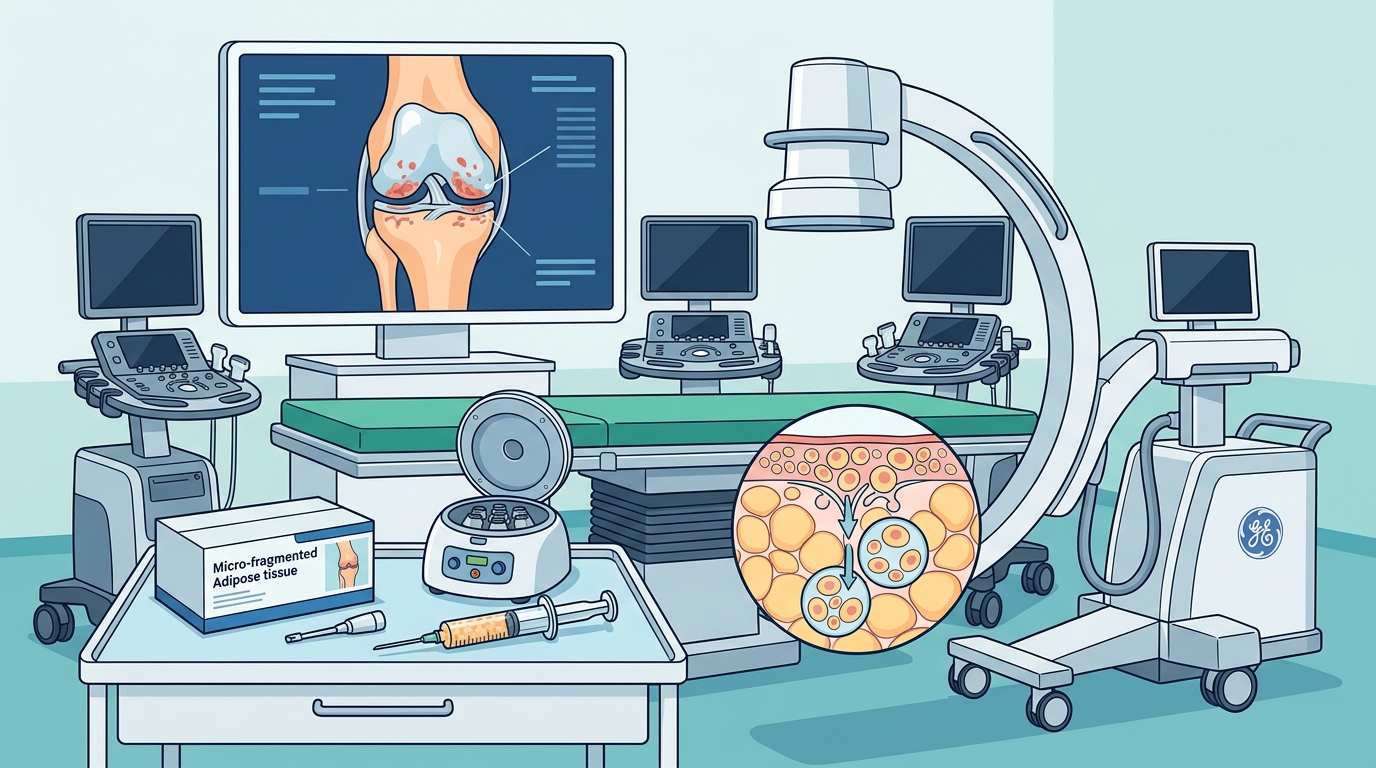
Adipose tissue graft therapy is a regenerative injection treatment that uses your own fat cells and tissue to alleviate pain and restore joint function. During the procedure, a small amount of adipose (fat) tissue is harvested from your body, processed to concentrate the regenerative cell populations, and then injected into the affected joint.
Adipose tissue is recognized as a valuable source of cells with angiogenic, immunomodulatory, and reparative properties. It contains mesenchymal stem cells (MSCs), growth factors, and a natural bio-scaffolding matrix that together promote tissue repair. Unlike treatments that simply mask symptoms, adipose grafts aim to address the underlying structural damage of osteoarthritis.
How Adipose Grafts Work Against Osteoarthritis
Osteoarthritis is characterized by the destruction of cartilage and cushioning surfaces of joints, driven by overuse, injury, and chronic inflammation. Adipose-derived therapies counter these processes through multiple biological mechanisms.
Anti-Inflammatory Action
Adipose-derived stem cells (ADSCs) secrete cytokines and growth factors that modulate the inflammatory environment inside the joint. This helps slow cartilage breakdown and reduce pain signaling at the source.
Cartilage Repair and Regeneration
The MSCs within adipose tissue can differentiate into chondrocytes, the cells that form cartilage. Clinics like Oregon Regenerative Medicine use adipose-derived tissues specifically because they are rich in regenerative cells that preferentially differentiate into chondrocytes.
Structural Support Through Bio-Scaffolding
The native tissue matrix in an adipose graft provides a scaffold that supports cell attachment and tissue regeneration. This combination of pluripotent cells, native tissue matrix, and bio-scaffolding acts together to repair and regenerate affected tissues.
Clinical Evidence Supporting Adipose Therapy for OA
Research into adipose-derived therapies for OA has accelerated in recent years. A 2025 review in Cells found that adipose tissue-derived therapies have shown promising potential in promoting cartilage repair, modulating inflammation, and improving joint function. A 2026 systematic review in Frontiers in Medicine evaluated 19 randomized controlled trials and confirmed that adipose-derived interventions produced clinically meaningful improvements.
A randomized controlled trial published in Arthroscopy (2025) found that microfragmented adipose tissue (MFAT) injection reduced pain compared with a saline control among patients with symptomatic knee OA during one-year follow-up. The researchers concluded that MFAT may be a viable alternative treatment for patients who fall into the orthopedic treatment gap between conservative care and surgery.
Additionally, clinical studies indicate that both autologous and allogenic ADSCs offer pain relief and functional improvement as measured by WOMAC and VAS scores, with some evidence of preventing disease progression.
MFAT vs. SVF vs. Cultured ADSCs: Key Differences
Not all adipose-derived treatments are identical. Understanding the distinctions helps patients and clinicians select the right approach.
| Therapy Type | Processing Method | Key Characteristics | Onset of Relief |
|---|---|---|---|
| Microfragmented Adipose Tissue (MFAT) | Mechanical fragmentation; no enzymes | Preserves native tissue matrix and scaffolding; higher growth factor secretion | Gradual; greater cartilage quality improvement |
| Stromal Vascular Fraction (SVF) | Enzymatic digestion of adipose tissue | Concentrated cell pellet; may suit older patients or BMI > 30 | Faster initial pain relief |
| Cultured ADSCs | Laboratory expansion of isolated stem cells | High cell count; standardized dosing possible | Pain relief observed around 3 months |
Research shows that MFAT treatment resulted in greater improvements in knee flexion and cartilage quality, while SVF treatment resulted in faster pain relief. Some meta-analyses of RCTs indicate similar short-term efficacy between ADSCs and SVF. The choice depends on patient age, BMI, joint condition, and clinical goals.
What to Expect During Treatment
At Oregon Regenerative Medicine, treatment begins with a comprehensive evaluation that goes beyond just the joint. The clinical team assesses metabolic, hormonal, and dietary factors that influence healing outcomes. Patients may be placed on a preparatory program for several weeks before their first injection.
The procedure itself involves harvesting a small amount of adipose tissue, processing it in the clinic's in-house laboratory, and injecting it into the affected joint under ultrasound or fluoroscopic guidance for precise needle placement. Adipose graft treatments are typically spaced about one year apart if additional treatments are needed, compared to PRP injections which generally require 3 to 5 sessions spaced 2 to 6 weeks apart.
Who Is a Good Candidate?
Adipose tissue graft therapy is well suited for patients with mild-to-moderate osteoarthritis who want to avoid or delay joint replacement surgery. It can also benefit patients with more advanced OA who have exhausted conventional options like corticosteroid injections, physical therapy, and oral medications.
Oregon Regenerative Medicine has successfully treated thousands of osteoarthritic hips, knees, shoulders, and other joints. Many patients arrive after being told their only option is surgery, yet the vast majority achieve durable pain-free function without surgery, joint replacement, or drugs. Ideal candidates should be evaluated individually, as factors like BMI, disease severity, and overall metabolic health all influence outcomes.
Key Takeaways
- Adipose tissue graft therapy is a regenerative treatment that uses your own fat-derived cells and tissue to repair osteoarthritic joints.
- A 2025 randomized controlled trial confirmed that MFAT injection reduced pain versus saline control at one-year follow-up in knee OA patients.
- Nineteen RCTs reviewed in 2026 demonstrate clinically meaningful improvements from adipose-derived therapies for knee OA.
- MFAT, SVF, and cultured ADSCs each offer distinct advantages; the best option depends on patient-specific factors.
- Adipose grafts address multiple OA mechanisms: inflammation, cartilage repair, and structural scaffolding.
- Oregon Regenerative Medicine has performed over 40,000 regenerative injections with image-guided precision since 1978.
- Early treatment produces better long-term outcomes; patients should not wait until surgery is the only remaining option.
Frequently Asked Questions
What is the difference between adipose tissue graft therapy and traditional stem cell therapy?
Adipose tissue graft therapy was formerly known as a type of stem cell therapy. It uses your own fat cells and tissue, which are rich in mesenchymal stem cells, rather than externally sourced or cultured cells. The graft preserves the natural tissue matrix and growth factors alongside the stem cells.
Is adipose tissue graft therapy FDA-approved?
While the FDA does not "approve" autologous tissue procedures the same way it approves drugs, Oregon Regenerative Medicine's adipose tissue stem cell grafts and microfragmented stem cell treatments are in FDA compliance. The tissue is harvested and used in the same patient during a single procedure.
How long does it take to see results?
Many patients notice improvement within 5 to 8 weeks. Clinical studies show that MFAT can produce significant pain reduction at the 3-month mark, with continued improvement through one year. Cultured ADSCs begin relieving pain around 3 months, while SVF may take up to 12 months for full effect.
How many treatments are needed?
Adipose graft treatments are typically spaced about one year apart if additional sessions are required. The number of treatments depends on the severity of your condition, the joint being treated, and your body's healing response.
Does the procedure hurt?
The harvest site involves a mini-lipoaspiration under local anesthesia. Most patients report mild soreness at the harvest site for a few days. The joint injection itself is performed under ultrasound guidance for precision and comfort.
How does adipose therapy compare to PRP for osteoarthritis?
PRP and adipose grafts are complementary. PRP delivers concentrated growth factors, while adipose tissue provides both stem cells and a bio-scaffolding matrix. Combining them creates a synergy that enhances the benefits of both. Learn more about PRP for cartilage regeneration in knee OA.
Is this treatment covered by insurance?
Most regenerative injection therapies, including adipose tissue grafts, are not currently covered by standard health insurance plans. Oregon Regenerative Medicine can provide detailed cost information during your consultation.
What joints can be treated with adipose tissue grafts?
Adipose grafts can be used on knees, hips, shoulders, ankles, elbows, wrists, hands, feet, TMJs, and spinal joints. Oregon Regenerative Medicine specializes in osteoarthritis treatment across all of these areas.
Take the Next Step Toward Joint Regeneration
If you are living with osteoarthritis pain and want to explore non-surgical treatment options, schedule a consultation with the regenerative medicine specialists at Oregon Regenerative Medicine in Lake Oswego, Oregon. With over 40,000 regenerative injections performed and decades of clinical experience, the team can evaluate whether adipose tissue graft therapy is right for your joints and your goals.