Adipose Tissue Graft Therapy: What to Expect During the Procedure
Adipose tissue graft therapy is a regenerative treatment that uses your own fat cells to repair damaged joints, ligaments, and connective tissues. Sometimes called autologous adipose graft therapy or biocellular therapy, the procedure harvests tissue rich in mesenchymal stem cells (MSCs) from your body and delivers it directly to the site of injury. For patients in the Portland and Lake Oswego, Oregon area, Oregon Regenerative Medicine has offered this advanced treatment as an alternative to surgery and joint replacement for years. Below, we walk you through the typical procedure from consultation to recovery.
What Is Adipose Tissue Graft Therapy?
Autologous adipose graft therapy is a form of regenerative injection therapy that uses your own fat tissue to alleviate pain and restore joint function. The procedure harvests adipose tissue rich in mesenchymal stem cells from your own body in what is known as an adipose tissue graft. These reparative cell populations, combined with native tissue matrix and bio-scaffolding, work together to repair and regenerate affected tissues.
Adipose tissue is recognized as one of the most abundant sources of adult stem cells in the human body. According to research published in Frontiers in Pharmacology, fat grafting is a well-established technique now valued for its regenerative properties beyond simple tissue restoration.
Who Is a Candidate?
Adipose tissue graft therapy is most appropriate for patients with moderate to severe osteoarthritis, chronic ligament or tendon injuries, and degenerative joint conditions who want to avoid surgery. Oregon Regenerative Medicine has successfully treated thousands of osteoarthritic hips, knees, rotator cuffs, shoulders, and spinal conditions at their Lake Oswego clinic.
Not every patient is a match. A thorough evaluation determines candidacy, and some patients may benefit more from PRP therapy or prolotherapy depending on the severity of their condition.
Pre-Procedure Consultation and Evaluation
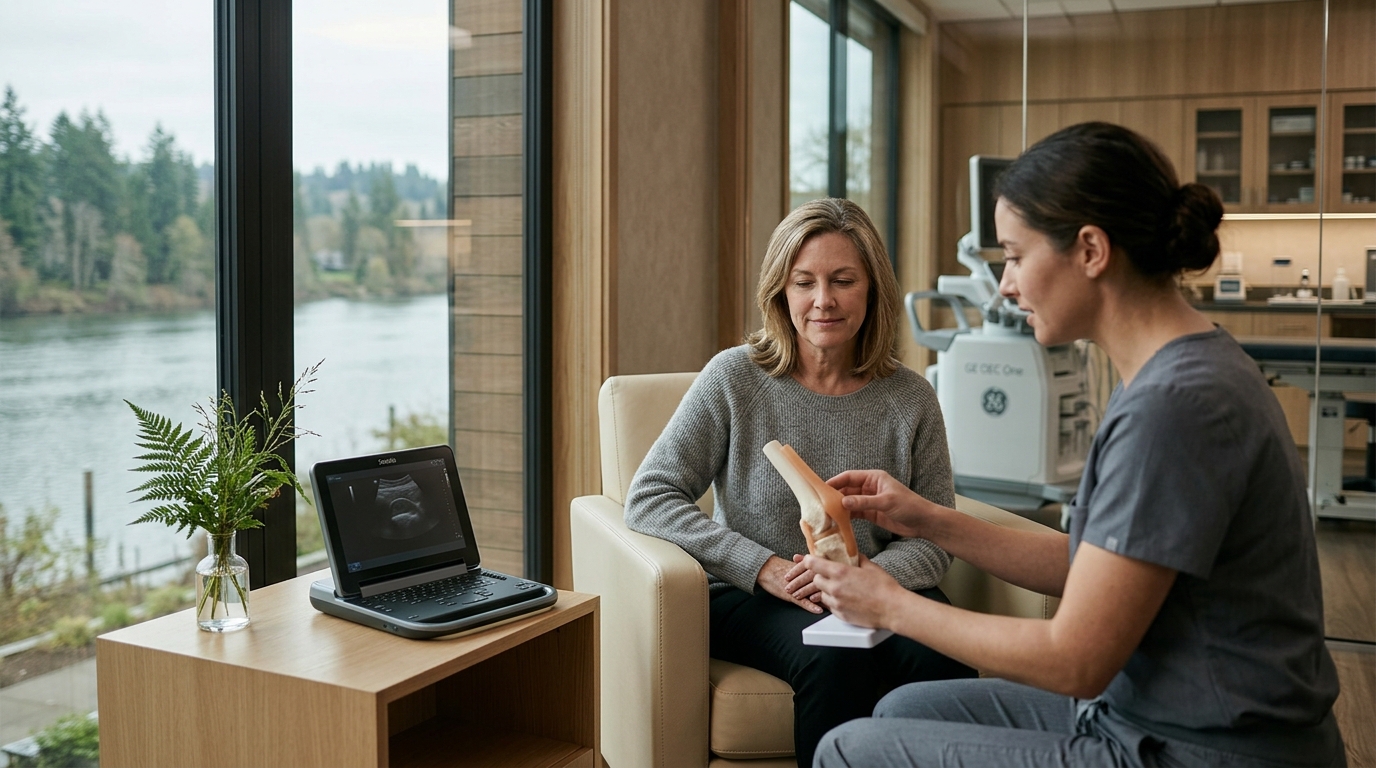
Before any treatment, the clinical team performs a comprehensive evaluation. This includes a thorough history, physical exam, review of X-rays and MRIs, and diagnostic ultrasound imaging. The goal is to determine whether you are a good candidate for treatment and which regenerative approach best fits your needs.
Diagnostic Ultrasound
Musculoskeletal ultrasound (MSKUS) is a critical diagnostic tool. Unlike a static MRI snapshot, ultrasound offers the ability to scan tissue during movement, enabling a functional evaluation of the joint. Oregon Regenerative Medicine uses four Sonosite ultrasound systems to correlate hands-on palpation with direct ultrasound images in real time.
Treatment Planning
Based on the diagnostic findings, your physician builds a treatment plan. Some patients begin with prolotherapy or PRP before advancing to adipose tissue grafts. As the regenerative medicine treatments comparison on oregenmed.com explains, each therapy has unique mechanisms and applications.
Step-by-Step Procedure Day Walkthrough
Step 1: Tissue Harvesting
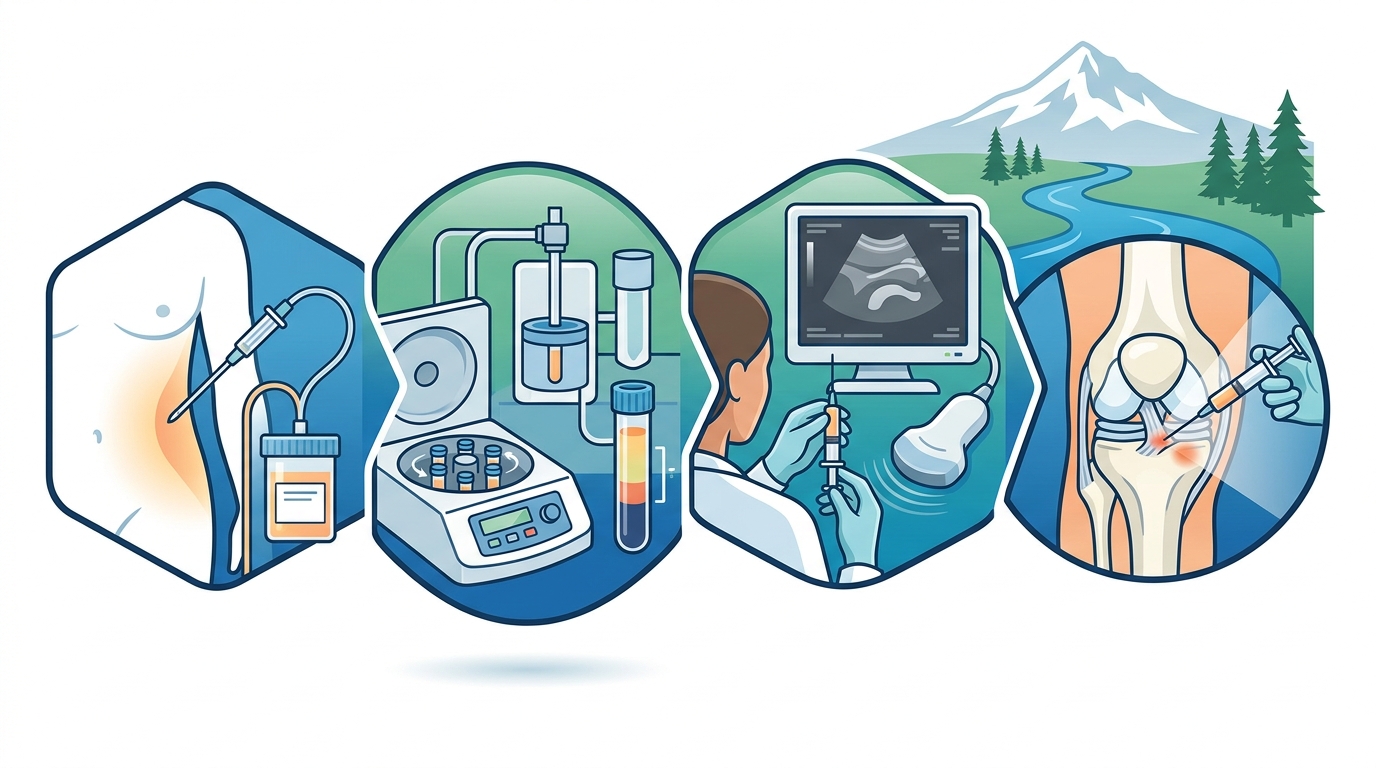
The procedure begins with a small-volume lipoaspiration. The harvesting area, typically the abdomen or flank, is numbed with local anesthetic using tumescent technique (a combination of lidocaine, epinephrine, and sterile saline). A small incision allows a cannula to collect adipose tissue from beneath the skin. The process takes roughly 15 to 20 minutes and uses only local anesthesia.
Step 2: In-House Laboratory Processing
The harvested fat is processed on-site in the clinic's laboratory. Processing involves rinsing and micro-fragmenting the tissue to concentrate the regenerative cell populations while preserving the native tissue architecture. Oregon Regenerative Medicine prepares biologics including M-FAT, PRP, PRF, A2M, and platelet lysates in their in-house lab, ensuring quality control from harvest to injection.
Step 3: Image-Guided Injection
The concentrated adipose graft is injected precisely into the injured or degenerated area using ultrasound or fluoroscopic guidance. The entire procedure, from harvest through injection, typically takes about 90 minutes. Most of that time involves waiting for anesthesia to take effect or lab processing.
| Phase | Duration | Details |
|---|---|---|
| Consultation and imaging | 60-90 min | History, physical exam, ultrasound, X-ray/MRI review |
| Tissue harvesting | 15-20 min | Local anesthesia, small-volume lipoaspiration from abdomen or flank |
| Lab processing | 30-40 min | Rinsing, micro-fragmentation, preparation of biologic products |
| Image-guided injection | 15-30 min | Ultrasound or fluoroscopy-guided delivery to target tissue |
| Post-procedure observation | 15-30 min | Monitoring, aftercare instructions |
The Role of Image Guidance
Precision is essential in regenerative injection therapy. As the team at Oregon Regenerative Medicine explains in their article on the art of regenerative injections, handling a needle, injecting with accuracy, and treating all the relevant structures are skills learned through extensive experience.
The clinic uses four Sonosite ultrasound systems for real-time guidance and a GE OEC One Flat Panel C-Arm fluoroscopy system for spinal procedures. Fluoroscopy is ideally suited for guiding injections directly into intervertebral disks, while ultrasound excels for peripheral joints like knees, hips, and shoulders.
Recovery Timeline and Follow-Up
Most patients can return to light daily activities within a few days. Soreness at the harvest and injection sites is normal and typically resolves within one to two weeks. Significant improvements in pain and function often begin appearing within four to six weeks.
Adipose graft treatments are generally spaced about one year apart if additional sessions are needed. This contrasts with PRP injections, which usually require three to five sessions spaced two to six weeks apart. Your physician will schedule follow-up imaging and appointments to track progress.
Adipose Tissue Graft vs. PRP Therapy
Understanding the differences helps you make an informed decision. Prolotherapy is the predecessor of all modern regenerative injection therapy, including PRP and adipose tissue graft cell therapy. Here is a quick comparison:
| Factor | Adipose Tissue Graft | PRP Therapy |
|---|---|---|
| Source | Your own fat tissue (abdomen/flank) | Your own blood |
| Active components | MSCs, growth factors, bio-scaffolding | Concentrated platelets and growth factors |
| Typical sessions | 1-2, spaced ~1 year apart | 3-5, spaced 2-6 weeks apart |
| Best for | Moderate-severe osteoarthritis, significant tissue damage | Mild-moderate injuries, tendon/ligament repair |
| Procedure time | ~90 minutes | ~45-60 minutes |
For a deeper dive, read the full breakdown at Regenerative Medicine Treatments Defined on oregenmed.com.
Key Takeaways
- Adipose tissue graft therapy is a regenerative procedure that uses your own fat cells, rich in mesenchymal stem cells, to repair damaged joints and connective tissues.
- The typical procedure involves three main phases: tissue harvesting, in-house lab processing, and image-guided injection.
- The entire procedure takes approximately 90 minutes from start to finish.
- Real-time ultrasound and fluoroscopy guidance ensure precise delivery of the graft to the target tissue.
- Recovery is relatively quick, with most patients resuming light activities within days and seeing notable improvement within four to six weeks.
- Additional treatments, if needed, are typically spaced about one year apart.
- A thorough pre-procedure evaluation, including diagnostic ultrasound and imaging review, determines whether you are a good candidate.
Frequently Asked Questions
What is adipose tissue graft therapy?
Adipose tissue graft therapy is a regenerative treatment that harvests fat tissue from your own body, processes it to concentrate reparative stem cells and growth factors, and injects it into damaged joints or connective tissues to promote healing.
Is the procedure painful?
Local anesthesia is used at both the harvest site and the injection site. Most patients report mild discomfort during the procedure and soreness afterward that resolves within one to two weeks.
How long does the procedure take?
The full procedure, including tissue harvesting, lab processing, and injection, takes approximately 90 minutes. The initial consultation with diagnostic imaging is a separate visit.
How many treatments will I need?
Most patients see significant results after one treatment. If additional treatments are required, they are typically spaced about one year apart.
Is adipose tissue graft therapy FDA compliant?
Oregon Regenerative Medicine's adipose tissue stem cell grafts and micro-fragmented stem cell treatments are in FDA compliance. The procedure uses your own tissue without enzymatic digestion, staying within regulatory guidelines for same-surgical-procedure autologous use.
What conditions can adipose tissue graft therapy treat?
Common conditions include osteoarthritis of the hip, knee, and shoulder, rotator cuff injuries, meniscus tears, degenerative disc disease, and chronic ligament or tendon damage.
How does this differ from PRP therapy?
PRP uses concentrated platelets from your blood, while adipose grafts use fat tissue containing mesenchymal stem cells and native bio-scaffolding. Adipose therapy is generally reserved for more advanced degeneration. Learn more about PRP therapy.
Where is the fat harvested from?
Fat is typically harvested from the abdomen or flank area using a small cannula under local anesthesia. The incision is minimal and heals quickly.
Schedule Your Consultation
If you are dealing with chronic joint pain or have been told surgery is your only option, adipose tissue graft therapy may offer a non-surgical path to recovery. Oregon Regenerative Medicine has been delivering regenerative and integrative medicine from their Lake Oswego, Oregon clinic since 1978. Visit the FAQ page or contact the clinic directly to schedule a consultation and find out if you are a candidate.