

Chronic joint pain affects millions of individuals who have exhausted conventional pain management strategies. Recent clinical data indicates that regenerative medicine offers a viable pathway for tissue repair, with studies showing significant improvement in patient mobility and pain reduction. According to a 2024 analysis of regenerative therapies, over 60% of patients with moderate osteoarthritis reported sustained relief after biocellular interventions. This guide details the specific conditions treatable through advanced biocellular joint regeneration at Oregon Regenerative Medicine.
What Is Biocellular Joint Regeneration?
Biocellular joint regeneration represents a sophisticated evolution in regenerative medicine. It combines the growth factors found in Platelet-Rich Plasma (PRP) with the cellular repair mechanisms of adipose-derived stem cells. This dual-action approach targets both inflammation and tissue structural integrity.
Biocellular therapy is a medical procedure that utilizes autologous (patient-derived) cells and growth factors to stimulate the body's natural healing processes in damaged joints. Unlike synthetic implants, this method works with your biology to encourage genuine tissue regeneration rather than merely masking pain.
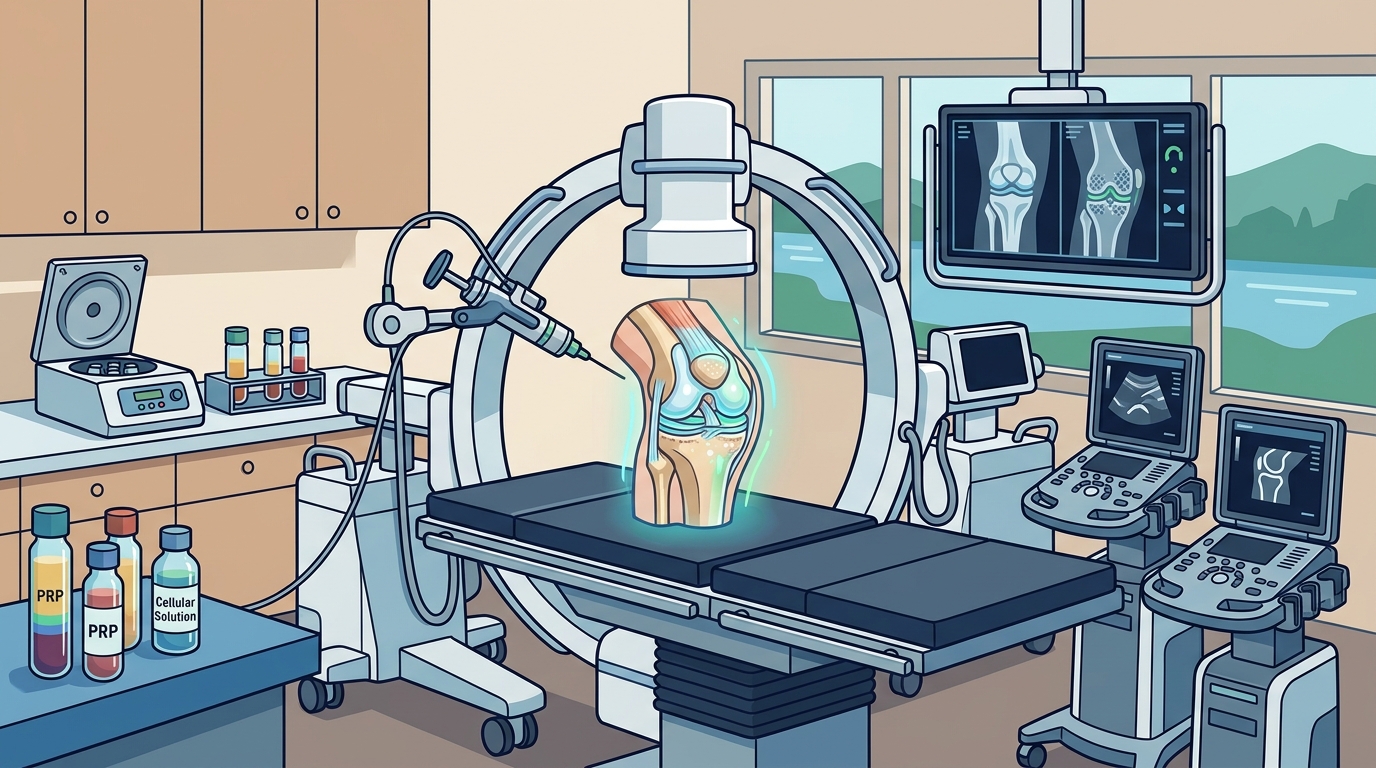
The process typically involves harvesting adipose tissue, processing it to isolate regenerative cells, and injecting the concentrate directly into the affected joint under ultrasound guidance. This precision ensures the therapeutic agents are delivered exactly where the pathology exists. For more details on our methodology, visit our Oregon Regenerative Medicine homepage.
Treating Osteoarthritis and Cartilage Loss
Osteoarthritis is the most common indication for biocellular joint regeneration. It is a degenerative joint disease characterized by the breakdown of cartilage, the protective tissue that cushions the ends of bones. As cartilage wears down, bones rub against each other, causing pain, stiffness, and loss of mobility.
According to the Centers for Disease Control and Prevention, more than 32.5 million adults in the United States have doctor-diagnosed osteoarthritis. The prevalence of this condition increases significantly with age, making regenerative options critical for active seniors. Biocellular therapy aims to slow this progression and potentially reverse early-stage damage.
Knee Osteoarthritis
The knee joint bears significant weight and is highly susceptible to degenerative changes. Research published in the Journal of Orthopaedic Research highlights the efficacy of mesenchymal stem cells in treating knee osteoarthritis. Patients often experience reduced need for NSAIDs and improved functional scores.
Hip and Shoulder Degeneration
While the knee is the primary target, biocellular regeneration is increasingly used for hip and shoulder osteoarthritis. Ultrasound expertise is crucial here, as these joints are deeper and more complex. Our team utilizes advanced imaging to ensure accurate placement of the biocellular concentrate. Learn more about our ultrasound guidance capabilities.
Tendon and Ligament Pathology
Beyond joints, biocellular regeneration addresses chronic tendon and ligament injuries that have failed to heal with rest or physical therapy. These conditions are often referred to as tendinopathies or ligamentous laxity.
Tendinopathy is a condition where the tendon becomes inflamed, thickened, or degenerated due to overuse or acute injury. Common sites include the Achilles tendon, patellar tendon, and rotator cuff. The growth factors in biocellular therapy stimulate fibroblast activity, which is essential for collagen synthesis and tendon repair.
Rotator Cuff Tears
Partial-thickness rotator cuff tears are a frequent complaint among athletes and older adults. Biocellular injection can promote healing in these tears, potentially avoiding surgical intervention. Studies suggest that combining PRP with stem cells improves healing rates compared to PRP alone.
Lateral Epicondylitis (Tennis Elbow)
Chronic elbow pain is often resistant to traditional treatments. Biocellular regeneration offers a non-surgical alternative that targets the underlying degeneration at the tendon insertion point. This approach is particularly effective for patients who have undergone multiple corticosteroid injections without lasting relief.
Spine and Disc Degeneration
Spinal conditions are a major focus of regenerative medicine. Biocellular therapy is used to treat degenerative disc disease, facet joint arthritis, and radiculopathy. The goal is to reduce inflammation around the nerve roots and support the structural integrity of the spinal discs.
Disc degeneration is the gradual loss of hydration and elasticity in the spinal discs, leading to pain and potential nerve compression. By injecting biocellular material into the disc or surrounding facet joints, we can modulate the inflammatory environment and encourage tissue repair.
For patients with complex spinal issues, we offer fluoroscopy-guided spine injections to ensure maximum safety and precision. This imaging technique provides real-time visualization of the spine, allowing for accurate delivery of the therapeutic agents.
Prolotherapy vs. PRP vs. Biocellular
Understanding the differences between these regenerative modalities is essential for making an informed decision. Each has distinct mechanisms and indications.
| Modality | Primary Mechanism | Best For | Cellular Content |
|---|---|---|---|
| Prolotherapy | Chemical irritation to trigger healing | Ligament laxity, mild joint pain | None (sugar-based solution) |
| PRP | Growth factor concentration | Tendon injuries, early arthritis | Platelets only |
| Biocellular | Stem cells + Growth factors | Advanced arthritis, complex tears | Stem cells + Platelets |
Biocellular therapy is generally considered the most potent option because it introduces living cells that can differentiate into various tissue types. Prolotherapy is a foundational treatment that stimulates healing but lacks the cellular regenerative capacity of biocellular methods. PRP sits in the middle, offering high concentrations of growth factors without the added complexity of stem cells.
Our team at Oregon Regenerative Medicine evaluates each patient's specific pathology to determine the most appropriate treatment plan. We do not believe in a one-size-fits-all approach to regenerative medicine.
Key Takeaways
- Biocellular joint regeneration combines adipose-derived stem cells with PRP for enhanced tissue repair.
- Osteoarthritis of the knee, hip, and shoulder are primary indications for this therapy.
- Tendinopathies, including rotator cuff tears and tennis elbow, respond well to biocellular treatment.
- Spinal conditions like degenerative disc disease can be managed with fluoroscopy-guided injections.
- Ultrasound guidance is critical for accurate delivery in complex joint areas.
- Biocellular therapy offers a non-surgical alternative for patients seeking to avoid joint replacement.
- Our clinic is located in the historic Foundry Building in Portland, Oregon.
Frequently Asked Questions
Is biocellular joint regeneration covered by insurance?
Most insurance plans do not currently cover regenerative medicine procedures, including biocellular therapy. However, we offer flexible payment plans to make treatment accessible. Contact our reception team for financial assistance options.
How long does the procedure take?
The entire process, including harvesting and processing, typically takes about 60 to 90 minutes. The injection itself is performed under imaging guidance and is relatively quick.
What is the recovery time after biocellular injection?
Recovery varies by patient and condition. Most patients experience mild soreness for a few days. Significant improvements in pain and function are often noticed within 4 to 6 weeks as the healing process progresses.
Are there any risks associated with biocellular therapy?
Since the material is derived from your own body, the risk of allergic reaction or rejection is virtually non-existent. Minor risks include temporary pain at the injection site or bruising. Our medical team ensures all safety protocols are followed.
How many treatments are needed?
Many patients see significant improvement after a single treatment. However, some complex cases may benefit from a series of injections spaced several weeks apart. Your doctor will recommend a plan based on your specific needs.
Can biocellular therapy cure arthritis?
While it cannot "cure" arthritis in the sense of reversing aging, it can significantly reduce symptoms, improve function, and potentially slow disease progression. Many patients are able to delay or avoid joint replacement surgery.
Do you treat athletes with biocellular regeneration?
Yes, we frequently treat athletes with sports-related injuries. The regenerative capacity of biocellular therapy makes it ideal for accelerating recovery from tendon and ligament injuries. Learn about our services for active individuals.
Contact Oregon Regenerative Medicine
If you are suffering from chronic joint pain, tendon injuries, or spinal degeneration, biocellular regeneration may offer the relief you have been seeking. Our team of experienced doctors, including Dr. Noel Peterson and Dr. Kristian Flores, is dedicated to providing personalized care.
We invite you to schedule a consultation to discuss your condition and explore your treatment options. Visit our contact page to book an appointment or call us at (503) 636-2734. Take the first step toward regenerating your health today.