
Regenerative medicine has fundamentally shifted the landscape of orthopedic care in the Pacific Northwest. According to recent clinical data, over 40,000 regenerative injections have been performed by Oregon Regenerative Medicine, demonstrating a massive shift toward non-surgical interventions for joint pain and musculoskeletal injuries. This surge in patient volume reflects a growing demand for treatments that address the root cause of degeneration rather than merely masking symptoms with pharmaceuticals.
Understanding Regenerative Medicine
Regenerative Orthopedic Medicine is a powerful healing art and medical specialty that focuses on restoring function to damaged tissues. Unlike traditional pain management, which often relies on anti-inflammatory drugs or opioids, regenerative therapies utilize the body's own biological resources to accelerate healing. This approach is particularly effective for chronic conditions such as osteoarthritis, tendon tears, and ligament laxity.
At Oregon Regenerative Medicine, the philosophy centers on empowering patients to create healthy, active longevity. The clinic has been a pioneer in the Pacific Northwest for over 30 years, establishing itself as a trusted source for evidence-based treatments. The core premise is that by stimulating the body's natural repair mechanisms, patients can avoid invasive surgeries and the long recovery times associated with joint replacements.
Platelet Rich Plasma (PRP) is a concentrated preparation of a patient's own platelets, which contain growth factors that promote healing. Prolotherapy is a technique that involves injecting an irritant solution, such as dextrose, to stimulate the body's inflammatory healing response. Stem Cell Biocellular Therapies involve the use of adult adipose tissue-derived stem cells to provide a robust source of reparative cells. Together, these modalities form a comprehensive toolkit for treating degenerative diseases.
PRP vs. Stem Cell Therapies
Choosing between Platelet Rich Plasma (PRP) and Stem Cell therapy depends on the severity of the injury and the specific biological needs of the patient. Both treatments are autologous, meaning they are derived from the patient's own body, which minimizes the risk of rejection or adverse reactions.
Platelet Rich Plasma (PRP)
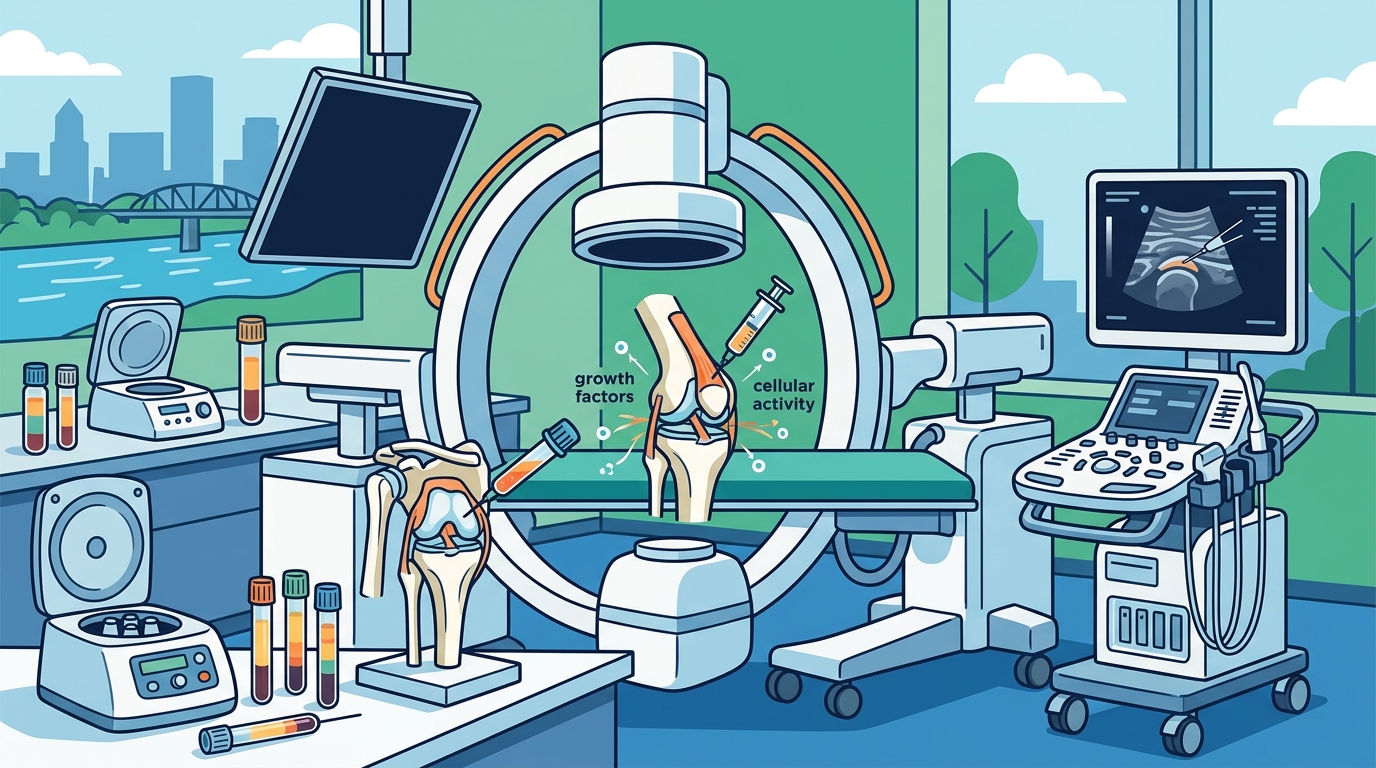
PRP therapy involves drawing a small amount of blood from the patient and spinning it in a centrifuge to separate the platelets from other blood components. The resulting concentrate is then injected into the injured area. Scientists have identified hundreds of growth and repair compounds in PRP, making it highly effective for soft tissue injuries and early-stage osteoarthritis. The treatment is particularly popular for conditions like tennis elbow, golfer's elbow, and rotator cuff tendinitis.
Research indicates that PRP can significantly reduce pain and improve function in patients with knee osteoarthritis. A meta-analysis of randomized controlled trials has shown that intra-articular PRP injections provide superior pain relief compared to hyaluronic acid or saline injections in the short to medium term. This makes PRP a valuable first-line regenerative treatment for many patients.
Adipose-Derived Stem Cells
For more advanced degenerative conditions, adipose-derived stem cells offer a more potent regenerative potential. Adult adipose tissue is the most abundant source of reparative cells in the human body. By harvesting a small amount of fat tissue, usually from the abdomen, and processing it to isolate the stem cells, doctors can inject a high concentration of regenerative cells directly into the damaged joint or tissue.
These stem cells have the ability to differentiate into various cell types, including cartilage, bone, and tendon cells. They also secrete a wide array of growth factors and cytokines that modulate the local inflammatory environment, promoting tissue repair and reducing pain. Clinical studies have demonstrated the regeneration of cartilage in human knee osteoarthritis using autologous adipose tissue-derived stem cells, offering hope for patients who have exhausted other treatment options.
The Role of Ultrasound Guidance
One of the critical differentiators of Oregon Regenerative Medicine is its commitment to ultrasound expertise. Traditional injections often rely on anatomical landmarks or blind palpation, which can lead to inaccurate placement of the therapeutic agent. In contrast, ultrasound-guided injections allow physicians to visualize the needle in real-time as it approaches the target tissue.
Ultrasound imaging is equal to or better than MRI in evaluating most tendon and ligament disorders in the arms and legs. This includes common conditions such as achilles tendinitis, meniscus tears, and patella tendinitis. By using ultrasound, doctors can separate out individual tendon, ligament, and fascia fibers, get around nerves, and put the medicine into the correct location without a doubt.
This precision is vital for the efficacy of regenerative therapies. If the PRP or stem cells are not delivered exactly to the site of injury, the healing response may be suboptimal. Ultrasound guidance ensures that the treatment is targeted, maximizing the biological effect and minimizing the risk of complications. It also allows for immediate diagnosis, enabling the physician to confirm the pathology before proceeding with the injection.
Clinical Efficacy and Patient Outcomes
The real-world results of regenerative medicine speak for themselves. At Oregon Regenerative Medicine, the vast majority of patients achieve durable pain-free function without surgery, joint replacement, or drugs. This outcome is particularly significant for individuals who have been told that their only solution is invasive surgery or a lifetime of pain medication.
Patients with osteoarthritic hips, knees, rotator cuffs, shoulders, elbows, wrists, hands, feet, ankles, and TMJs have been successfully treated using these modalities. The treatments enhance the natural cycles of repair of aging and chronically injured tissues, providing long-term relief and improved quality of life. While no treatment has 100% success, the clinical data supports the use of PRP and stem cells as effective interventions for a wide range of orthopedic conditions.
Furthermore, the non-surgical nature of these treatments means that patients can return to their daily activities much faster than after traditional surgery. The recovery process involves a period of relative rest followed by gradual rehabilitation, allowing the body to heal naturally. This approach aligns with the clinic's mission to empower patients to live at their highest potential through orthopedic medicine and condition-specific nutritional programs.
Comparison of Treatment Options
Understanding the differences between various regenerative therapies helps patients make informed decisions about their care. The table below summarizes the key characteristics of PRP, Prolotherapy, and Stem Cell therapy.
| Treatment Modality | Source | Best For | Key Benefit |
|---|---|---|---|
| Platelet Rich Plasma (PRP) | Patient's Blood | Soft tissue injuries, early osteoarthritis | High concentration of growth factors |
| Prolotherapy | Dextrose Solution | Ligament laxity, joint instability | Stimulates natural inflammatory healing |
| Stem Cell Therapy | Adipose Tissue | Advanced degeneration, cartilage loss | Potent regenerative cell source |
| Hormone Optimization | Bioidentical Hormones | Hormonal imbalance, fatigue | Restores hormonal balance |
Key Takeaways
- Oregon Regenerative Medicine has performed over 40,000 regenerative injections, establishing a strong track record of patient outcomes.
- PRP therapy utilizes the patient's own platelets to deliver growth factors that promote tissue repair and reduce inflammation.
- Adipose-derived stem cells offer a potent regenerative option for advanced degenerative conditions, including cartilage loss.
- Ultrasound guidance is critical for ensuring accurate needle placement and maximizing the efficacy of injections.
- Regenerative medicine provides a non-surgical alternative for patients with osteoarthritis and chronic musculoskeletal pain.
- The clinic is located in the historic Foundry Building in Portland, serving patients across Oregon and Washington.
- Doctors at ORM have decades of experience in hands-on diagnosis, ultrasound imaging, and fluoroscopic guidance.
Frequently Asked Questions
Is PRP therapy painful?
Most patients report minimal discomfort during PRP therapy. The use of local anesthesia and ultrasound guidance helps to minimize pain during the injection process. Some soreness may occur afterward as the healing response begins, but this is typically manageable with over-the-counter pain relievers.
How many PRP treatments do I need?
The number of treatments required varies depending on the severity of the condition. Many patients see significant improvement after one or two sessions. However, chronic conditions may require a series of treatments to achieve optimal results. Your doctor will create a personalized treatment plan based on your specific needs.
What is the difference between PRP and stem cell therapy?
PRP uses platelets from the patient's blood to release growth factors, while stem cell therapy uses adult adipose-derived stem cells to provide a more robust regenerative potential. Stem cell therapy is generally reserved for more advanced degenerative conditions where PRP may not be sufficient.
How long does recovery take after regenerative injections?
Recovery time varies depending on the treatment and the area treated. Most patients can return to normal activities within a few days, but strenuous exercise may need to be avoided for a week or two. Your doctor will provide specific post-treatment instructions to ensure optimal healing.
Are regenerative treatments covered by insurance?
Insurance coverage for regenerative medicine varies by provider and plan. Some insurance plans may cover a portion of the cost, while others may not. It is important to check with your insurance provider to determine your coverage. Oregon Regenerative Medicine can also provide information on financing options.
Can stem cells regenerate cartilage?
Yes, clinical studies have shown that autologous adipose tissue-derived stem cells can regenerate cartilage in patients with knee osteoarthritis. This is one of the key benefits of stem cell therapy for degenerative joint conditions.
What conditions can be treated with Prolotherapy?
Prolotherapy is effective for treating ligament laxity, joint instability, and chronic pain conditions such as tennis elbow, golfer's elbow, and lower back pain. It works by stimulating the body's natural healing response to strengthen weakened ligaments and tendons.
Schedule Your Consultation
If you are suffering from chronic pain or joint degeneration, regenerative medicine may offer the relief you have been seeking. Oregon Regenerative Medicine provides evidence-based, ultrasound-guided treatments tailored to your individual needs. Contact us today to schedule a consultation and learn more about how we can help you achieve a pain-free, active life.
Visit our Contact Page to get in touch with our team. You can also learn more about our Therapies or meet our Medical Team. For those interested in the latest research, explore our Articles section.