
Expected Outcomes from Regenerative Medicine for Osteoarthritis in Portland
Regenerative medicine has fundamentally altered the treatment landscape for osteoarthritis, offering a viable alternative to joint replacement surgery for thousands of patients. According to recent clinical data, over 40,000 regenerative injections have been performed by Oregon Regenerative Medicine, demonstrating the widespread adoption and reliability of these non-surgical interventions. Patients seeking relief in Portland are increasingly turning to biologic therapies to restore function and reduce pain without the risks associated with invasive orthopedic surgery.
Mechanism of Action and Biological Repair
Osteoarthritis is a degenerative joint disease characterized by the breakdown of cartilage and underlying bone. Regenerative medicine works by harnessing the body's natural healing mechanisms to slow this progression and stimulate tissue repair. The core principle involves introducing concentrated biological agents directly into the affected joint or soft tissue.
Platelet Rich Plasma is a concentration of a patient's own platelets, which release growth factors that promote healing and reduce inflammation. This process leverages the body's innate ability to repair damaged tissues by amplifying the natural inflammatory response that initiates healing. By focusing these growth factors on the injury site, clinicians can accelerate the repair of tendons, ligaments, and joint surfaces.
Adipose tissue-derived stem cells represent another powerful tool in this arsenal. Adult adipose tissue is the most abundant source of reparative cells in the human body. When harvested and processed correctly, these cells can differentiate into various tissue types and secrete potent anti-inflammatory cytokines. This makes them particularly effective for treating chronic degenerative conditions where traditional anti-inflammatory drugs have failed.
PRP Therapy Outcomes and Efficacy
Platelet Rich Plasma therapy has gained significant traction in orthopedics due to its ability to modulate the inflammatory environment within the joint. For patients with early to moderate osteoarthritis, PRP injections can provide substantial pain relief and improved mobility. The outcomes are often durable, with many patients experiencing benefits that last for several months to years after a single treatment series.
Research indicates that PRP is particularly effective for knee osteoarthritis. A meta-analysis of randomized controlled trials confirms the efficacy of Platelet-Rich Plasma in the treatment of knee osteoarthritis, showing superior outcomes compared to hyaluronic acid injections in many cases. This evidence supports its use as a first-line biologic intervention before considering more invasive options.
Patients often report a gradual improvement in symptoms rather than immediate relief. This is because the biological healing process takes time. However, the long-term benefits include reduced reliance on pain medications and a delayed need for joint replacement surgery. The non-surgical nature of PRP therapy also means a significantly faster recovery time compared to traditional orthopedic procedures.
Stem Cell Regeneration and Adipose Tissue
For more advanced cases of osteoarthritis, stem cell therapy offers a more robust regenerative potential. Autologous adipose tissue stem cell grafts are harvested from the patient's own body, minimizing the risk of immune rejection. These cells are then processed and injected into the degenerative joint to stimulate cartilage regeneration.
The regeneration of cartilage in human knee osteoarthritis with autologous adipose tissue-derived stem cells has been documented in clinical case series. While no treatment has a 100% success rate, the vast majority of patients achieve durable pain-free function without surgery. The goal is not just pain relief but the restoration of structural integrity to the joint.
Biocellular therapies combine these stem cells with other biological factors to enhance the healing response. This approach is particularly useful for complex injuries involving multiple tissue types, such as the rotator cuff or the lumbar spine. By addressing the underlying degeneration rather than just the symptoms, these therapies offer a more comprehensive solution to chronic joint pain.
Prolotherapy and Ligament Stability
Prolotherapy is a non-surgical treatment that involves injecting an irritant solution, typically dextrose, into damaged ligaments and tendons. This injection stimulates the body's healing response, causing new tissue growth and strengthening the affected area. It is particularly effective for joint laxity and chronic instability associated with osteoarthritis.
Long-term effects of dextrose prolotherapy for anterior cruciate ligament laxity have been studied extensively. The treatment helps to tighten loose ligaments, thereby improving joint stability and reducing pain. For patients whose osteoarthritis is exacerbated by joint instability, prolotherapy can be a crucial component of their treatment plan.
When combined with PRP or stem cells, prolotherapy can enhance the overall regenerative outcome. The irritant effect of the prolotherapy solution primes the tissue for healing, while the growth factors from PRP or stem cells accelerate the repair process. This synergistic approach is often used in complex orthopedic cases to maximize functional recovery.
Precision Guidance and Diagnostic Accuracy
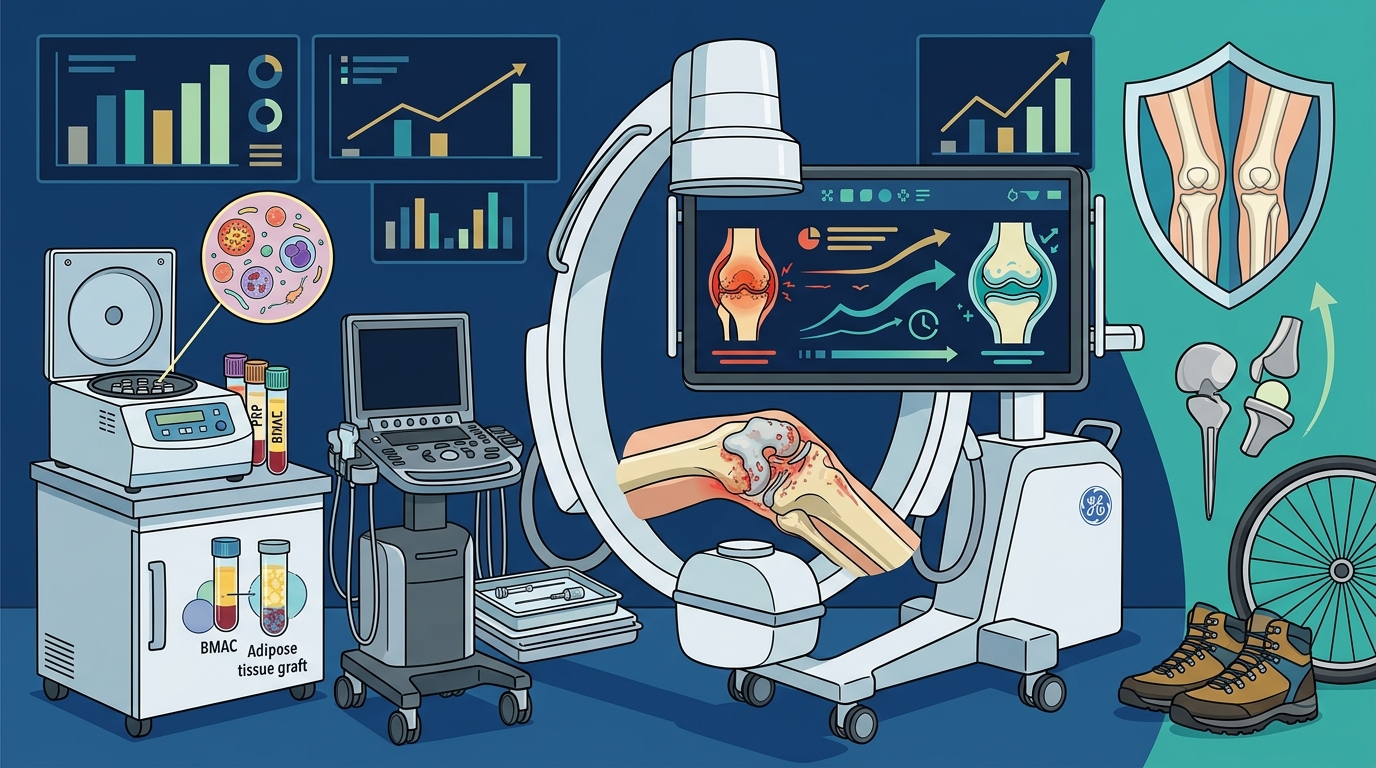
The success of regenerative medicine depends heavily on the accuracy of the injection. Ultrasound imaging has become an essential tool in this process, allowing clinicians to visualize soft tissues in real-time. This expertise ensures that the therapeutic agents are delivered precisely to the target site, maximizing efficacy and minimizing complications.
Ultrasound imaging is equal to or better than MRI in evaluating most tendon and ligament disorders in the arms and legs. This includes common conditions such as achilles tendinitis, tennis elbow, and rotator cuff tears. By using ultrasound, clinicians can confirm the diagnosis and plan the injection strategy with confidence.
Fluoroscopic C-Arm guidance is another critical component of precision medicine. This X-ray-based imaging allows for accurate placement of needles in the spine and other complex anatomical regions. The combination of ultrasound and fluoroscopy ensures that every injection is performed with the highest degree of accuracy, which is vital for achieving optimal clinical outcomes.
Comparison of Regenerative Therapies
Choosing the right regenerative therapy depends on the specific condition, the stage of osteoarthritis, and the patient's overall health. The table below summarizes the key characteristics of the primary treatments offered.
| Therapy | Primary Mechanism | Best For | Recovery Time |
|---|---|---|---|
| PRP Therapy | Growth factor release | Early to moderate osteoarthritis, tendon injuries | Minimal |
| Stem Cell Therapy | Cellular regeneration | Advanced degeneration, cartilage loss | Short |
| Prolotherapy | Ligament tightening | Joint laxity, chronic instability | Short |
| IV Therapy | Systemic nutrient support | Overall wellness, inflammation reduction | None |
Key Takeaways
- Oregon Regenerative Medicine has performed over 40,000 regenerative injections, establishing a strong track record of patient outcomes.
- PRP therapy is highly effective for early to moderate osteoarthritis, with outcomes supported by meta-analyses of randomized controlled trials.
- Stem cell therapy offers regenerative potential for advanced joint degeneration by utilizing autologous adipose tissue.
- Precision guidance using ultrasound and fluoroscopy is critical for ensuring accurate delivery of therapeutic agents.
- Prolotherapy addresses joint instability by stimulating ligament strengthening, complementing other biologic therapies.
- Patients often achieve durable pain-free function without the need for joint replacement surgery or long-term medication use.
- The clinic is located in the historic Foundry Building in Portland, serving the Pacific Northwest region for over 30 years.
Frequently Asked Questions
How long do the results of regenerative medicine last?
Results vary by patient and condition, but many individuals experience durable pain relief and improved function for several years. The biological healing process continues to strengthen tissues over time, often leading to long-term benefits.
Is regenerative medicine covered by insurance?
Most regenerative medicine treatments, including PRP and stem cell therapy, are currently considered elective and are not covered by insurance. However, some diagnostic imaging may be covered depending on the policy.
What is the difference between PRP and stem cell therapy?
PRP uses concentrated platelets from your blood to release growth factors, while stem cell therapy uses adult adipose tissue-derived cells to promote cellular regeneration. Stem cell therapy is generally reserved for more advanced degenerative conditions.
How is ultrasound used in these treatments?
Ultrasound provides real-time visualization of soft tissues, allowing clinicians to guide needles precisely to the target site. This ensures accurate delivery of the therapeutic agents and improves overall treatment efficacy.
Are there any risks associated with these procedures?
As these treatments use the patient's own biological materials, the risk of allergic reaction or rejection is minimal. Risks are generally limited to temporary soreness or swelling at the injection site.
How many treatments are typically needed?
Many patients see improvement after one or two sessions. However, a series of treatments may be recommended for severe cases or to optimize long-term outcomes. Your doctor will create a personalized plan based on your specific needs.
Can I return to work after the procedure?
Most patients can return to work immediately or within a day. However, strenuous physical activity should be avoided for a short period to allow the tissues to heal properly.
Schedule Your Consultation
If you are suffering from osteoarthritis and want to explore non-surgical options, Oregon Regenerative Medicine is here to help. Our team of experienced doctors specializes in precision injection therapy and biologic treatments. Contact us today to schedule a consultation and discover how regenerative medicine can restore your quality of life.
Click here to contact Oregon Regenerative Medicine and take the first step toward pain-free living.