
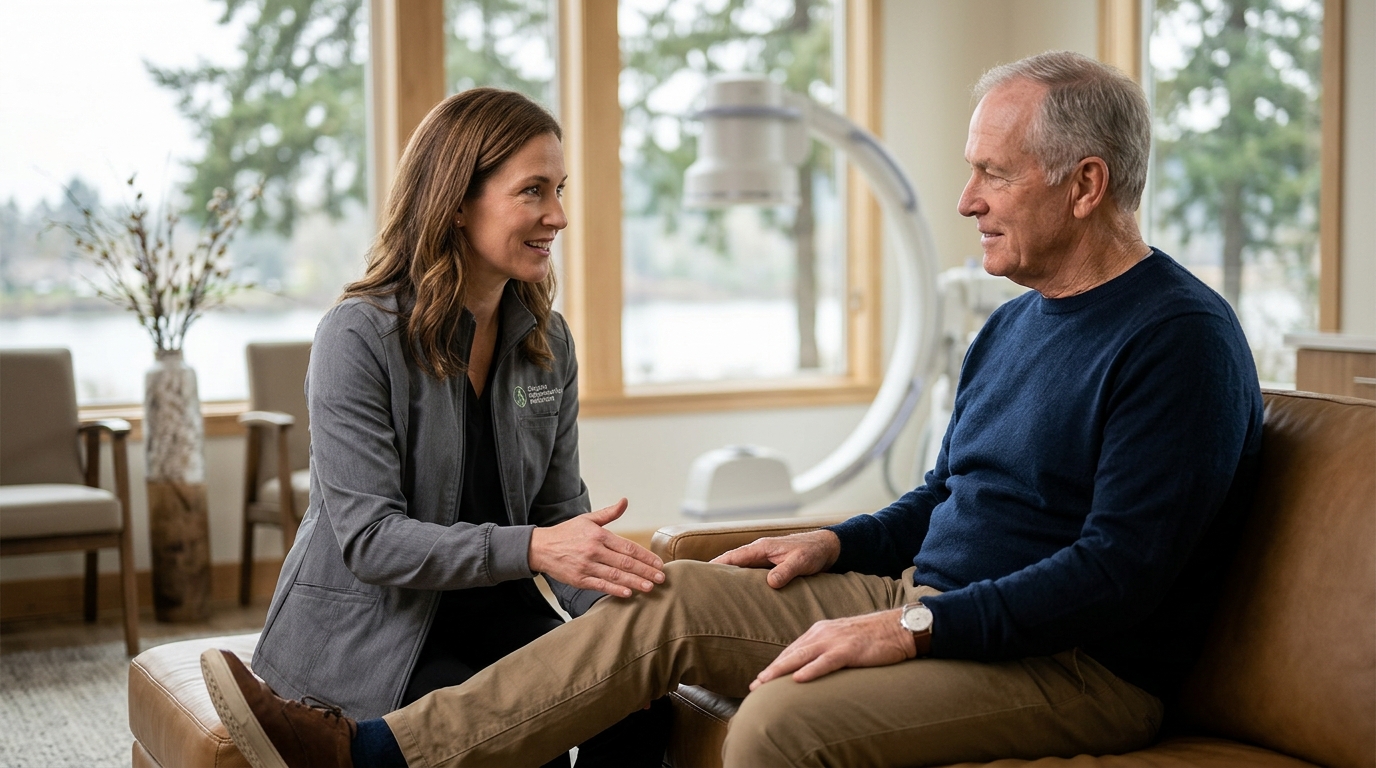
Platelet-Rich Plasma (PRP) therapy for knee pain works by concentrating the body's own healing factors to stimulate tissue repair and reduce inflammation. At Oregon Regenerative Medicine, this biocellular approach offers a non-surgical alternative for patients with osteoarthritis or chronic joint pain. The treatment leverages autologous blood to accelerate the natural healing cascade, aiming to restore function and reduce reliance on pain medications.
The Biological Mechanism of PRP
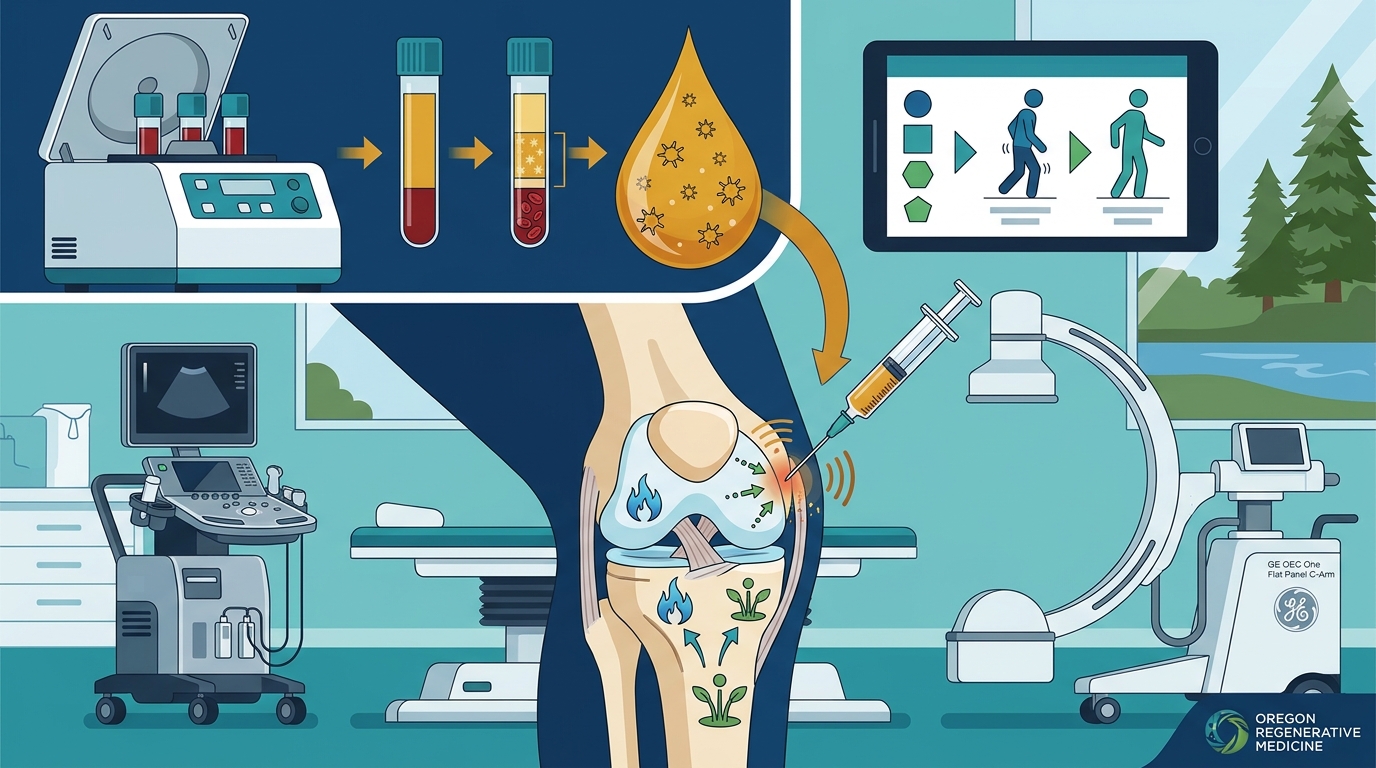
Platelet-Rich Plasma is a concentrated solution of platelets derived from a patient's own blood. When injected into a damaged joint, these platelets release a potent mix of growth factors and cytokines. These biological agents act as chemical signals that recruit stem cells and other repair cells to the site of injury. according to The Effectiveness of
The primary goal is to modulate the inflammatory response. In chronic knee pain, the joint environment is often characterized by persistent, low-grade inflammation that prevents healing. PRP helps shift this environment from a pro-inflammatory state to a pro-regenerative state. This biological shift is the core mechanism that distinguishes PRP from simple pain-blocking injections.
At Oregon Regenerative Medicine, we utilize in-house laboratory preparation to ensure high-quality PRP. This includes the preparation of PRP, PRF, and platelet lysates. By controlling the concentration and activation of these factors, clinicians can tailor the biological response to the specific needs of the patient's knee tissue.
Clinical Effectiveness and Patient Outcomes
The effectiveness of PRP for knee osteoarthritis has been a subject of significant clinical research. Studies generally indicate that PRP can provide pain relief and functional improvement comparable to corticosteroid injections, but with a longer duration of effect. While corticosteroids often provide rapid but short-term relief, PRP tends to offer more sustained benefits over several months. according to The Effectiveness of
For patients with mild to moderate osteoarthritis, PRP is often the first-line regenerative therapy. It is particularly effective for those who have failed conservative treatments like physical therapy or oral anti-inflammatories. The treatment does not replace the cartilage, but it can significantly improve the quality of the remaining tissue and reduce the pain associated with its degradation.
At Oregon Regenerative Medicine, we track patient outcomes closely. Many patients report a reduction in pain and an increase in range of motion within the first few weeks. The goal is to achieve drug-free, pain-free function without the need for joint replacement surgery. This approach is especially relevant for patients in the Portland, Oregon area who wish to avoid the long recovery times associated with major orthopedic procedures.
The Role of Guided Precision in Treatment
The success of PRP therapy is heavily dependent on the accuracy of the injection. Placing the PRP directly into the synovial fluid or the damaged cartilage surface is critical for optimal results. At Oregon Regenerative Medicine, we use four Sonosite ultrasound systems to guide these procedures. Ultrasound guidance allows the clinician to visualize the joint space in real-time, ensuring the PRP is delivered precisely where it is needed.
For more complex cases, we also utilize fluoroscopy-guided injections using our state-of-the-art GE OEC One Flat Panel C-Arm system. This advanced imaging technology provides high-resolution views of the joint, which is particularly useful for deeper structures or when anatomical variations are present. This level of precision is a key differentiator in regenerative medicine, as it maximizes the biological potential of the PRP.
Patients often ask why imaging guidance is necessary. The answer lies in the complexity of the knee joint. It contains multiple compartments, including the medial, lateral, and patellofemoral joints. A blind injection may miss the target area entirely, leading to suboptimal results. By using ultrasound or fluoroscopy, we ensure that the therapeutic agent reaches the specific site of pathology.
Who Is a Candidate for PRP?
Not every patient with knee pain is an ideal candidate for PRP therapy. The best candidates are those with mild to moderate osteoarthritis, as confirmed by imaging and physical examination. Patients with severe bone-on-bone arthritis may not respond as well to PRP alone and might require a combination of therapies or surgical intervention.
It is also important to consider the patient's overall health. At Oregon Regenerative Medicine, we practice an integrated system of Orthopedic Medicine. This means we look at the whole person, including nutritional status, endocrine function, and detoxification needs. A patient who is systemically inflamed due to poor diet or metabolic issues may not respond as well to local PRP injections. Addressing these underlying factors is a core part of our regenerative protocols.
Patients should also be aware of potential contraindications. For example, the use of certain over-the-counter pain relievers can inhibit the healing properties of PRP. We provide detailed pre-treatment instructions to ensure that patients are prepared for the procedure. This includes guidance on which medications to avoid and how to manage activity levels during the recovery period.
Recovery and Post-Treatment Care
The recovery process after PRP therapy is generally straightforward. Most patients can return to light activities within a day or two. However, it is important to avoid high-impact activities for the first few weeks to allow the biological healing process to take hold. The knee may feel slightly sore or swollen for a few days, which is a normal part of the inflammatory response triggered by the PRP.
At Oregon Regenerative Medicine, we emphasize the importance of active recovery. Patients are encouraged to engage in gentle range-of-motion exercises and low-impact activities like swimming or cycling. This helps maintain joint mobility and supports the healing process. We also provide nutritional guidance to support tissue repair, as the body requires specific nutrients to build new collagen and cartilage matrix.
Follow-up appointments are scheduled to monitor progress. If the initial PRP injection does not provide sufficient relief, additional treatments may be recommended. In some cases, we may combine PRP with other regenerative therapies, such as prolotherapy or stem cell treatments, to enhance the healing response. This multi-modal approach is a hallmark of our practice, ensuring that each patient receives a personalized treatment plan.
Key Takeaways
- PRP therapy works by concentrating platelets to release growth factors that stimulate tissue repair and reduce inflammation.
- Clinical evidence suggests PRP provides sustained pain relief and functional improvement for mild to moderate knee osteoarthritis.
- Imaging guidance, such as ultrasound or fluoroscopy, is critical for ensuring the PRP is delivered accurately to the damaged tissue.
- At Oregon Regenerative Medicine, we use in-house laboratory preparation to create high-quality PRP, PRF, and platelet lysates.
- Whole-person health, including nutrition and endocrine balance, plays a significant role in the success of regenerative treatments.
- Patients should avoid certain pain relievers before and after treatment to prevent inhibition of the healing process.
- PRP is a non-surgical alternative that can help patients achieve drug-free function without joint replacement.
Frequently Asked Questions
How long does PRP therapy for knee pain last?
Does PRP therapy hurt?
The injection itself is typically well-tolerated. We use local anesthesia to numb the area before the procedure. Some patients may experience mild soreness or swelling in the days following the injection, which is a normal part of the healing response. This discomfort is usually manageable with over-the-counter pain relief, though specific medication restrictions apply.
How many PRP injections are needed for the knee?
Many patients achieve significant relief with a single PRP injection. However, some may require a series of injections, spaced several weeks apart, to achieve optimal results. The treatment plan is customized based on the patient's response and the severity of their condition. At Oregon Regenerative Medicine, we monitor progress closely to determine the best course of action.
Can PRP therapy be combined with other treatments?
Yes, PRP is often used in combination with other regenerative therapies. For example, it can be combined with prolotherapy to stimulate a stronger wound repair cascade. In some cases, we may also use stem cell therapy or adipose tissue grafts to enhance the regenerative potential. This multi-modal approach allows us to address the knee pain from multiple angles.
Is PRP therapy covered by insurance?
PRP therapy is generally considered an experimental or elective procedure and is not typically covered by insurance. Patients are usually responsible for the cost of the treatment. At Oregon Regenerative Medicine, we provide transparent pricing and discuss all costs during the initial consultation. We also offer financing options to help make regenerative medicine accessible.
What should I avoid before PRP therapy?
It is important to avoid non-steroidal anti-inflammatory drugs (NSAIDs) like ibuprofen or naproxen for a period before and after the injection. These medications can inhibit the inflammatory response that is necessary for PRP to work. We provide specific instructions on which medications to avoid and how long to wait before resuming them.
Conclusion
PRP therapy offers a promising, non-surgical option for patients suffering from knee pain and osteoarthritis. By leveraging the body's own healing mechanisms, this biocellular approach can provide sustained pain relief and improved function. At Oregon Regenerative Medicine, we combine advanced imaging guidance with in-house laboratory preparation to deliver precise, high-quality PRP treatments. Our integrated approach to regenerative medicine ensures that each patient receives a personalized plan that addresses both the local joint pathology and their overall health. If you are looking for a drug-free alternative to joint replacement, we invite you to schedule a consultation to discuss your options.