Regenerative orthopedics has transformed the landscape of pain management, offering a viable alternative to invasive surgery for thousands of patients. According to recent clinical data, over 40,000 regenerative injections have been performed by specialized clinics in the Pacific Northwest alone, demonstrating the widespread adoption of these therapies. Despite this growth, significant misinformation persists regarding the efficacy, safety, and scientific basis of these treatments. This article addresses the most prevalent myths, providing clear, evidence-based clarifications to help patients make informed decisions about their musculoskeletal health.
Myth 1: It Is Just a Trend, Not Real Medicine
Many patients believe that regenerative medicine is a fleeting wellness trend rather than a established medical specialty. This misconception often stems from the commercialization of aesthetic applications, such as hair restoration and skin rejuvenation. However, regenerative orthopedics is a rigorous medical discipline focused on repairing damaged tissues. Regenerative Orthopedic Medicine is a powerful healing art and medical specialty. It requires decades of dedicated training in hands-on diagnosis, ultrasound imaging, and fluoroscopic guidance.
The scientific foundation is robust. Research published in journals like the Journal of Orthopaedic Research confirms the efficacy of Platelet-Rich Plasma (PRP) in treating knee osteoarthritis. Furthermore, studies on Mesenchymal Stem Cells demonstrate their potential in hip osteoarthritis treatment. These are not trends; they are evidence-based interventions supported by meta-analyses and systematic reviews.
Myth 2: PRP and Stem Cells Are the Same Thing
A common confusion lies in equating Platelet-Rich Plasma (PRP) with stem cell therapy. While both are regenerative treatments, they function differently. Platelet-Rich Plasma is a concentration of a patient's own platelets, which release growth factors to stimulate healing. It is primarily used for tendon, ligament, and joint inflammation.
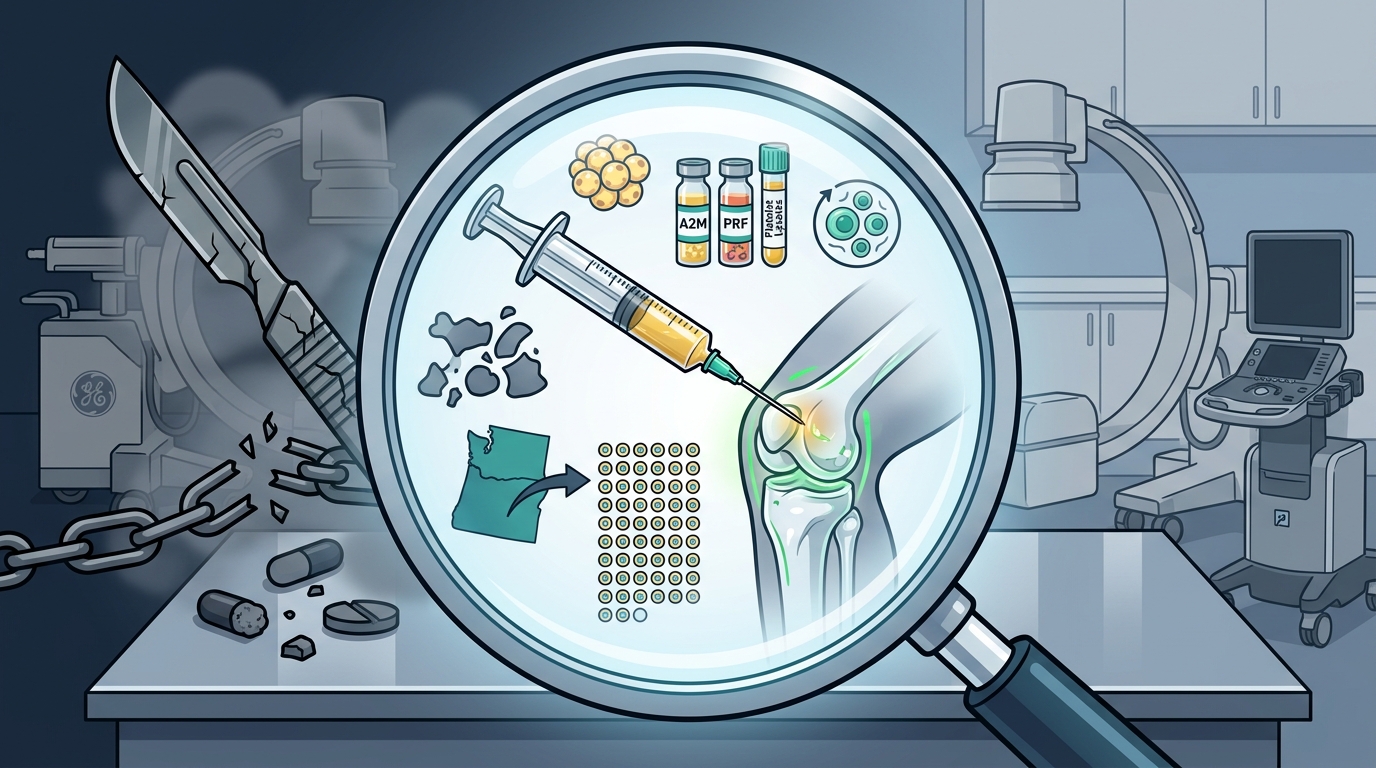
In contrast, Adipose-Derived Stem Cells are reparative cells harvested from the patient's own fat tissue. These cells have the potential to differentiate into various tissue types, offering a more robust regenerative capacity for severe degenerative conditions. At Oregon Regenerative Medicine, we distinguish clearly between these modalities. We utilize autologous Platelet Rich Plasma for acute injuries and autologous Adipose Tissue Stem Cell Grafts for more complex degenerative diseases. Understanding this distinction is critical for setting realistic expectations. For a deeper dive, explore our Ultimate Guide to PRP Therapy.
Myth 3: Ultrasound Guidance Is Unnecessary
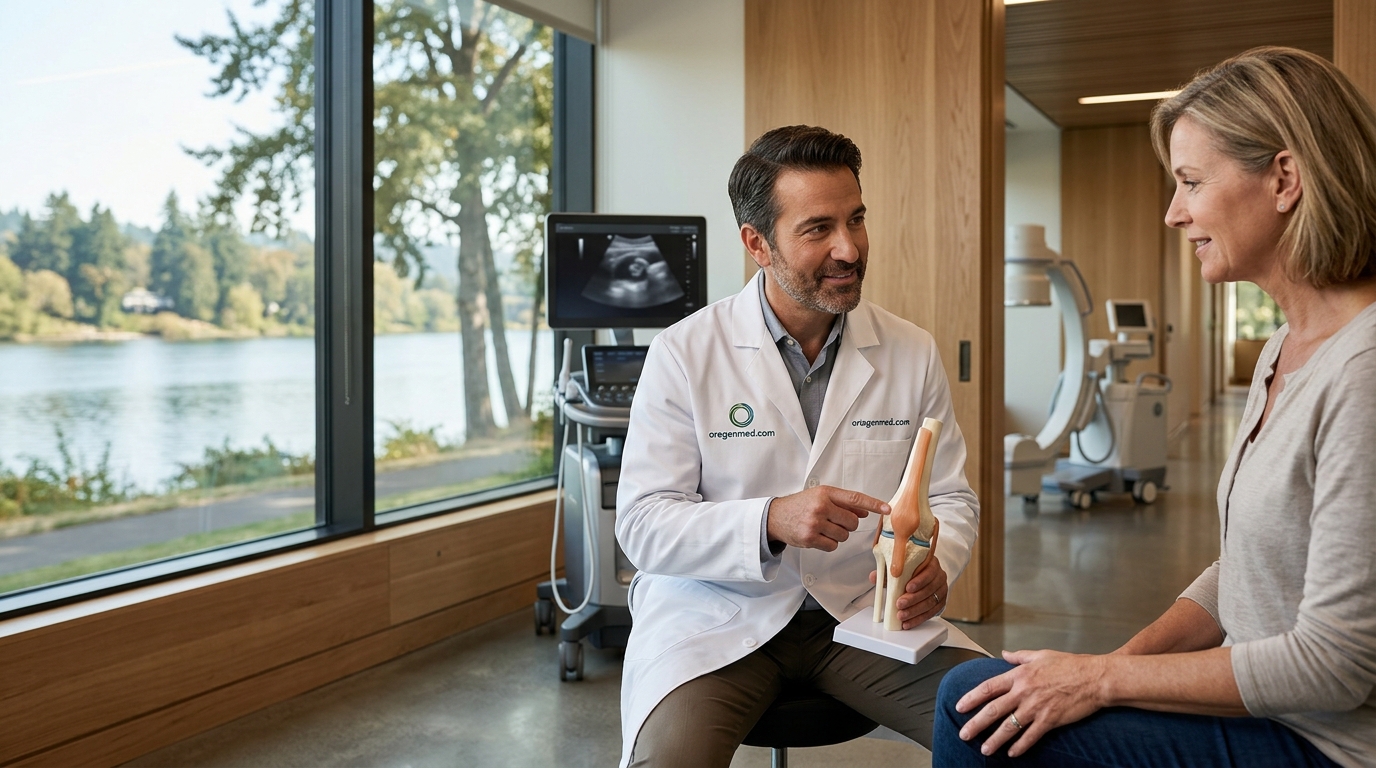
Some patients assume that injections can be administered accurately by feel alone. This is a dangerous misconception. Ultrasound imaging is equal to or better than MRI in evaluating most tendon and ligament disorders. It allows for real-time visualization of the needle tip, ensuring the medication is delivered exactly where it is needed.
Without ultrasound guidance, practitioners are essentially guessing. At Oregon Regenerative Medicine, we prioritize ultrasound expertise to ensure precision. This technology allows us to separate individual tendon fibers, avoid nerves, and target specific areas of inflammation. This precision reduces the risk of complications and maximizes the therapeutic effect. For more information on our diagnostic capabilities, visit our Ultrasound Expertise page.
Myth 4: Results Are Immediate and Guaranteed
Patients often expect instant pain relief after a single injection. This is unrealistic. Regenerative medicine works by stimulating the body's natural healing processes, which takes time. Regenerative medicine is a biological process that requires weeks to months for full tissue repair. Most patients begin to notice improvements within 4 to 6 weeks, with continued progress up to 6 months.
Furthermore, no treatment has a 100% success rate. While the vast majority of our patients achieve durable pain-free function, individual outcomes depend on factors such as the severity of the injury, overall health, and adherence to post-treatment protocols. We provide honest, evidence-based assessments during consultations. You can read more about our approach in our Articles section.
Myth 5: It Is Only for Elite Athletes
There is a perception that regenerative treatments are only for professional athletes seeking peak performance. This is false. These therapies are designed for anyone suffering from chronic pain, osteoarthritis, or sports injuries. Our patient base includes individuals from all walks of life, from active seniors to office workers with repetitive strain injuries.
For example, our treatments for elbow pain are highly effective for both tennis players and office workers with tendonitis. The goal is to restore function and quality of life, regardless of athletic status. We serve thousands of patients in the Oregon, Washington, and Portland region, empowering them to live at their highest potential. Learn more about our Team of specialists.
Myth 6: It Is a One-Size-Fits-All Solution
Another myth is that one treatment fits all conditions. Regenerative medicine is highly customizable. We tailor our approach based on the specific diagnosis, using a combination of therapies if necessary. For instance, we may combine PRP with Prolotherapy for ligament laxity or use stem cells for severe joint degeneration.
We also consider the patient's overall health, including hormonal balance and nutritional status. Our Functional Medicine approach ensures that we address the root causes of pain, not just the symptoms. This holistic strategy leads to more sustainable outcomes. For more on our comprehensive care model, check out our Functional Medicine page.
Comparison of Regenerative Modalities
Understanding the differences between treatment options is crucial. The table below summarizes the key characteristics of our primary regenerative therapies.
| Therapy | Source | Primary Use | Key Benefit |
|---|---|---|---|
| PRP | Patient's Blood | Tendon/Ligament Repair | High concentration of growth factors |
| Stem Cells | Patient's Adipose Tissue | Joint Regeneration | Cellular repair and differentiation |
| Prolotherapy | Dextrose Solution | Ligament Strengthening | Stimulates natural inflammation response |
Key Takeaways
- Regenerative orthopedics is an evidence-based specialty, not a trend, supported by decades of clinical experience.
- PRP and stem cells are distinct therapies with different mechanisms and applications.
- Ultrasound guidance is essential for precision and safety in injection therapies.
- Results take time, typically 4 to 6 weeks for initial improvement, and are not guaranteed for every patient.
- These treatments are suitable for a wide range of patients, not just elite athletes.
- Treatment plans are customized based on individual diagnosis and overall health.
- Oregon Regenerative Medicine has performed over 40,000 regenerative injections, demonstrating extensive expertise.
Frequently Asked Questions
Is regenerative medicine covered by insurance?
Most insurance plans do not currently cover regenerative orthopedic treatments, as they are often considered elective or experimental. However, we provide detailed documentation to assist with potential reimbursement claims. Contact our reception team for more information.
How long does a PRP treatment take?
The entire process, including blood draw, centrifugation, and injection, typically takes about 45 to 60 minutes. The procedure is performed in-office with minimal downtime.
Are stem cell treatments painful?
Stem cell harvesting involves a minor liposuction procedure, which is performed under local anesthesia. The injection site may be sore for a few days, but most patients manage discomfort with over-the-counter pain relievers.
Can I combine PRP with other therapies?
Yes, we often combine PRP with Prolotherapy or other modalities to enhance outcomes. This customized approach is tailored to your specific condition. Learn more about our Prolotherapy services.
What is the success rate of regenerative injections?
While no treatment has a 100% success rate, the vast majority of our patients achieve durable pain-free function without surgery. Our extensive experience with over 40,000 injections supports this high satisfaction rate.
Do you treat osteoarthritis?
Yes, we specialize in treating osteoarthritis with stem cell therapy and PRP. Our approach focuses on slowing degeneration and restoring function. Read our guide on treating osteoarthritis.
How do I schedule a consultation?
You can schedule a consultation by calling our office at (503) 636-2734 or by using our online contact form. We are located inside the historic Foundry Building at Oswego Pointe.
Take the Next Step in Your Healing Journey
If you are suffering from chronic pain or joint degeneration, do not let myths prevent you from exploring effective treatment options. Our team of experienced doctors is dedicated to providing evidence-based, personalized care. We invite you to schedule a consultation to discuss your specific needs. Visit our Contact Page to book your appointment today and take the first step toward a pain-free life.