

There is no single stem cell treatment that works best for every knee condition. The optimal choice depends on the specific tissue involved, such as cartilage, meniscus, or bone, and the severity of the degeneration. At Oregon Regenerative Medicine, we use diagnostic ultrasound to identify the exact injury before selecting a therapy. This precision ensures that the biological agent targets the correct tissue to support natural healing.
Understanding the Tissue Target
Stem cell therapy is not a one-size-fits-all solution. The knee contains several distinct tissues, each with different healing capacities. Cartilage is avascular, meaning it lacks a direct blood supply, which makes it difficult to heal on its own. The meniscus, a C-shaped cushion of fibrocartilage, has a limited blood supply only at its outer edge. Bone, however, is highly vascular and heals more readily. Understanding which tissue is damaged is the first step in choosing the right treatment.
At Oregon Regenerative Medicine, we utilize in-house laboratory preparation to create specific biological agents. For example, we prepare Platelet-Rich Plasma (PRP) and Adipose-Derived Stem Cells (ADSCs) from the patient's own body. This autologous approach minimizes the risk of rejection and ensures the treatment is tailored to the individual's biology. The choice between PRP and stem cells often depends on whether the goal is to reduce inflammation or to regenerate structural tissue.
Cartilage Defects and Osteoarthritis
For patients with focal cartilage defects or early-stage osteoarthritis, the goal is to restore the smooth surface of the joint. Cartilage is a specialized connective tissue that cushions the ends of bones. When this tissue wears down, it leads to pain and stiffness. In these cases, mesenchymal stem cells derived from adipose tissue may be considered. These cells have the potential to differentiate into chondrocytes, the cells that produce cartilage.
However, for advanced osteoarthritis where the cartilage is completely worn away, stem cells alone may not be sufficient. In such cases, a combination of therapies might be recommended. We often use ultrasound guidance to ensure the injection reaches the joint space or the specific defect. This precision is critical because the biological agents need to be in direct contact with the damaged tissue to be effective. The evidence suggests that early intervention yields better outcomes than waiting for the condition to progress.
Meniscus Tears and Ligament Injuries
Meniscus tears are a common cause of knee pain, especially in athletes and older adults. The meniscus is a fibrocartilaginous structure that distributes weight and absorbs shock. Because the inner part of the meniscus has poor blood supply, tears in this area often do not heal on their own. Platelet-Rich Plasma (PRP) is frequently used for meniscus tears because it contains growth factors that can stimulate healing in the vascularized outer zone and potentially support repair in the inner zone.
Ligament injuries, such as those to the anterior cruciate ligament (ACL), present a different challenge. Ligaments are dense connective tissues that stabilize the joint. While stem cells can be used to support ligament healing, the mechanical stability of the joint is also crucial. In some cases, a combination of PRP and prolotherapy may be recommended to enhance the healing response. Prolotherapy involves injecting a dextrose solution to stimulate a controlled inflammatory response, which can help strengthen ligaments and tendons.
The Role of Diagnostic Ultrasound
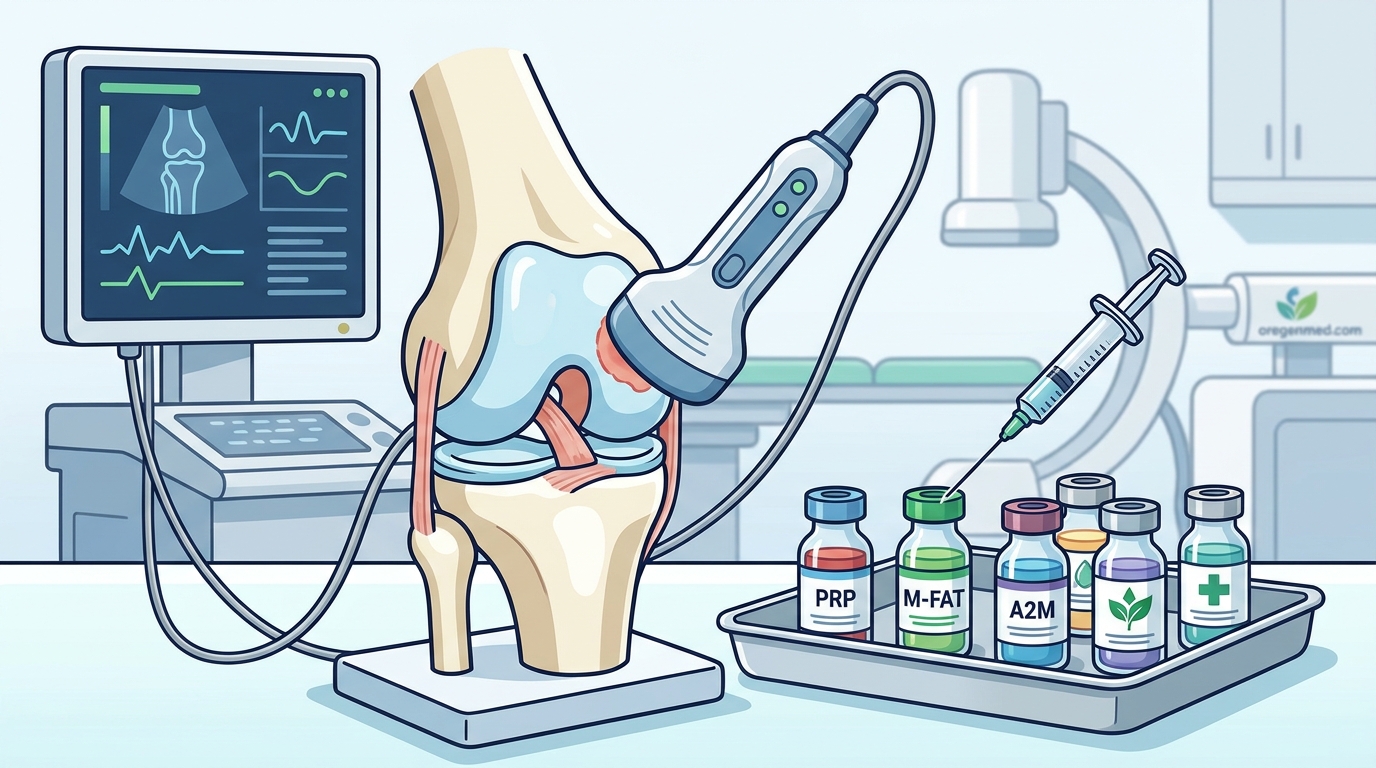
Accurate diagnosis is essential for selecting the right treatment. At Oregon Regenerative Medicine, all physicians are highly skilled in diagnostic and interventional musculoskeletal ultrasound. Ultrasound is a real-time imaging technique that allows us to see the soft tissues of the knee in detail. It is often more accurate than MRI for evaluating tendon and ligament disorders. By using ultrasound, we can identify the specific structure that is injured and guide the needle to the exact location of the damage.
This level of precision is not available in all clinics. Many practices rely on anatomical landmarks or MRI images, which can lead to less accurate injections. At Oregon Regenerative Medicine, we use four Sonosite ultrasound systems to ensure that every procedure is performed with the highest level of accuracy. This technology allows us to separate individual tendon and ligament fibers and place the biological agent precisely where it is needed. The result is a more effective treatment with fewer side effects.
Integrative Care for Optimal Healing
Healing is a complex process that involves more than just the local injury. The body's overall health plays a significant role in how well it responds to regenerative treatments. At Oregon Regenerative Medicine, we take a whole-person approach to care. This includes addressing underlying metabolic and hormonal factors that may interfere with healing. For example, patients with insulin resistance or thyroid disorders may have slower healing times. By managing these conditions, we can create a more favorable environment for tissue repair.
Our team includes naturopathic physicians who specialize in endocrinology and functional medicine. They work closely with the regenerative medicine team to develop a comprehensive treatment plan. This integrative approach ensures that patients receive not only the right injection but also the support they need to optimize their recovery. Nutrition, exercise, and lifestyle modifications are all part of the plan. This holistic strategy is a key differentiator for Oregon Regenerative Medicine in the Portland, Oregon area.
Key Takeaways
- There is no single best stem cell treatment for all knee conditions; the choice depends on the specific tissue involved.
- Cartilage defects may benefit from adipose-derived stem cells, while meniscus tears often respond well to PRP.
- Diagnostic ultrasound is critical for accurate diagnosis and precise injection placement.
- Autologous treatments, such as PRP and stem cells from the patient's own body, minimize the risk of rejection.
- Whole-person care, including metabolic and hormonal optimization, can improve healing outcomes.
- Early intervention generally leads to better results than waiting for the condition to progress.
- Oregon Regenerative Medicine uses advanced ultrasound technology and in-house lab preparation for personalized care.
Frequently Asked Questions
What is the difference between PRP and stem cell therapy for the knee?
PRP is a concentrate of the patient's own platelets, which release growth factors to reduce inflammation and stimulate healing. Stem cell therapy involves injecting mesenchymal stem cells, often from adipose tissue, which have the potential to differentiate into various cell types, including cartilage cells. PRP is often used for tendons and ligaments, while stem cells may be considered for cartilage defects.
How many treatments are usually needed for knee pain?
The number of treatments varies depending on the condition and the patient's response. Some patients may see improvement after a single injection, while others may require a series of treatments spaced several weeks apart. At Oregon Regenerative Medicine, we develop a personalized plan based on the specific diagnosis and the patient's goals.
Is stem cell therapy for the knee safe?
Autologous stem cell therapy, which uses the patient's own cells, is generally considered safe. Because the cells come from the patient's own body, the risk of immune rejection is minimal. However, as with any medical procedure, there are potential risks, such as infection or bleeding. It is important to choose a qualified provider who uses sterile techniques and advanced imaging guidance.
Can stem cells reverse osteoarthritis?
Stem cells may help slow the progression of osteoarthritis and improve function, but they are not a cure. The goal of regenerative medicine is to support the body's natural healing processes and restore function. For advanced osteoarthritis, a combination of therapies may be recommended. It is important to have realistic expectations and to work with a provider who can set clear goals for treatment.
How long does it take to see results from stem cell therapy?
Results can vary. Some patients may experience pain relief within a few days, while others may take several weeks to see improvement. The healing process is gradual, and it is important to follow the post-treatment care instructions provided by your physician. At Oregon Regenerative Medicine, we monitor progress closely and adjust the treatment plan as needed.
Do I need a referral to see a regenerative medicine specialist?
A referral is not always required, but it can be helpful. If you have been diagnosed with a knee condition by your primary care physician or orthopedic surgeon, bringing those records to your appointment can provide valuable context. At Oregon Regenerative Medicine, we work collaboratively with other healthcare providers to ensure that you receive the best possible care.
Next Steps for Your Knee Health
Choosing the right treatment for your knee condition requires a detailed evaluation and a personalized plan. At Oregon Regenerative Medicine, we combine advanced diagnostic tools with a whole-person approach to care. Our team of specialists is dedicated to helping you achieve your goals and return to the activities you love. If you are experiencing knee pain or have been diagnosed with a condition such as osteoarthritis or a meniscus tear, we encourage you to schedule a consultation. To learn more about our services or to book an appointment, please today.