Regenerative medicine has fundamentally shifted the standard of care for chronic pain and orthopedic injuries across the Pacific Northwest. According to recent clinical data, over 40,000 regenerative injections have been performed by leading local providers to help patients avoid surgery. This surge in demand reflects a broader national trend where patients seek durable, non-surgical solutions for degenerative conditions. The approach focuses on harnessing the body's own biological resources to repair damaged tissues rather than merely masking symptoms with pharmaceuticals.
What Is Regenerative Medicine?
Regenerative medicine is a branch of translational research in tissue engineering and molecular biology which focuses on replacing or regenerating human cells, tissues or organs to restore or establish normal function. In the context of orthopedics, it involves stimulating the body's natural healing processes to repair damaged joints, tendons, and ligaments. This field has evolved significantly over the last three decades, moving from experimental protocols to evidence-based clinical practices.
At centers like Oregon Regenerative Medicine, the philosophy centers on empowering patients to create healthy, active longevity. By utilizing autologous materials, the risk of rejection is eliminated, and the biological environment is optimized for tissue repair. The goal is not just pain relief, but the restoration of structural integrity and function.
Core Therapies: PRP, Prolo, and Stem Cells
Understanding the distinct mechanisms of each therapy is crucial for determining the right treatment path. Each modality targets different aspects of the healing cascade.
Platelet-Rich Plasma (PRP)
Platelet-Rich Plasma is a concentration of platelets from your own blood. Platelets are known for their role in clotting, but they also contain numerous growth factors that stimulate tissue repair. When injected into an injured area, PRP releases these growth factors, which attract stem cells and promote the formation of new blood vessels and tissue.
Research indicates that PRP is highly effective for soft tissue injuries. A meta-analysis of randomized controlled trials published in medical literature confirms the efficacy of platelet-rich plasma in the treatment of knee osteoarthritis. This therapy is particularly popular for tennis elbow, golfer's elbow, and early-stage joint degeneration.
Prolotherapy
Prolotherapy is a nontraditional approach to knee osteoarthritis and ligament laxity. It involves injecting an irritant solution, typically dextrose, into the affected area. This irritation triggers an inflammatory healing response, causing the body to send nutrients and repair cells to the site. Over time, this strengthens the ligaments and tendons.
Long-term studies on dextrose prolotherapy show significant improvements in anterior cruciate ligament laxity. It is a cost-effective option for patients with chronic joint instability who wish to avoid surgical intervention.
Biocellular Stem Cell Therapy
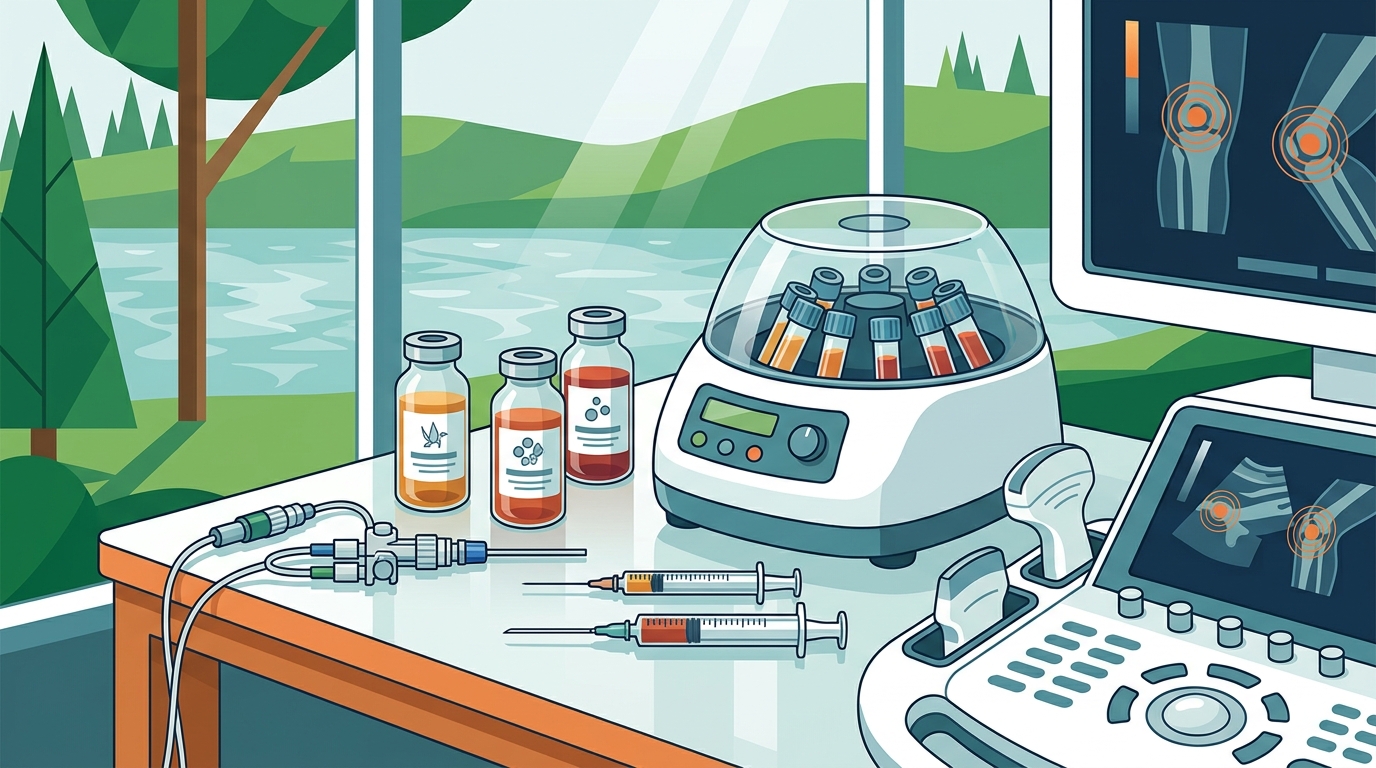
Biocellular stem cell therapy utilizes adult adipose tissue-derived stem cells. These cells are harvested from the patient's own fat tissue and processed to isolate the reparative components. Adipose tissue is the most abundant source of reparative cells in the human body.
Recent studies on the regeneration of articular cartilage by adipose tissue-derived mesenchymal stem cells highlight the potential for deep tissue repair. This therapy is often reserved for more severe cases of osteoarthritis or complex joint injuries where PRP alone may not provide sufficient biological stimulus.
The Role of Ultrasound Guidance
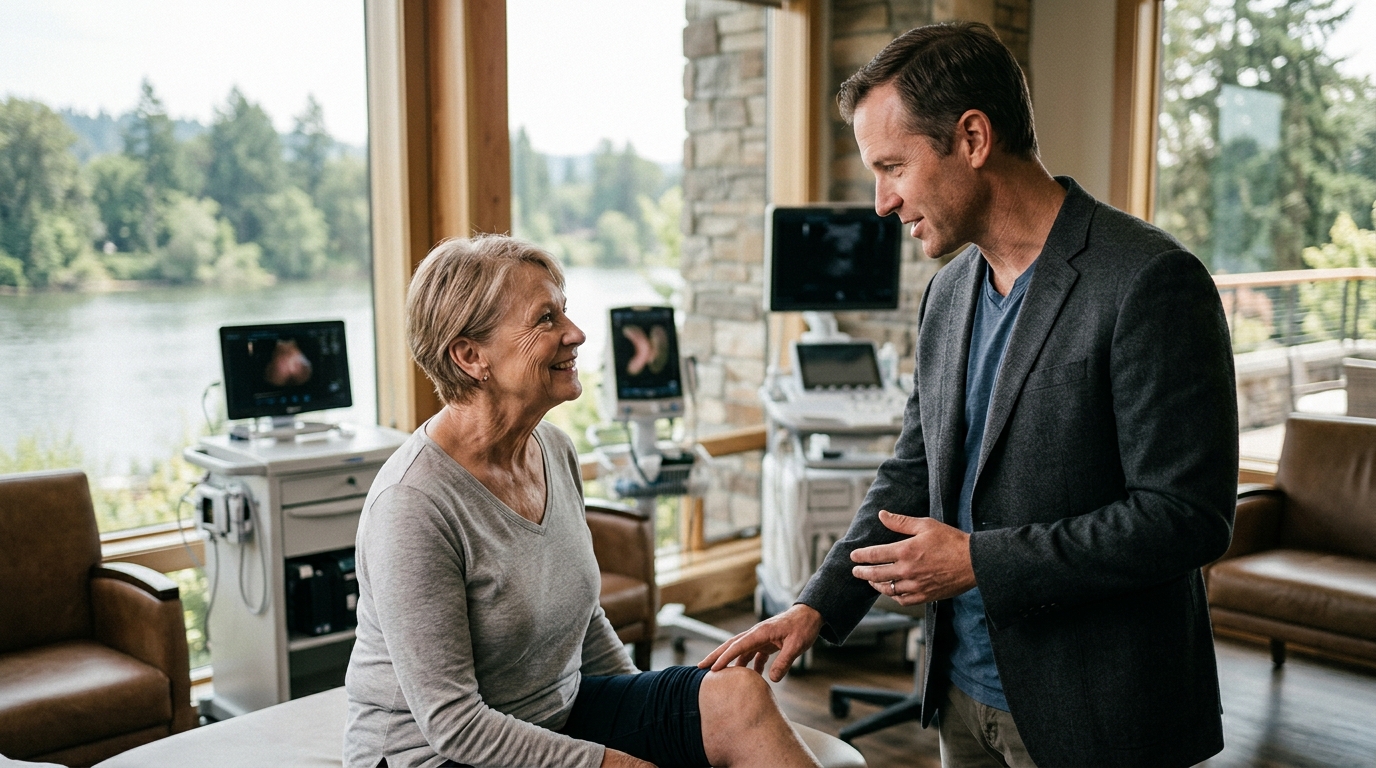
Precision is the cornerstone of successful regenerative medicine. Ultrasound imaging is equal to or better than MRI in evaluating most tendon and ligament disorders in the arms and legs. This technology allows physicians to visualize the anatomy in real-time during the procedure.
Without imaging, injections are often guided by palpation, which can lead to inaccurate placement. With ultrasound guidance, physicians can separate out individual tendon, ligament, and fascia fibers. This ensures the therapeutic agent is delivered exactly where it is needed, maximizing efficacy and minimizing discomfort.
At Oregon Regenerative Medicine, all physicians are highly skilled in ultrasound imaging for both diagnosis and image-guided procedures. This expertise allows for immediate diagnosis and treatment in a single visit, saving patients weeks of waiting for external imaging results.
Conditions Treated by ORM
Regenerative therapies address a wide spectrum of musculoskeletal conditions. The most common presentations include:
- Osteoarthritis: Degeneration of joint cartilage and underlying bone, particularly in the knees, hips, and shoulders.
- Tendon Injuries: Chronic tendinopathies such as Achilles tendinitis and rotator cuff tears.
- Ligament Injuries: Sprains and laxity in the ankles, knees, and wrists.
- Spinal Issues: Back and neck pain resulting from degenerative disc disease or facet joint arthritis.
Many patients arrive at the clinic after being told that surgery is their only option. By utilizing a combination of PRP, prolotherapy, and stem cells, these patients often achieve durable pain-free function without invasive surgery.
Comparing Treatment Modalities
Selecting the right therapy depends on the severity of the injury and the specific tissue involved. The following table summarizes the key differences between the primary modalities offered.
| Therapy | Source | Best For | Recovery Time |
|---|---|---|---|
| PRP | Patient's Blood | Soft tissue injuries, early arthritis | 1-2 weeks |
| Prolotherapy | Dextrose Solution | Ligament laxity, joint instability | 1-3 weeks |
| Stem Cell | Adipose Tissue | Severe arthritis, deep tissue repair | 2-4 weeks |
Key Takeaways
- Regenerative medicine offers a non-surgical alternative for chronic pain and joint degeneration.
- PRP utilizes growth factors from blood to stimulate soft tissue healing.
- Prolotherapy strengthens ligaments by triggering a controlled inflammatory response.
- Biocellular stem cell therapy uses adipose-derived cells for deep joint regeneration.
- Ultrasound guidance ensures precise needle placement and accurate diagnosis.
- Oregon Regenerative Medicine has over 30 years of experience in the Pacific Northwest.
- More than 40,000 regenerative injections have been performed by the clinic's physicians.
Frequently Asked Questions
Is regenerative medicine covered by insurance?
Most insurance plans do not currently cover regenerative therapies like PRP or stem cell injections as they are often considered elective or experimental. However, some policies may cover the diagnostic imaging or initial consultation.
How long does PRP therapy take to work?
Patients typically begin to notice improvements within 4 to 6 weeks. The full effects of the treatment can continue to develop over 3 to 6 months as the tissue heals.
What is the difference between PRP and stem cell therapy?
PRP uses platelets from your blood to release growth factors. Stem cell therapy uses adult stem cells harvested from your fat tissue to provide a more potent regenerative signal for severe damage.
Are the procedures painful?
The injections can cause some discomfort, but local anesthesia is used to minimize pain. The post-procedure soreness is part of the healing process and usually subsides within a few days.
Can I drive after the procedure?
If you receive local anesthesia only, you can usually drive yourself home. If sedation is used, you will need a ride. Your physician will provide specific instructions based on your treatment plan.
How many treatments are needed?
Most patients require 1 to 3 treatments spaced several weeks apart. The exact number depends on the severity of the condition and the body's response to the therapy.
What is the success rate of these treatments?
While no treatment has a 100% success rate, the vast majority of patients at leading clinics achieve durable pain-free function. Success rates vary by condition, with high efficacy reported for knee osteoarthritis and tendon injuries.
Schedule Your Consultation
If you are suffering from chronic pain or joint degeneration, regenerative medicine may offer the solution you have been seeking. Oregon Regenerative Medicine provides evidence-based, ultrasound-guided treatments in Portland, Oregon. Contact the clinic today to discuss your options and take the first step toward a pain-free life.
Click here to contact Oregon Regenerative Medicine to schedule your appointment.