
Common Myths and FAQs About Regenerative Medicine for Osteoarthritis
Regenerative medicine has emerged as a transformative approach for patients seeking relief from chronic joint pain. According to recent clinical data, over 40,000 regenerative injections have been performed by specialized clinics in the Pacific Northwest alone, highlighting a significant shift away from traditional surgical interventions. This surge in demand reflects a growing patient desire for non-surgical solutions that address the root cause of degeneration rather than merely masking symptoms. Understanding the science behind these treatments is essential for making informed healthcare decisions.
Myth vs. Reality: Separating Fact from Fiction
Regenerative medicine is often surrounded by misinformation. Many patients hesitate to pursue these treatments due to exaggerated claims or fear of the unknown. It is crucial to distinguish between marketing hype and clinical reality. At Oregon Regenerative Medicine, we prioritize evidence-based practices to ensure patient safety and efficacy.
Myth 1: Regenerative medicine is just a fancy term for stem cells. This is incorrect. Regenerative medicine is a broad field that includes Platelet-Rich Plasma (PRP), Prolotherapy, and various stem cell therapies. Each modality works differently to stimulate the body's natural healing processes. PRP, for instance, utilizes concentrated platelets to release growth factors, while Prolotherapy uses irritant solutions to trigger inflammation and repair.
Myth 2: These treatments are unproven and experimental. While research is ongoing, many regenerative therapies are supported by substantial clinical evidence. For example, a meta-analysis of randomized controlled trials has shown the efficacy of Platelet-Rich Plasma in treating knee osteoarthritis. Furthermore, ultrasound-guided injections ensure precision, reducing the risk of complications and improving outcomes. Our doctors utilize advanced imaging techniques to guarantee accurate delivery of therapeutic agents.
Myth 3: You will need surgery eventually anyway. Many patients who undergo regenerative treatments avoid joint replacement surgery for years, if not indefinitely. By addressing early-stage degeneration and inflammation, these therapies can restore function and delay or eliminate the need for invasive procedures. Our clinic has successfully treated thousands of patients with osteoarthritic hips, knees, and shoulders.
Understanding Platelet-Rich Plasma (PRP)
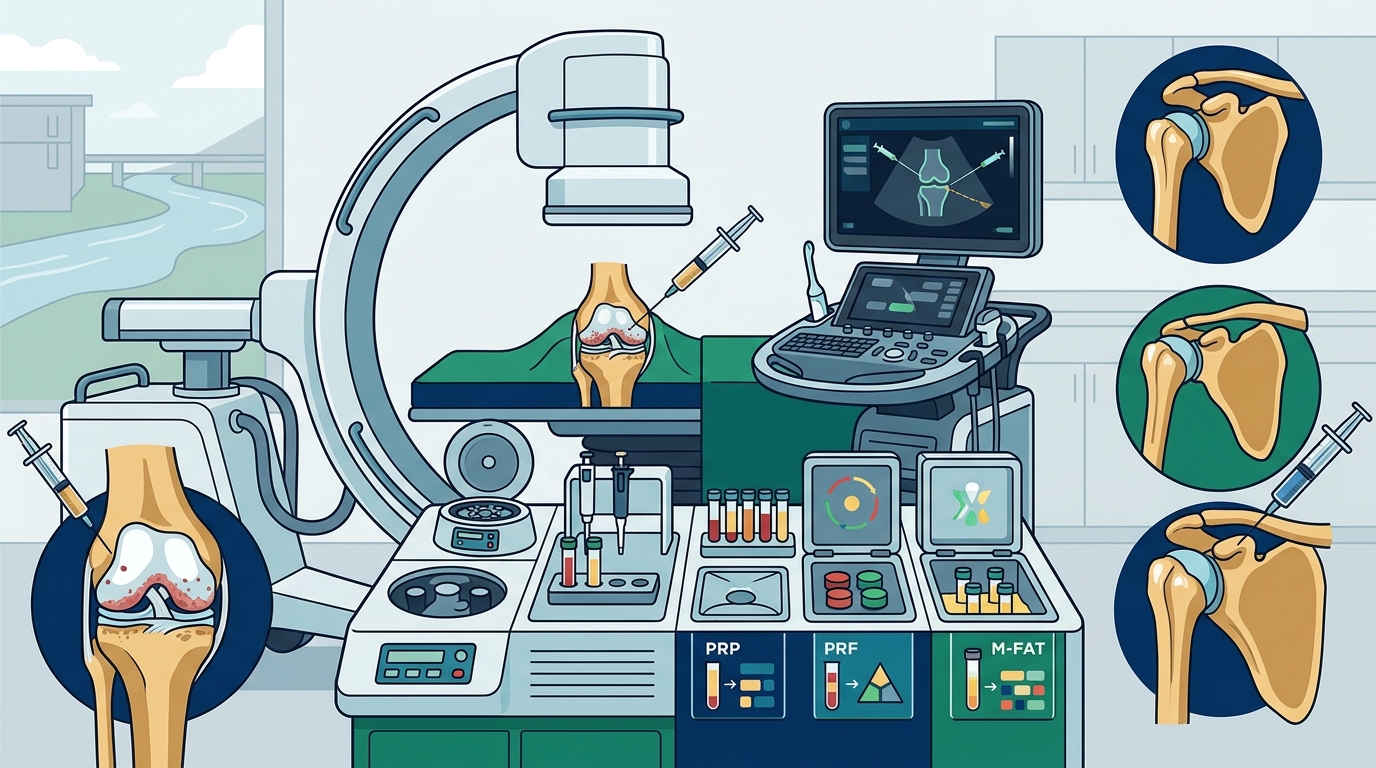
Platelet-Rich Plasma is a concentration of a patient's own platelets, which are rich in growth factors. These growth factors promote healing and tissue regeneration. PRP is commonly used for tendon injuries, ligament sprains, and osteoarthritis. The process involves drawing blood, spinning it in a centrifuge to separate the platelets, and injecting the concentrated plasma into the affected area.
One of the biggest advantages of PRP is its autologous nature, meaning it is derived from the patient's own body. This minimizes the risk of allergic reactions or immune rejection. Additionally, PRP can be used for aesthetic purposes, such as skin rejuvenation and hair restoration, demonstrating its versatility. For more details on our aesthetic applications, visit our Aesthetic Arts page.
Research indicates that PRP can significantly reduce pain and improve function in patients with knee osteoarthritis. A systematic review of intra-articular PRP injections highlighted its potential as a viable alternative to corticosteroids, which only provide temporary relief. Our team at Oregon Regenerative Medicine tailors PRP protocols to each patient's specific condition and healing capacity.
The Truth About Stem Cell Therapies
Stem cell therapy is often misunderstood. Adipose-derived stem cells are harvested from the patient's own fat tissue and processed to isolate reparative cells. These cells have the potential to differentiate into various tissue types, including cartilage and bone. This makes them particularly valuable for treating degenerative joint diseases.
Clarification: Stem cells are not a cure-all. While they offer significant regenerative potential, they are part of a comprehensive treatment plan. Success depends on factors such as the severity of the condition, the patient's overall health, and adherence to post-treatment rehabilitation. Our doctors at Oregon Regenerative Medicine evaluate each case individually to determine if stem cell therapy is appropriate.
Another common concern is the safety of stem cell injections. When performed by qualified professionals using autologous cells, the risk is minimal. We adhere to strict safety protocols and utilize ultrasound guidance to ensure precise placement. For more information on the risks and benefits, read our article on Understanding the Risks of Stem Cells.
Prolotherapy is another effective non-surgical option. It involves injecting a solution, typically dextrose, into damaged ligaments and tendons to stimulate healing. This method has been used for decades and is supported by long-term studies on its efficacy for conditions like anterior cruciate ligament laxity. Learn more about Prolotherapy and how it can benefit you.
Treatment Comparison: PRP vs. Prolotherapy vs. Stem Cells
Choosing the right treatment can be challenging. Below is a comparison of the three primary regenerative therapies we offer at Oregon Regenerative Medicine.
| Treatment | Source | Best For | Key Benefit |
|---|---|---|---|
| Platelet-Rich Plasma (PRP) | Patient's Blood | Tendon injuries, early osteoarthritis | High concentration of growth factors |
| Prolotherapy | Dextrose Solution | Ligament laxity, chronic pain | Strengthens connective tissue |
| Adipose Stem Cells | Patient's Fat Tissue | Advanced degeneration, cartilage repair | Regenerative potential for tissue repair |
Each treatment has unique indications. For instance, PRP is often preferred for soft tissue injuries, while stem cells may be more suitable for significant cartilage loss. Our doctors use ultrasound expertise to diagnose the underlying issue and recommend the most effective therapy.
Key Takeaways
- Regenerative medicine offers non-surgical alternatives for osteoarthritis, with over 40,000 injections performed in the Pacific Northwest region.
- Platelet-Rich Plasma (PRP) utilizes growth factors from the patient's blood to promote healing in tendons and joints.
- Adipose-derived stem cells are harvested from fat tissue and offer significant regenerative potential for degenerative conditions.
- Prolotherapy strengthens ligaments and tendons using dextrose injections, providing long-term pain relief.
- Ultrasound guidance ensures precise injection placement, improving safety and efficacy for all regenerative therapies.
- Patients at Oregon Regenerative Medicine in Portland, Oregon, have access to evidence-based treatments tailored to their specific needs.
- Consulting with a specialist is crucial to determine the most appropriate treatment plan for your condition.
Frequently Asked Questions
Is regenerative medicine covered by insurance?
Most insurance plans do not cover regenerative medicine treatments as they are often considered elective or experimental. However, some policies may cover diagnostic imaging or related procedures. We recommend checking with your provider for specific details.
How long does it take to see results from PRP?
Results vary by individual, but many patients notice improvement within 4 to 6 weeks. Full healing can take up to 3 months. Our doctors at Oregon Regenerative Medicine monitor progress through follow-up visits.
Are stem cell injections painful?
The procedure involves a needle injection, which may cause some discomfort. However, we use local anesthesia and ultrasound guidance to minimize pain. Most patients report mild soreness for a few days post-treatment.
Can PRP be used for hair loss?
Yes, PRP is effective for hair restoration. It stimulates hair follicles and promotes growth. Visit our Hair Restoration page for more information.
What is the difference between PRP and Prolotherapy?
PRP uses concentrated platelets to release growth factors, while Prolotherapy uses an irritant solution to trigger inflammation and healing. Both are effective for different types of injuries and conditions.
Do you offer ketamine therapy?
Yes, we offer Ketamine-Assisted Somatic Mindfulness (KASM) for pain management and mental health. Learn more about KASM on our website.
How do I schedule a consultation?
You can schedule a consultation by calling our office at (503) 636-2734 or by visiting our Contact page online. Our team is ready to answer your questions and help you begin your healing journey.
Schedule Your Consultation
If you are suffering from osteoarthritis or chronic joint pain, regenerative medicine may offer the relief you have been seeking. At Oregon Regenerative Medicine, we are dedicated to empowering patients to create healthy, active longevity. Our experienced doctors provide evidence-based treatments in a patient-centered environment.
Do not let pain dictate your life. Take the first step towards recovery by scheduling a consultation with our specialists. Contact us today to learn more about how PRP, Prolotherapy, and stem cell therapies can help you regain your mobility and quality of life.