
For decades, the standard medical protocol for severe joint pain, ligament tears, and degenerative arthritis in the Pacific Northwest was straightforward and often invasive. Patients presenting with chronic knee, hip, or shoulder issues were routinely directed toward surgical intervention or lifelong pharmaceutical management. However, the landscape of orthopedic medicine has shifted dramatically in recent years. Today, a significant majority of patients in the Portland-Willamette Valley region are seeking alternatives that prioritize tissue regeneration over mechanical replacement. This evolution reflects a broader medical consensus that the body possesses an innate, powerful capacity for repair when properly stimulated. (PRP amp Biocellular Joint)
According to recent clinical observations, the demand for regenerative orthopedics has grown exponentially as patients realize that surgery is no longer the only path to mobility. This shift is not merely a trend but a fundamental change in how musculoskeletal injuries are diagnosed and treated. The integration of advanced imaging and biological therapies has created a new standard of care that is both precise and restorative.
Historical Context of Orthopedic Treatment
The traditional approach to orthopedic care relied heavily on the "wear and tear" model of joint degeneration. In this framework, damaged cartilage was viewed as irreparable tissue that required mechanical removal or replacement. For patients in Oregon and Washington, this often meant a referral to a surgeon for total joint arthroplasty or arthroscopic debridement. While these procedures remain vital for end-stage disease, they were historically over-prescribed for conditions that could be managed conservatively.
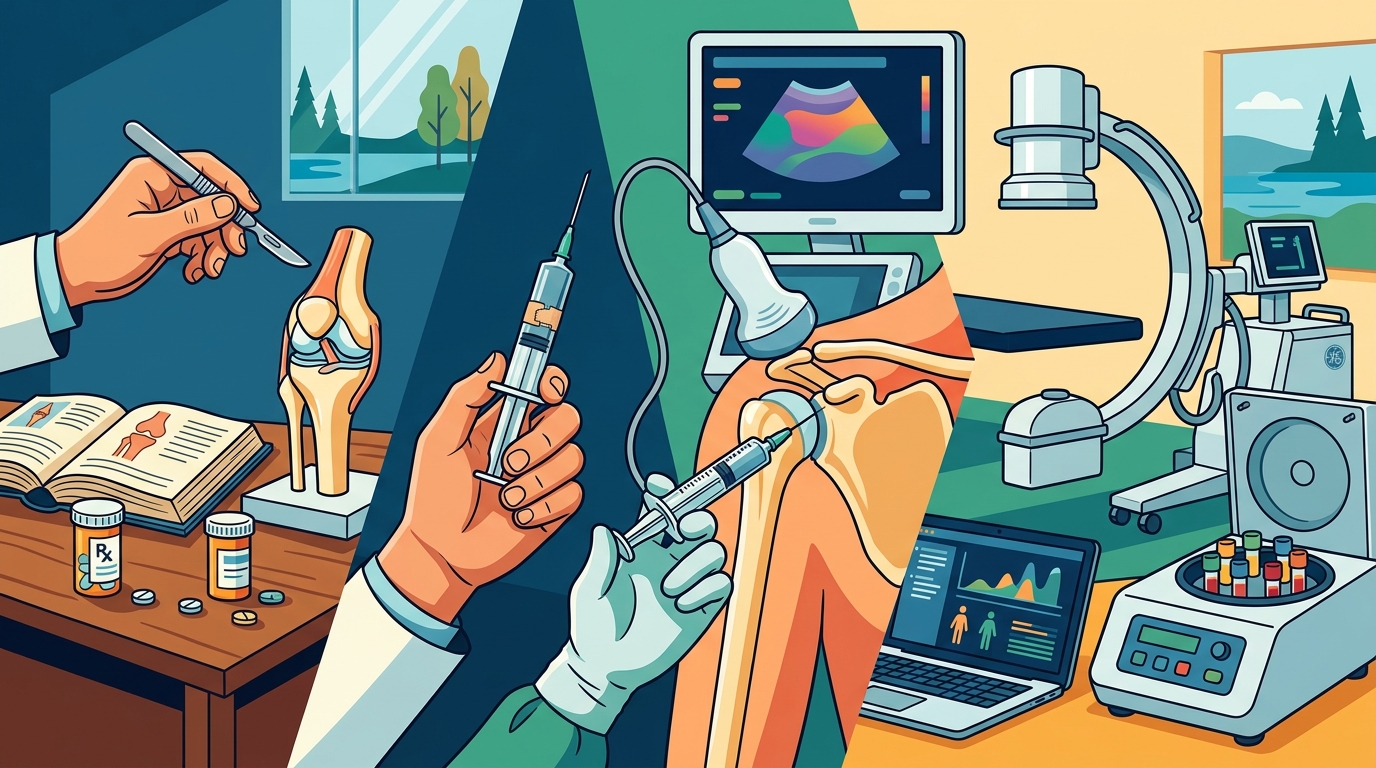
Platelet Rich Plasma is a concentration of a patient's own platelets, which contain growth factors that stimulate tissue repair. This concept, once considered experimental, is now a cornerstone of non-surgical orthopedics. The realization that blood components could accelerate healing changed the trajectory of musculoskeletal medicine. Instead of masking symptoms with anti-inflammatory drugs, doctors began to look for ways to reverse the damage.
Prolotherapy is a treatment that involves injecting an irritant solution into damaged ligaments and tendons to stimulate the body's natural healing response. Developed in the early 20th century, it fell out of favor as surgical techniques improved. However, it has seen a robust resurgence as part of the modern regenerative toolkit. By targeting the root cause of joint instability, prolotherapy offers a durable solution for chronic pain that surgery often fails to address long-term.
Understanding Regenerative Mechanisms
The core of the evolution in orthopedic care lies in the understanding of biological healing. When tissue is injured, the body initiates an inflammatory response. In chronic cases, this response is insufficient or dysregulated. Regenerative therapies work by amplifying this natural signal, recruiting stem cells and growth factors to the site of injury.
Adipose Biocellular therapy utilizes stem cells harvested from the patient's own fat tissue to promote regeneration. This method is particularly effective for osteoarthritis and severe degenerative conditions. The adipose tissue contains a high concentration of mesenchymal stem cells, which can differentiate into various tissue types, including cartilage and bone. This autologous approach minimizes the risk of rejection and maximizes the biological potential of the treatment.
The efficacy of these treatments is supported by a growing body of research. Studies indicate that platelet-rich plasma injections can significantly reduce pain and improve function in patients with knee osteoarthritis. Similarly, adipose-derived stem cells have shown promise in regenerating cartilage in human knee osteoarthritis. These findings have encouraged orthopedic specialists to adopt these therapies as first-line treatments for many degenerative conditions.
The Role of Ultrasound and Fluoroscopy
A critical component of the evolution in non-surgical care is the advancement in diagnostic imaging. In the past, injections were often guided by anatomical landmarks alone, leading to variable outcomes. Today, real-time imaging ensures that therapeutic agents are delivered with pinpoint accuracy.
Ultrasound imaging is equal to or better than MRI in evaluating most tendon and ligament disorders in the arms and legs. This technology allows physicians to visualize soft tissue structures in real-time, identifying tears, inflammation, and degeneration with high precision. It eliminates the guesswork associated with blind injections and ensures that the treatment targets the exact source of pain.
Fluoroscopic C-Arm guidance provides a similar level of precision for spinal and deep joint injections. By using live X-ray imaging, doctors can navigate complex anatomical structures safely and effectively. This combination of ultrasound and fluoroscopy has raised the standard of care, making non-surgical interventions more reliable and reproducible. Patients benefit from faster diagnoses and more effective treatments, reducing the need for additional imaging or follow-up procedures.
Comparing PRP, Prolotherapy, and Stem Cells
Understanding the differences between regenerative therapies is essential for patients navigating their treatment options. Each modality offers unique benefits depending on the specific injury and patient profile.
| Therapy | Primary Mechanism | Best For | Recovery Time |
|---|---|---|---|
| Platelet Rich Plasma (PRP) | Growth factor release from concentrated platelets | Tendonitis, mild to moderate arthritis | Short |
| Prolotherapy | Inflammatory stimulation for ligament tightening | Ligament laxity, joint instability | Moderate |
| Adipose Stem Cells | Cellular regeneration and tissue repair | Severe osteoarthritis, chronic degeneration | Longer |
PRP is often the first line of defense for acute injuries and early-stage degeneration. It is less invasive and has a rapid recovery period. Prolotherapy is ideal for patients with joint laxity, where the goal is to strengthen the supportive structures around the joint. Adipose stem cell therapy is reserved for more advanced cases, where significant tissue regeneration is required.
The choice of therapy depends on a thorough evaluation by a skilled physician. At Oregon Regenerative Medicine, doctors utilize their extensive experience to determine the most appropriate treatment plan. This personalized approach ensures that patients receive the most effective care for their specific condition.
Key Takeaways
- Non-surgical orthopedic care has evolved from a niche alternative to a primary standard of treatment in the Portland-Willamette Valley.
- Regenerative therapies like PRP and stem cells leverage the body's natural healing mechanisms to repair damaged tissue.
- Real-time imaging, including ultrasound and fluoroscopy, has significantly improved the precision and efficacy of injections.
- Oregon Regenerative Medicine has performed over 40,000 regenerative injections, establishing a strong track record of success.
- Patients with osteoarthritis and chronic pain can often achieve durable pain-free function without surgery or joint replacement.
- Treatment selection depends on the specific injury, with PRP for tendons, prolotherapy for ligaments, and stem cells for severe degeneration.
- Early intervention with regenerative medicine can prevent the progression of joint disease and avoid invasive procedures.
Frequently Asked Questions
Is non-surgical orthopedic care covered by insurance?
Coverage varies by provider and plan. Many insurance companies cover diagnostic imaging and prolotherapy, while PRP and stem cell therapies are often considered elective. It is best to check with your provider directly.
How long does it take to see results from PRP therapy?
Most patients begin to notice improvements within 4 to 6 weeks, with full benefits developing over 3 to 6 months as the healing process continues.
What is the difference between PRP and stem cell therapy?
PRP uses concentrated platelets to release growth factors, while stem cell therapy uses adult adipose cells to promote cellular regeneration. Stem cell therapy is typically used for more severe degenerative conditions.
Are these treatments painful?
Patients may experience some soreness after the procedure, which is a sign of the healing response. Local anesthesia is used during the injection to minimize discomfort.
Can I combine different therapies?
Yes, combining PRP with prolotherapy or stem cells can enhance outcomes for complex injuries. Your physician will determine the best combination based on your specific needs.
What is the success rate of regenerative injections?
While no treatment has 100% success, the vast majority of patients at Oregon Regenerative Medicine achieve durable pain-free function without surgery.
How do I know if I am a candidate for non-surgical care?
A comprehensive evaluation using ultrasound and clinical history will determine if you are a suitable candidate. Early-stage degeneration is often the best indicator for success.
Schedule Your Consultation
If you are suffering from chronic joint pain, tendonitis, or arthritis, you do not have to accept surgery as your only option. The evolution of non-surgical orthopedic care offers hope and healing for thousands of patients in the Pacific Northwest. Oregon Regenerative Medicine is dedicated to empowering you to create healthy, active longevity through evidence-based regenerative treatments.
Our team of experienced physicians is ready to evaluate your condition and develop a personalized treatment plan. Contact us today to learn more about how we can help you regain your mobility and quality of life. Visit our contact page to schedule an appointment or call us at (503) 636-2734.