
Evolution of Regenerative Medicine Protocols for Joint Degeneration in Portland Clinics
Regenerative medicine has fundamentally shifted the standard of care for joint degeneration in the Pacific Northwest. According to recent clinical data, over 40,000 regenerative injections have been performed by leading Portland specialists to treat osteoarthritis and musculoskeletal injuries. This massive volume of clinical experience demonstrates a clear departure from traditional surgical interventions toward biological restoration. Patients are no longer forced to choose between lifelong pain medication or invasive joint replacement as their only options. Instead, evidence-based protocols utilizing autologous tissues are restoring function and durability to aging joints. (PRP amp Biocellular Joint)
Historical Context of Joint Care
For decades, the treatment of joint degeneration followed a linear, often frustrating path. Patients with knee, hip, or shoulder pain were typically directed toward anti-inflammatory medications, corticosteroid injections, or eventual surgical replacement. While these methods manage symptoms, they do not address the underlying biological failure of the tissue. The evolution of regenerative medicine in Portland clinics began with a recognition that the body possesses innate healing mechanisms that can be amplified. (Meet Our Team)
Early attempts at biological treatment lacked standardization. Protocols varied wildly in concentration, preparation methods, and delivery techniques. This inconsistency led to skepticism within the broader medical community. However, as research into growth factors and cellular biology advanced, clinics in the Pacific Northwest began to refine their approaches. The focus shifted from merely reducing inflammation to actively stimulating tissue repair.
Today, the integration of regenerative orthopedics with functional medicine represents a holistic paradigm. It is not just about fixing a torn ligament or degenerated cartilage. It is about optimizing the patient's overall biological environment to support healing. This approach requires a deep understanding of cellular biology and precise clinical execution.
Platelet-Rich Plasma (PRP) Evolution
Platelet-Rich Plasma (PRP) remains one of the most widely utilized protocols in regenerative medicine. PRP is a concentration of platelets from a patient's own blood that contains high levels of growth factors. These growth factors signal the body to initiate healing processes in damaged tissues.
The evolution of PRP protocols has moved from simple centrifugation to sophisticated dual-spin systems. Early methods often resulted in variable platelet concentrations and inconsistent activation of growth factors. Modern protocols in Portland clinics utilize advanced centrifugation techniques to isolate specific platelet concentrations. This ensures that the therapeutic dose delivered to the joint is both potent and reproducible.
Research indicates that PRP is particularly effective for early-stage osteoarthritis and soft tissue injuries. A meta-analysis of randomized controlled trials has shown significant efficacy in treating knee osteoarthritis. The growth factors released by the platelets, such as platelet-derived growth factor (PDGF) and transforming growth factor-beta (TGF-beta), stimulate chondrocyte proliferation and collagen synthesis.
However, the success of PRP therapy depends heavily on the preparation method. Clinics that invest in high-quality centrifuges and standardized activation protocols see better patient outcomes. The goal is to deliver a biologically active substance that mimics the natural healing cascade without triggering excessive inflammation.
Stem Cell and Biocellular Therapies
The next frontier in joint regeneration involves the use of stem cells. Specifically, adipose-derived stem cells (ADSCs) have emerged as a powerful tool for treating severe joint degeneration. Adipose tissue is the most abundant source of reparative cells in the human body. Harvesting these cells from the patient's own fat tissue allows for a rich supply of mesenchymal stem cells.
Biocellular therapies combine these stem cells with other biological components to enhance regeneration. This approach is distinct from PRP because it introduces multipotent cells capable of differentiating into various tissue types. These cells can help regenerate cartilage, reduce inflammation, and modulate the immune response in the joint.
Clinical studies have demonstrated the regenerative capacity of adipose-derived stem cells. Research comparing ADSCs with mesenchymal stem cells from bone marrow highlights the advantages of adipose tissue. It is easier to harvest, yields a higher cell count, and demonstrates robust paracrine signaling capabilities. This makes it an ideal candidate for intra-articular injections.
The protocol for biocellular therapy requires strict sterile techniques and precise processing. The adipose tissue is harvested via minimally invasive liposuction. It is then processed to isolate the stromal vascular fraction (SVF), which contains the stem cells. This fraction is injected directly into the degenerated joint under imaging guidance. The result is a localized environment that promotes tissue repair and reduces pain.
Prolotherapy and Ligament Stability
Prolotherapy is a foundational technique in regenerative medicine that focuses on ligament and tendon laxity. Prolotherapy is a non-surgical injection therapy that stimulates the body to repair weakened ligaments and tendons. It involves injecting an irritant solution, typically dextrose, into the affected area. This irritation triggers an acute inflammatory response, which kickstarts the healing process.
While often overshadowed by PRP and stem cell therapies, prolotherapy remains critical for joint stability. Many cases of chronic joint pain are rooted in ligamentous laxity rather than cartilage loss. When ligaments are stretched or damaged, the joint becomes unstable, leading to accelerated wear and tear.
Long-term studies on dextrose prolotherapy have shown positive effects on anterior cruciate ligament laxity. By tightening the ligaments, prolotherapy restores mechanical stability to the joint. This reduces the abnormal forces that contribute to degeneration. It is often used in conjunction with PRP to enhance the healing response.
The evolution of prolotherapy protocols has seen a move toward more precise injection techniques. Rather than relying on anatomical landmarks alone, practitioners now use imaging to ensure accurate placement. This precision maximizes the therapeutic effect while minimizing discomfort.
The Role of Ultrasound Guidance
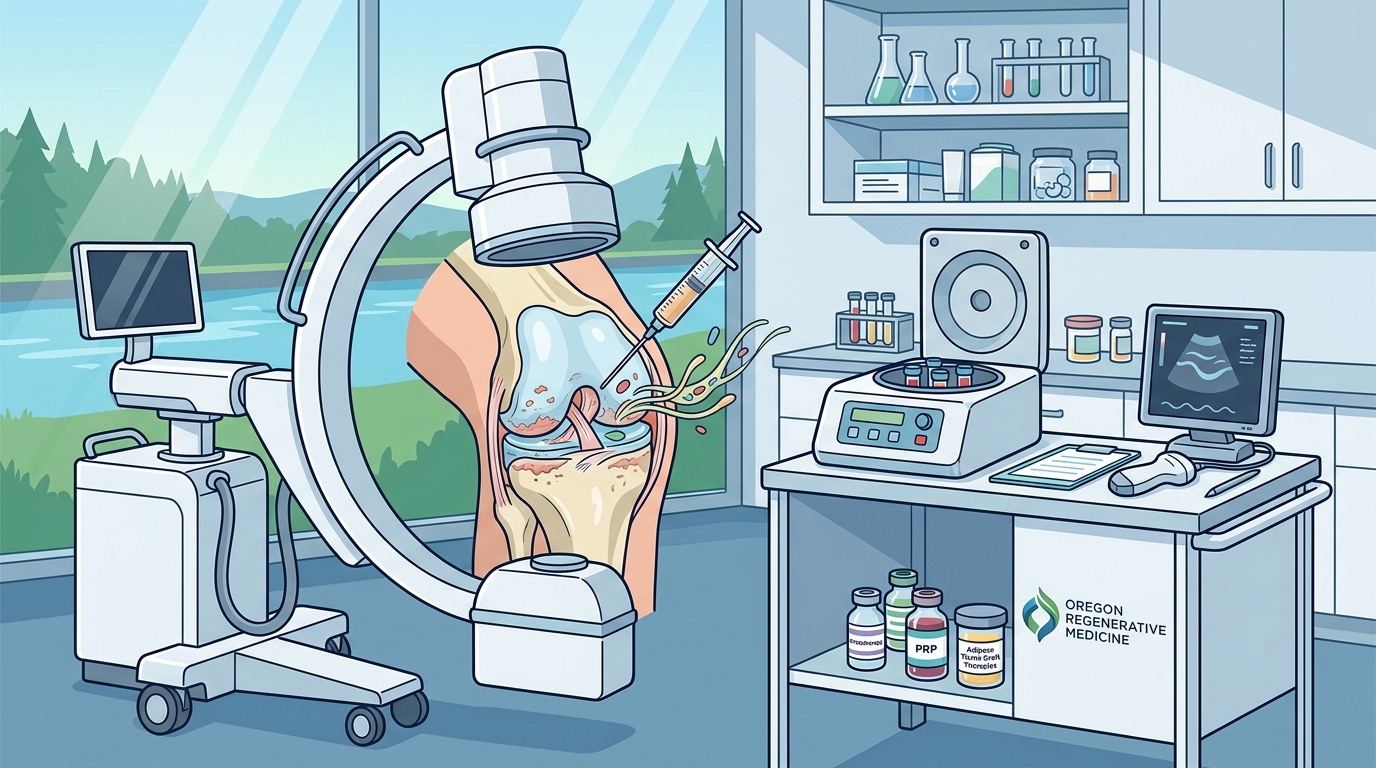
A critical advancement in regenerative medicine protocols is the widespread adoption of ultrasound guidance. Ultrasound imaging is equal to or better than MRI in evaluating most tendon and ligament disorders in the arms and legs. This technology allows practitioners to visualize soft tissues in real-time during the injection process.
Traditional blind injections rely on anatomical guesswork. This approach risks missing the target tissue or injecting into a nerve or blood vessel. Ultrasound guidance eliminates this uncertainty. Practitioners can see the needle tip as it approaches the target. They can adjust the angle and depth in real-time to ensure precise delivery.
The benefits of ultrasound guidance extend beyond accuracy. It allows for the assessment of the tissue before and after the injection. Practitioners can identify subtle tears, fluid accumulation, or inflammation that might be missed on physical exam alone. This diagnostic capability ensures that the treatment plan is tailored to the specific pathology.
Furthermore, ultrasound guidance enhances patient safety. By visualizing nearby nerves and blood vessels, practitioners can avoid them during the injection. This reduces the risk of complications and improves the overall patient experience. The ability to provide immediate feedback on needle placement also builds patient confidence in the procedure.
Comparing Treatment Modalities
Choosing the right regenerative protocol depends on the specific condition, the stage of degeneration, and the patient's biological profile. The table below summarizes the key characteristics of the primary treatment modalities available in Portland clinics.
| Modality | Primary Mechanism | Best For | Cellular Component |
|---|---|---|---|
| PRP Therapy | Growth Factor Release | Early Osteoarthritis, Soft Tissue Injuries | Platelets |
| Stem Cell Therapy | Cellular Regeneration | Severe Degeneration, Cartilage Loss | Adipose-Derived Stem Cells |
| Prolotherapy | Inflammatory Stimulation | Ligament Laxity, Joint Instability | Dextrose/Irritant Solution |
| Biocellular Grafts | Matrix Restoration | Complex Joint Repair | SVF + Extracellular Matrix |
Understanding these differences is crucial for patients seeking effective treatment. A comprehensive evaluation by a specialist can determine which protocol offers the highest likelihood of success. Often, a combination of these therapies yields the best results.
Key Takeaways
- Over 40,000 regenerative injections have been performed by leading Portland clinics, indicating a significant shift in joint care protocols.
- PRP protocols have evolved from simple centrifugation to advanced dual-spin systems for consistent growth factor concentration.
- Adipose-derived stem cells offer a potent source of reparative cells for treating severe osteoarthritis and cartilage loss.
- Ultrasound guidance is now standard in top clinics, providing real-time visualization that improves accuracy and safety.
- Prolotherapy remains a vital tool for addressing ligament laxity and joint instability, often used in conjunction with other modalities.
- Biocellular therapies combine stem cells with extracellular matrix to enhance tissue regeneration and structural support.
- Regenerative medicine offers a non-surgical alternative for thousands of patients who were previously told surgery was their only option.
Frequently Asked Questions
How long does it take for regenerative medicine to work?
Healing timelines vary by individual and the specific protocol used. Most patients begin to notice improvements in pain and function within 4 to 6 weeks. Full therapeutic effects may take 3 to 6 months as the biological healing process completes.
Is PRP therapy covered by insurance?
Currently, most insurance plans do not cover regenerative medicine procedures as they are often considered experimental or elective. However, some plans may offer partial coverage depending on the diagnosis and policy details.
What is the difference between PRP and stem cell therapy?
PRP utilizes concentrated platelets from the patient's blood to release growth factors. Stem cell therapy uses multipotent cells harvested from adipose tissue to directly regenerate damaged tissue. Stem cell therapy is generally reserved for more severe degeneration.
Are regenerative injections painful?
Patients typically experience some discomfort during the procedure. However, the use of local anesthesia and ultrasound guidance minimizes pain. Post-procedure soreness is common but usually subsides within a few days.
Can regenerative medicine cure osteoarthritis?
While it cannot reverse the aging process, regenerative medicine can significantly slow degeneration, reduce pain, and improve joint function. Many patients achieve durable pain-free function without the need for joint replacement.
How is ultrasound guidance used in these procedures?
Ultrasound allows the practitioner to visualize the needle in real-time. This ensures precise delivery of the therapeutic substance to the exact site of injury, maximizing efficacy and safety.
What is Prolotherapy?
Prolotherapy is a non-surgical injection therapy that stimulates the body to repair weakened ligaments and tendons by triggering a controlled inflammatory response.
Schedule Your Consultation
If you are suffering from joint pain or degeneration, it is time to explore the latest in regenerative medicine. Oregon Regenerative Medicine offers evidence-based protocols tailored to your specific needs. Our team of experts is dedicated to helping you achieve pain-free function and active longevity.
Contact us today to schedule a consultation and learn how regenerative medicine can help you. Visit our Contact Page to get started on your journey to recovery.