When choosing a PRP injection provider in Portland, prioritize a clinic that uses real-time imaging guidance, prepares your PRP in-house, and employs physicians with specific training in regenerative orthopedics. These factors ensure the biologic is delivered to the exact anatomical target, maximizing the therapeutic potential of your own blood while minimizing procedural risk.
Imaging Precision and Procedural Accuracy
The most critical technical factor in a successful PRP injection is the accuracy of needle placement. Platelet-Rich Plasma is a biologic therapy that relies on the precise delivery of growth factors to damaged tissue. If the needle is even a few millimeters off target, the therapeutic effect is significantly reduced or lost entirely.
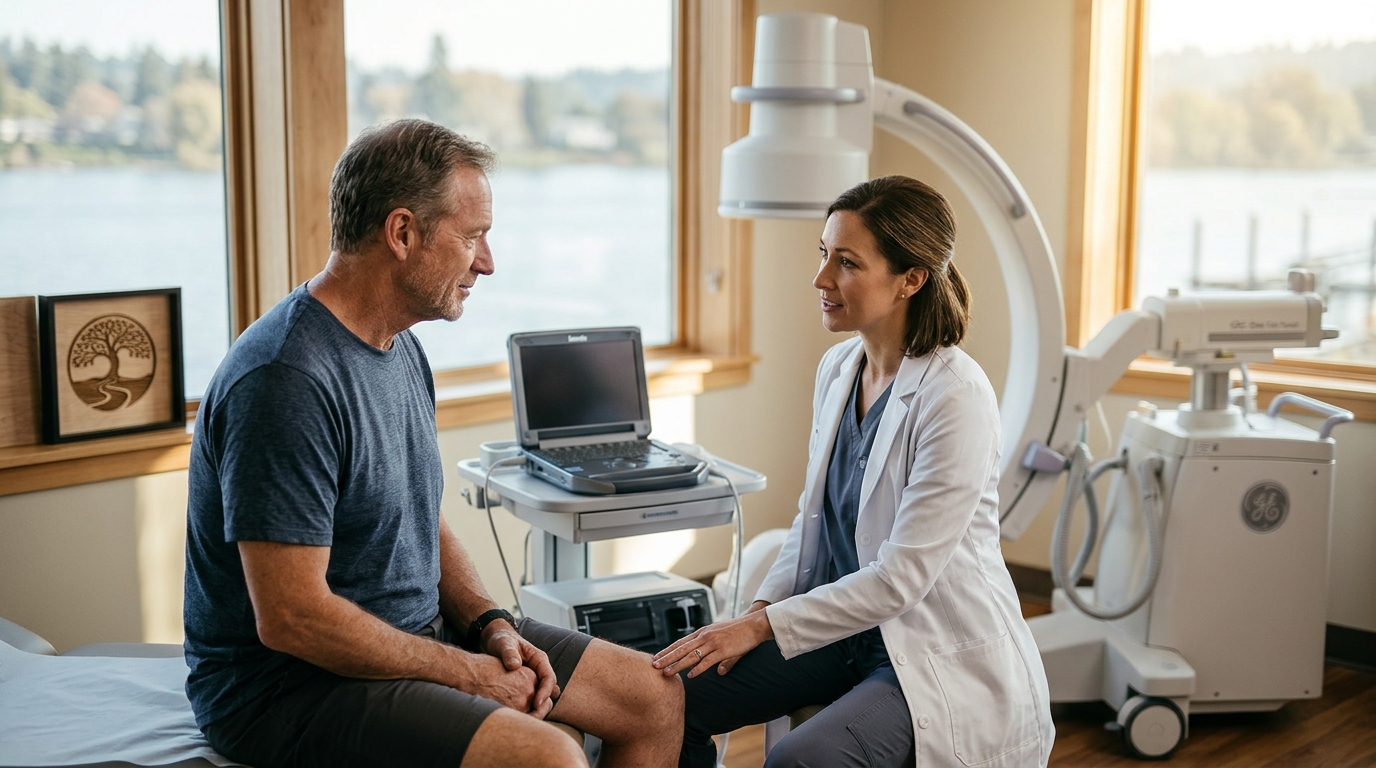
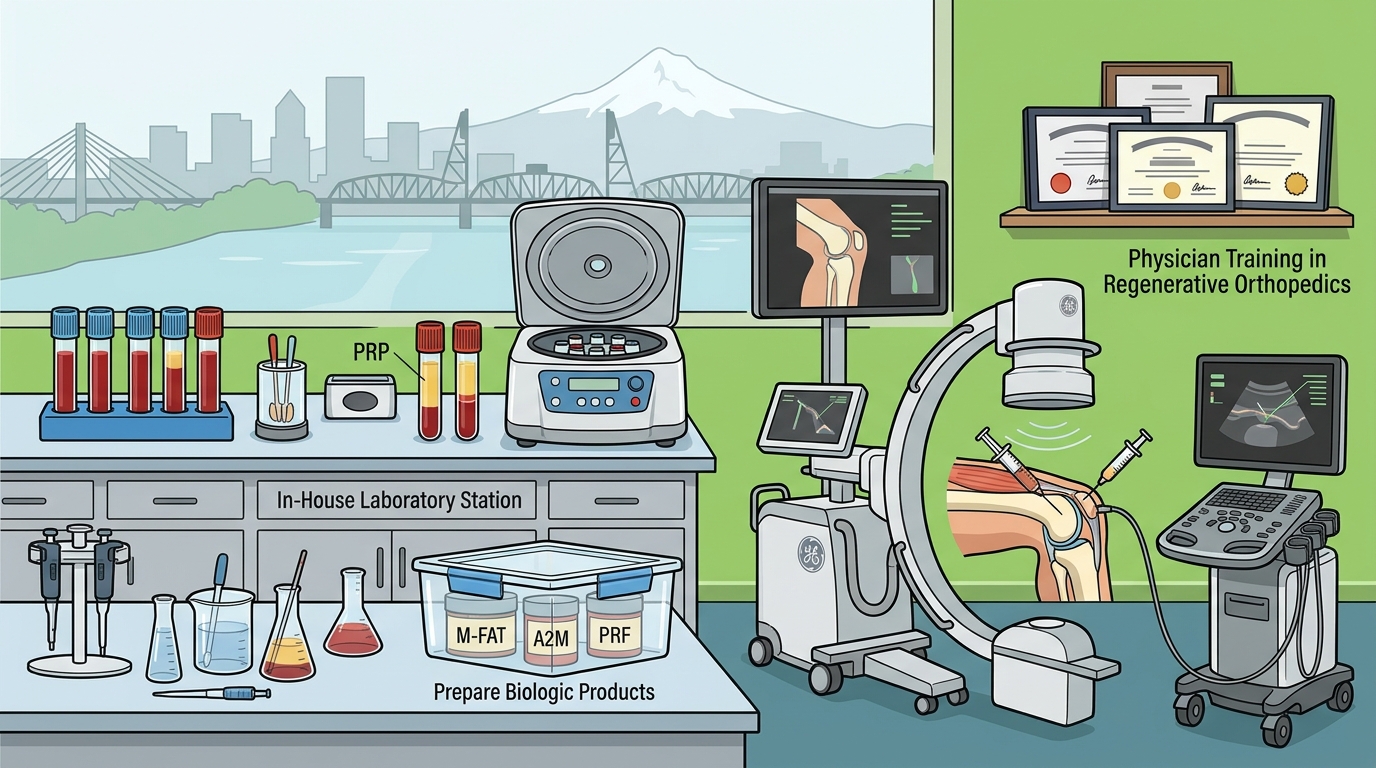
Look for a provider that utilizes real-time imaging during the procedure. At Oregon Regenerative Medicine, clinicians use C-arm fluoroscopy for deep spinal and joint targets, as this technology allows for dynamic visualization of bony anatomy and joint spaces. For peripheral joints like the shoulder or knee, high-resolution ultrasound is the standard of care. A provider that relies solely on anatomical landmarks without imaging is not providing the level of precision required for modern regenerative medicine.
Why Fluoroscopy Matters for Deep Joints
Fluoroscopy is a real-time X-ray imaging system that enables clinicians to see the needle tip as it moves through tissue. This is particularly important for spine injections or deep hip targets where ultrasound waves cannot penetrate bone effectively. The ability to confirm needle position in multiple planes ensures that the PRP is delivered exactly where the pathology exists.
In-House Preparation and Biologic Quality
Platelet-Rich Plasma is a concentrated solution of a patient's own blood platelets, which are rich in growth factors and biologically active proteins. The quality of this concentrate depends heavily on how the blood is processed. Many clinics outsource their PRP preparation to third-party laboratories, which can introduce delays and variability in the final product.
A high-quality provider prepares PRP in-house using a dedicated laboratory. This ensures that the biologic is fresh and that the platelet concentration is optimized for the specific injury. At Oregon Regenerative Medicine, the clinic maintains an in-house laboratory that prepares PRP, PRF, and other biologics on-site. This control over the preparation process is a key differentiator when evaluating potential providers.
The Importance of Platelet Concentration
Not all PRP is created equal. The concentration of platelets and the specific growth factor profile can vary based on the centrifugation protocol used. A provider should be able to explain their preparation method and how it relates to the specific condition being treated. For example, a higher concentration might be preferred for tendon injuries, while a different profile might be used for joint cartilage.
Physician Expertise and Clinical Credentials
The skill of the physician performing the injection is as important as the technology they use. Regenerative medicine is a specialized field that requires specific training beyond general medical education. Look for providers who have dedicated training in orthobiologics and regenerative procedures.
At Oregon Regenerative Medicine, the medical team includes physicians with specific credentials in this area. For instance, Dr. Kristian Flores is a Board Certified Physiatrist, a specialty that focuses on the non-surgical treatment of pain and musculoskeletal conditions. Dr. Terry Manning II is a Fellow of the American Academy of Orthopedic Medicine and is registered in Musculoskeletal Sonography. These credentials indicate a deep focus on the specific skills required for successful regenerative injections.
Experience with Complex Cases
Consider the provider's experience with complex or refractory cases. A provider who has treated a wide range of conditions, from acute sports injuries to chronic osteoarthritis, is likely to have a more nuanced understanding of how to tailor the treatment. Ask about their success rates and how they handle cases that have not responded to other treatments.
The Integrative Care Approach
Regenerative medicine is most effective when it is part of a comprehensive treatment plan. A provider that offers only injections may miss underlying factors that affect healing, such as nutritional deficiencies, hormonal imbalances, or chronic inflammation. An integrative approach addresses the whole person, not just the injured joint.
At Oregon Regenerative Medicine, the practice is built on an integrated system of orthopedic medicine enhanced by nutritional guidance, endocrine support, and functional medicine testing. This whole-person approach ensures that the body is in an optimal state to respond to regenerative therapies. For example, a patient with chronic pain may also have underlying thyroid issues or vitamin D deficiency that are addressed concurrently.
Supporting Healing with Functional Medicine
Functional medicine testing can identify specific biomarkers of inflammation or nutrient deficiencies that may be hindering the healing process. By addressing these underlying issues, the provider can enhance the effectiveness of the PRP injection and improve long-term outcomes. This level of care is a hallmark of a truly comprehensive regenerative medicine practice.
Key Takeaways
- Real-time imaging, such as ultrasound or fluoroscopy, is essential for accurate PRP delivery.
- In-house preparation of PRP ensures biologic quality and freshness.
- Physician credentials in regenerative orthopedics and physiatry indicate specialized expertise.
- An integrative approach that addresses underlying health issues improves treatment outcomes.
- Look for a provider with a dedicated laboratory and advanced imaging technology.
- Experience with complex and refractory cases is a sign of a skilled provider.
Frequently Asked Questions
What is Platelet-Rich Plasma (PRP)?
Platelet-Rich Plasma is a concentrated solution of a patient's own blood platelets, which are rich in growth factors and biologically active proteins used to promote tissue repair.
Why is imaging important for PRP injections?
Imaging, such as ultrasound or fluoroscopy, allows the clinician to see the needle tip in real-time, ensuring that the PRP is delivered to the exact anatomical target for maximum therapeutic effect.
What is the difference between in-house and outsourced PRP preparation?
In-house preparation means the clinic processes the blood on-site, allowing for greater control over the biologic's quality and freshness. Outsourced preparation involves sending the blood to a third-party lab, which can introduce delays and variability.
Who should perform a PRP injection?
A PRP injection should be performed by a physician with specific training in regenerative medicine and orthopedics, such as a physiatrist or a naturopathic physician with advanced training in orthobiologics.
How does an integrative approach improve PRP outcomes?
An integrative approach addresses underlying health issues, such as nutritional deficiencies or hormonal imbalances, that may be hindering the healing process, thereby enhancing the effectiveness of the PRP injection.
What is C-arm fluoroscopy?
C-arm fluoroscopy is a real-time X-ray imaging system that enables dynamic visualization of bony anatomy and joint spaces, allowing for precise needle placement during spinal and deep joint procedures.
Where can I find a PRP provider in Portland?
You can find a specialized PRP provider in the Portland area at Oregon Regenerative Medicine, which offers advanced regenerative therapies in Lake Oswego. Learn more: Contact Oregon Regenerative Medicine.