
Biocellular joint regeneration represents a significant shift in orthopedic care, moving away from symptom management toward actual tissue repair. According to recent clinical data, regenerative therapies are increasingly recognized for their ability to modify disease progression in degenerative joint conditions. This guide details the realistic timelines, functional improvements, and procedural expectations for patients considering these advanced treatments at Oregon Regenerative Medicine. (Contact Oregon Regenerative Medicine)
What is Biocellular Joint Regeneration?
Biocellular joint regeneration is a non-surgical treatment approach that utilizes the body's own biological materials to repair damaged tissues. This method relies on the natural healing capacity of the human body to restore function and reduce pain in joints affected by osteoarthritis or chronic injury. (Meet Our Team)
At Oregon Regenerative Medicine, we specialize in three primary modalities: Platelet-Rich Plasma (PRP), Prolotherapy, and Adipose Biocellular Stem Cell Therapy. Each method leverages different biological components to stimulate repair. PRP is a concentrated solution of platelets derived from the patient's own blood, rich in growth factors that initiate healing. Adipose Biocellular Therapy involves harvesting stem cells from the patient's fat tissue to provide a potent source of regenerative cells. Prolotherapy is a technique that uses irritant solutions to stimulate the body's natural inflammatory healing response in weakened ligaments and tendons.
These treatments are designed for patients who have not found relief through traditional methods or wish to avoid surgery. The goal is not just pain relief, but the restoration of structural integrity in the joint.
The Healing Timeline: What to Expect
Recovery from biocellular therapies is not instantaneous. Because these treatments work by stimulating the body's biological repair mechanisms, the timeline is gradual. Understanding this process helps manage patient expectations and ensures compliance with post-procedure protocols.
Phase 1: Initial Inflammation (Days 1-7)
In the first week following treatment, patients often experience increased pain and swelling. This is a normal and necessary part of the healing process. The injected biological agents trigger an acute inflammatory response, which recruits healing cells to the damaged area. During this phase, rest and ice are typically recommended. Patients should avoid anti-inflammatory medications, as they can inhibit the healing cascade.
Phase 2: Cellular Proliferation (Weeks 2-6)
As the initial inflammation subsides, the body begins to produce new tissue. Patients may notice a gradual reduction in pain and an increase in joint mobility. This is the period where the growth factors and stem cells are actively working to repair tendons, ligaments, and cartilage. Physical therapy often begins during this window to guide the healing tissues and prevent stiffness.
Phase 3: Tissue Remodeling (Months 3-6)
The final phase involves the maturation of the newly formed tissue. Strength and stability continue to improve over several months. Most patients report peak benefits between three and six months post-treatment. Long-term studies suggest that the structural improvements can last for years, provided the patient maintains a healthy lifestyle and follows rehabilitation guidelines.
Factors Influencing Recovery Outcomes
While biocellular therapies offer significant potential for recovery, individual results vary based on several biological and lifestyle factors. Understanding these variables helps in predicting the likely outcome for each patient.
Age and Biological Age play a crucial role. Younger patients or those with a lower biological age typically have more robust stem cell populations and faster healing rates. However, even older patients can achieve meaningful improvements in pain and function.
Severity of Joint Degeneration is another critical factor. Patients with early to moderate osteoarthritis often see the best outcomes. In cases of severe bone-on-bone arthritis, the potential for complete regeneration is limited, though pain relief may still be significant.
Lifestyle Factors such as smoking, poor nutrition, and lack of exercise can negatively impact healing. Smoking, in particular, restricts blood flow and impairs the delivery of oxygen and nutrients to the healing tissues. Patients are encouraged to optimize their health before undergoing treatment.
PRP vs. Stem Cell Therapies
Choosing between PRP and Adipose Biocellular Therapy depends on the specific condition, the severity of the injury, and the desired intensity of the treatment. Both are effective, but they operate differently.
| Feature | Platelet-Rich Plasma (PRP) | Adipose Biocellular Therapy |
|---|---|---|
| Source | Patient's own blood | Patient's own fat tissue |
| Cell Count | High concentration of platelets | High concentration of stem cells and growth factors |
| Best For | Mild to moderate arthritis, tendon injuries | Severe arthritis, large tissue defects |
| Recovery Time | Shorter initial downtime | Slightly longer initial downtime due to harvest |
| Duration of Effect | 6-12 months typically | 12-24+ months typically |
For more detailed information on the efficacy of these treatments, patients can review clinical research articles available on our website. These resources provide insight into the scientific basis of our protocols.
The Role of Ultrasound Guidance
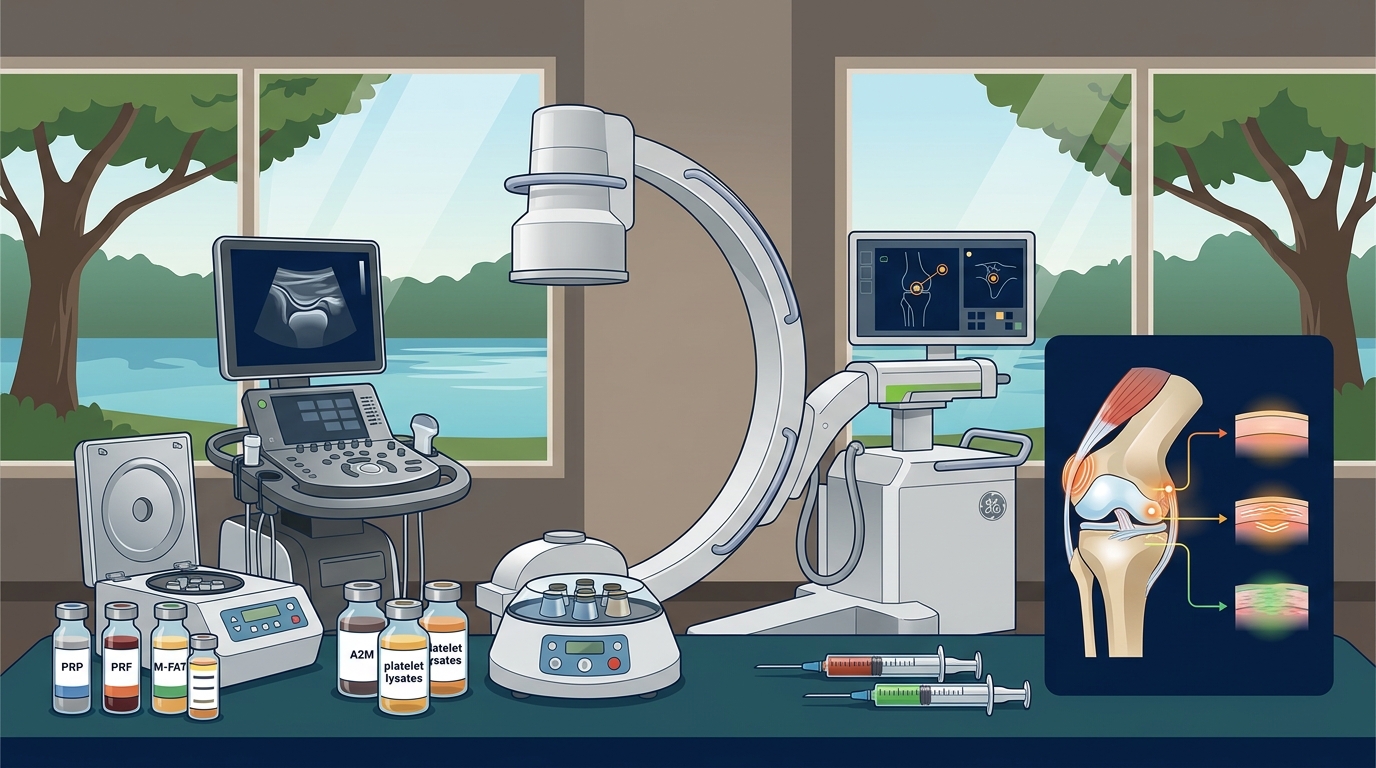
Precision is paramount in regenerative medicine. At Oregon Regenerative Medicine, we utilize advanced ultrasound imaging for all injection procedures. This technology allows our physicians to visualize the needle in real-time, ensuring the biological material is placed exactly where it is needed.
Ultrasound guidance reduces the risk of complications and maximizes the therapeutic effect. It allows us to separate individual tendon fibers and avoid nerves, ensuring the treatment targets the damaged tissue without affecting surrounding structures. This level of precision is a key differentiator in achieving optimal recovery outcomes.
Key Takeaways
- Non-Surgical Option: Biocellular therapies offer a viable alternative to joint replacement surgery for many patients with osteoarthritis.
- Gradual Healing: Peak benefits are typically seen between three and six months post-treatment as tissue remodels.
- Precision Matters: Ultrasound-guided injections ensure accurate placement of regenerative cells, enhancing efficacy.
- Personalized Care: Treatment plans are tailored to the individual's biological profile and specific joint condition.
- Long-Term Relief: Many patients experience durable pain relief and improved function for years after treatment.
- Expert Team: Our doctors have decades of experience in regenerative orthopedics, ensuring high standards of care.
- Comprehensive Approach: We combine biological treatments with functional medicine and nutritional support for holistic healing.
Frequently Asked Questions
How long does it take to see results from biocellular therapy?
Most patients begin to notice improvements in pain and function within four to six weeks. However, the full benefits of tissue regeneration continue to develop over three to six months as the body completes the healing process.
Is the procedure painful?
The procedure itself is performed under local anesthesia, so patients should not feel pain during the injection. Post-procedure soreness is common for a few days as the healing response is initiated. This is managed with rest and ice.
Who is a good candidate for stem cell joint regeneration?
Good candidates are individuals with mild to moderate osteoarthritis, chronic tendon injuries, or ligament damage who have not found relief with conservative treatments. A thorough evaluation by our medical team determines eligibility.
Are there any risks associated with these treatments?
Because the treatments use the patient's own biological materials, the risk of allergic reaction or rejection is virtually non-existent. Risks are similar to any injection, including temporary soreness, swelling, or rare infection, which are minimized by our sterile protocols.
How many treatments are needed?
Many patients achieve significant results with a single treatment. However, depending on the severity of the condition, a series of two or three treatments spaced several weeks apart may be recommended for optimal outcomes.
Can I return to work immediately after the procedure?
Most patients can return to work the next day if their job is sedentary. For physically demanding jobs, a few days of rest may be necessary. We provide specific activity guidelines based on your individual case.
What is the success rate of biocellular joint regeneration?
Success rates vary by individual and condition. However, clinical studies and our patient outcomes show that the vast majority of patients experience significant pain reduction and improved joint function, often avoiding the need for surgery.
Schedule Your Consultation
If you are suffering from joint pain and are considering biocellular regeneration, we invite you to schedule a consultation with our expert team. Located in Portland, Oregon, Oregon Regenerative Medicine is dedicated to helping you achieve pain-free function and active longevity. Contact us today to discuss your treatment options and take the first step toward recovery.