Essential Qualifications and Treatment Modalities for Non-Surgical Joint Preservation Specialists
Joint preservation has evolved from a niche surgical interest into a primary standard of care for musculoskeletal health. According to recent orthopedic data, over 50 million Americans suffer from arthritis, and the demand for non-surgical interventions has surged as patients seek to delay or avoid joint replacement surgery. This shift highlights the critical importance of selecting a specialist who possesses not only advanced medical training but also mastery in image-guided regenerative techniques. Understanding the specific qualifications and treatment modalities available is essential for anyone navigating the complex landscape of joint health.
Understanding the Specialist's Qualifications
Not every practitioner offering joint pain relief possesses the necessary depth of expertise for complex regenerative medicine. A qualified non-surgical joint preservation specialist typically holds dual board certifications or advanced fellowships in fields such as physical medicine and rehabilitation, anesthesiology, or family medicine with a focus on osteopathic principles. The most critical differentiator is proficiency in hands-on diagnosis combined with advanced imaging skills.
At Oregon Regenerative Medicine, our physicians have decades of experience in the arts of hands-on diagnosis, ultrasound imaging, and fluoroscopic guidance. This combination allows for immediate, accurate assessment of soft tissue and joint structures without the delay of external referrals. Proficiency in these areas requires many years of dedicated training and clinical experience, ensuring that the specialist can distinguish between tendon tears, ligament laxity, and early-stage osteoarthritis with high precision.
Furthermore, a reputable specialist will operate within a facility that prioritizes evidence-based protocols. This includes the use of sterile, autologous (patient-derived) materials and adherence to strict safety standards. The goal is to empower patients to create healthy, active longevity through orthopedic medicine, condition-specific nutritional programs, and hormone optimization. When evaluating a provider, look for a track record of performing thousands of regenerative injections, as volume correlates with technical mastery and consistent outcomes.
The Role of Image-Guided Precision
One of the most significant advancements in non-surgical joint care is the integration of real-time imaging. Traditional "blind" injections rely on anatomical landmarks alone, which can lead to inaccurate delivery of therapeutic agents. In contrast, image-guided therapy ensures that the treatment is delivered exactly where the pathology exists.
Ultrasound Imaging in Soft Tissue Repair
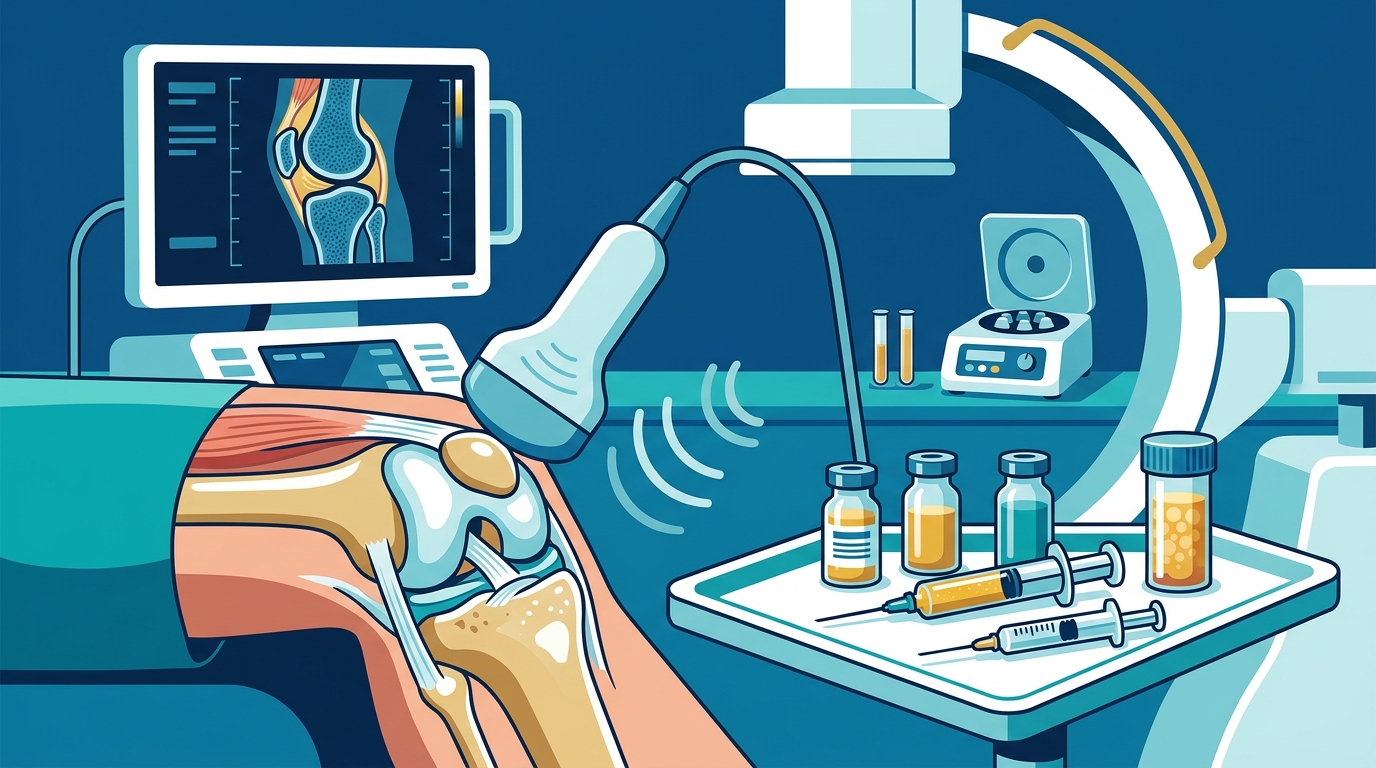
Ultrasound imaging is equal to or better than MRI in evaluating most tendon and ligament disorders in the arms and legs. This includes common conditions such as Achilles tendinitis, tennis elbow, golfer’s elbow, rotator cuff tendinitis, and ankle sprains. The ability to visualize these structures in real-time allows the physician to separate out individual tendon, ligament, and fascia fibers, get around nerves, and put the medicine into the correct location without a doubt. This level of precision is not guessing; it is visual confirmation of the therapeutic target.
Fluoroscopic Guidance for Spinal and Deep Joint Pathology
For deeper structures, such as the spine or hip joint, fluoroscopic C-Arm guidance is often required. This X-ray-based imaging provides a clear view of bony landmarks and joint spaces, ensuring that injections reach the intra-articular space or specific nerve roots. At Oregon Regenerative Medicine, we provide evidence-based, ultrasound imaging and fluoroscopic C-Arm guidance in our non-surgical injection procedures for the repair of tendons, ligaments, joints, and spine. This dual-modality approach ensures that no matter the location of the pain, the treatment is targeted and effective.
Core Regenerative Treatment Modalities
Non-surgical joint preservation relies on stimulating the body's natural healing mechanisms. The three primary modalities used in advanced regenerative medicine are Platelet-Rich Plasma (PRP), Prolotherapy, and Biocellular Stem Cell Therapy. Each modality works through distinct biological pathways to reduce inflammation, promote tissue repair, and restore function.
Platelet-Rich Plasma (PRP) Therapy
PRP is a concentration of a patient's own platelets, which contain hundreds of growth and repair compounds. When injected into an injured area, PRP triggers a localized healing response that can accelerate the repair of tendons, ligaments, and cartilage. Scientists have identified hundreds of growth and repair compounds in PRP, making it a potent tool for treating chronic injuries that have failed to heal with rest or physical therapy alone. It is particularly effective for early-stage osteoarthritis and soft tissue injuries.
Prolotherapy
Prolotherapy involves the injection of an irritant solution, typically dextrose, into damaged ligaments and tendons. This controlled irritation stimulates the body's inflammatory response, leading to the proliferation of new connective tissue and increased joint stability. Prolotherapy is a nontraditional approach to knee osteoarthritis and ligament laxity that has shown significant efficacy in long-term studies. It is often used in conjunction with PRP to enhance the healing response.
Biocellular Stem Cell Therapy
Biocellular stem cell therapy utilizes autologous adipose tissue-derived stem cells. Adult adipose tissue is the most abundant source of reparative cells in the human body. These cells, often referred to as stromal vascular fraction (SVF), contain mesenchymal stem cells that can differentiate into various tissue types and secrete anti-inflammatory cytokines. This modality is particularly powerful for advanced osteoarthritis and severe degenerative conditions where significant tissue regeneration is required. The use of your own cells eliminates the risk of immune rejection and ensures biological compatibility.
Comparing PRP, Prolotherapy, and Stem Cells
Choosing the right treatment depends on the severity of the condition, the specific tissue involved, and the patient's overall health. The following table summarizes the key differences between these modalities.
| Treatment Modality | Primary Mechanism | Best For | Recovery Time |
|---|---|---|---|
| Platelet-Rich Plasma (PRP) | Growth factor release | Soft tissue injuries, early arthritis | Minimal |
| Prolotherapy | Controlled inflammation | Ligament laxity, joint instability | Moderate |
| Biocellular Stem Cells | Cellular regeneration | Advanced osteoarthritis, severe degeneration | Moderate to Extended |
While no treatment has 100% success, the vast majority of our patients achieve durable pain-free function without surgery, joint replacement, or drugs. The decision between these options should be made in consultation with a specialist who can evaluate your specific anatomy and pathology through ultrasound or fluoroscopy.
Key Takeaways for Patients
- Specialist Expertise Matters: Look for physicians with decades of experience in hands-on diagnosis and image-guided procedures.
- Imaging is Essential: Real-time ultrasound or fluoroscopy ensures accurate delivery of treatment to the affected tissue.
- Autologous Materials: Using your own cells (PRP or Stem Cells) minimizes risk and maximizes biological compatibility.
- Non-Surgical Success: Most patients treated with regenerative injections achieve durable pain relief without the need for surgery.
- Comprehensive Care: Effective joint preservation often requires a combination of injections, nutritional support, and hormone optimization.
- Volume Indicates Mastery: Providers with thousands of successful injections demonstrate a high level of technical proficiency.
- Early Intervention: Treating soft tissue injuries early can prevent the progression to chronic joint degeneration.
Frequently Asked Questions
What is the difference between PRP and Stem Cell therapy?
PRP uses concentrated platelets from your blood to release growth factors that stimulate healing. Stem cell therapy uses adult adipose tissue-derived stem cells to promote cellular regeneration and reduce inflammation. Stem cell therapy is generally reserved for more advanced degenerative conditions.
Is image-guided injection safer than blind injection?
Yes. Image guidance ensures the needle is placed exactly in the target area, avoiding nerves and blood vessels. This increases efficacy and reduces the risk of complications.
How long does recovery take after regenerative injections?
Recovery varies by treatment. PRP often requires minimal downtime, while stem cell therapy may involve a few days of rest. Your physician will provide specific post-procedure instructions.
Can regenerative medicine reverse osteoarthritis?
While it cannot completely reverse advanced bone-on-bone arthritis, it can significantly reduce pain, improve function, and slow the progression of the disease by repairing surrounding soft tissues.
Are these treatments covered by insurance?
Many regenerative medicine procedures are considered elective and may not be covered by insurance. However, we provide detailed documentation to assist with any potential claims.
What qualifications should I look for in a specialist?
Look for board certification, advanced training in regenerative medicine, and proficiency in ultrasound and fluoroscopic guidance.
How many treatments will I need?
This depends on the severity of your condition. Some patients see improvement after one treatment, while others may require a series of injections for optimal results.
Schedule Your Consultation
If you are suffering from joint pain, do not accept surgery as your only option. Take the first step toward pain-free function by consulting with a qualified non-surgical joint preservation specialist. Our team at Oregon Regenerative Medicine is dedicated to empowering you to live at your highest potential. Contact us today to schedule your evaluation and discover how regenerative medicine can restore your health.