
Regenerative medicine has transformed the landscape of orthopedic care, offering hope to millions suffering from chronic joint pain. According to recent orthopedic data, over 20 million Americans visit a doctor for knee pain alone each year, with many seeking alternatives to surgery. However, the success of these advanced biological treatments is not guaranteed by the injection alone. Patient behavior plays a critical role in the final outcome. Studies indicate that up to 30% of treatment efficacy can be influenced by post-procedure compliance and lifestyle adjustments. Understanding these dynamics is essential for anyone considering Platelet Rich Plasma (PRP), Prolotherapy, or stem cell therapies.
The Critical Role of Ultrasound Guidance
One of the most significant mistakes patients make is choosing a provider who relies solely on "blind" injections or palpation. While palpation is a valuable diagnostic tool, it lacks the precision required for complex joint repairs. At Oregon Regenerative Medicine, we utilize ultrasound imaging to visualize soft tissue structures in real-time. This technology allows us to distinguish between individual tendon fibers, ligaments, and fascia, ensuring the therapeutic agent is delivered exactly where it is needed.
Without image guidance, there is a higher risk of missing the target tissue entirely. This can lead to ineffective treatment and prolonged recovery times. Ultrasound expertise is not just a convenience; it is a standard of care for high-fidelity regenerative procedures. It allows practitioners to avoid nerves and blood vessels, significantly reducing the risk of complications. When evaluating providers, ask specifically about their imaging protocols. Providers who do not use real-time imaging are essentially guessing the anatomy, which is unacceptable in modern orthopedic medicine.
Returning to Activity Too Soon
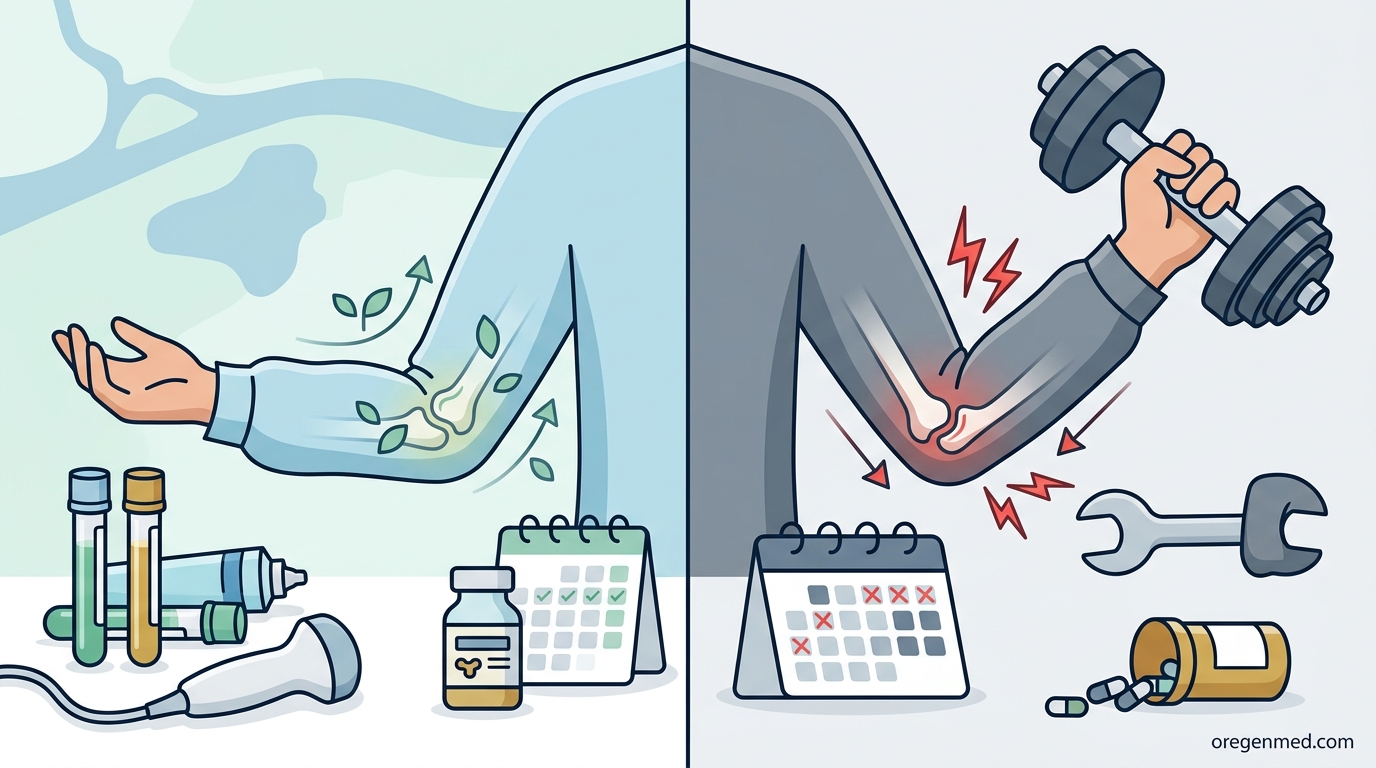
Patients often view regenerative injections as a "magic bullet" that instantly repairs damage. This is a dangerous misconception. The biological process of healing takes time. After a PRP or stem cell injection, your body initiates an inflammatory response to recruit healing cells to the site. If you return to high-impact activities too soon, you can disrupt this delicate biological cascade.
Most protocols require a period of relative rest followed by gradual rehabilitation. Ignoring these instructions can lead to re-injury or failure of the graft. For example, after a knee injection, walking on uneven terrain or running can shear the newly forming tissue. It is crucial to follow the specific post-procedure guidelines provided by your doctor. This includes avoiding anti-inflammatory behaviors that might interfere with the natural healing signal. Patience is not just a virtue in this process; it is a medical necessity for durable results.
Medication Interference with Healing
Another common error is the continued use of non-steroidal anti-inflammatory drugs (NSAIDs) such as ibuprofen or naproxen around the time of treatment. These medications work by blocking the cyclooxygenase (COX) enzymes, which are essential for the inflammatory phase of healing. While inflammation is often viewed negatively, it is the first and most critical step in the regenerative process.
By suppressing this inflammation, you are essentially turning off the body's natural repair mechanism. Research suggests that NSAIDs can significantly reduce the efficacy of PRP therapy. Patients should consult with their healthcare provider about alternative pain management strategies, such as acetaminophen or physical modalities, during the healing window. Understanding the biological mechanism of your treatment helps you make informed decisions about your medication regimen. Always disclose your current medication list to your provider to avoid adverse interactions.
Misaligned Expectations and Timeline
Regenerative medicine is not an overnight fix. The timeline for results varies depending on the condition, the tissue type, and the individual's biology. Some patients expect immediate pain relief, while others see gradual improvement over several weeks or months. Setting realistic expectations is vital for patient satisfaction.
For instance, cartilage regeneration is a slow process. It can take three to six months to see the full benefits of stem cell therapy in osteoarthritic joints. Comparing your recovery to someone else's timeline is misleading because every patient's biological response is unique. Trust the process and maintain open communication with your care team. If you experience unexpected symptoms, report them immediately rather than assuming the treatment has failed. Regular follow-ups help track progress and adjust the rehabilitation plan as needed.
Understanding Therapy Differences
Patients often confuse different regenerative modalities, leading to inappropriate treatment choices. Prolotherapy, PRP, and stem cell therapies each have distinct mechanisms and indications. Prolotherapy uses irritant solutions to stimulate healing, while PRP utilizes concentrated platelets from your own blood. Stem cell therapies, such as adipose-derived treatments, offer a higher concentration of reparative cells.
| Therapy Type | Source | Primary Mechanism | Best For |
|---|---|---|---|
| Prolotherapy | Self-administered irritant | Stimulates natural inflammation | Ligament laxity, mild osteoarthritis |
| PRP | Patient's blood | Growth factor release | Tendon injuries, early joint degeneration |
| Stem Cell | Adipose tissue | Cellular regeneration | Advanced osteoarthritis, severe tears |
Choosing the right therapy requires a thorough evaluation by a specialist. A one-size-fits-all approach rarely works in regenerative medicine. Your provider will assess the severity of your condition, your medical history, and your goals to recommend the most effective option. For example, PRP therapy is often preferred for soft tissue injuries, while stem cells may be better for significant cartilage loss. Understanding these differences empowers you to make an informed decision about your health.
Key Takeaways
- Always choose a provider who uses real-time ultrasound or fluoroscopic guidance for precision.
- Avoid NSAIDs for at least two weeks before and after your procedure to allow natural inflammation.
- Expect a gradual recovery timeline, often lasting several months for full benefits.
- Understand the differences between Prolotherapy, PRP, and stem cell therapies.
- Follow post-procedure activity restrictions strictly to protect the healing tissue.
- Maintain open communication with your doctor regarding pain levels and progress.
- Recognize that regenerative medicine is a process, not an instant cure.
Frequently Asked Questions
How long does it take for PRP to work?
Most patients begin to notice improvements within 4 to 6 weeks, with continued healing up to 6 months. The timeline depends on the severity of the injury and the body's individual response.
Is ultrasound guidance necessary for PRP?
While not always legally required, ultrasound guidance is considered the gold standard for accuracy. It ensures the medication is placed exactly in the damaged tissue, maximizing efficacy and safety.
Can I take ibuprofen after a stem cell injection?
No, you should avoid ibuprofen and other NSAIDs for a specified period, typically two weeks, as they can inhibit the inflammatory healing response required for the stem cells to work.
What is the difference between PRP and Prolotherapy?
PRP uses your own concentrated platelets to release growth factors, while Prolotherapy uses an irritant solution to stimulate healing. PRP is often more potent for soft tissue repair, while Prolotherapy is effective for ligament tightening.
Are stem cell treatments covered by insurance?
Most insurance plans do not cover regenerative medicine treatments as they are often considered experimental or elective. However, some plans may offer partial coverage depending on the specific diagnosis and policy.
How many PRP treatments do I need?
Many patients see significant relief after one treatment, but some may require a series of 2 to 3 injections spaced several weeks apart for optimal results.
What is the success rate of regenerative medicine?
Success rates vary by condition, but studies show high patient satisfaction rates, with many avoiding surgery and reducing pain significantly. Long-term durability is a key benefit of these treatments.
Schedule Your Consultation
Don't let common mistakes compromise your path to pain-free living. At Oregon Regenerative Medicine, we combine decades of experience with cutting-edge technology to provide personalized care. Our team is dedicated to helping you achieve healthy, active longevity through evidence-based regenerative treatments. Contact us today to discuss your options and take the first step toward recovery.