Essential Criteria for Selecting a Non-Surgical Orthopedic Specialist
Choosing the right provider for joint pain or musculoskeletal injury is a critical decision that impacts your long-term mobility and quality of life. According to recent orthopedic data, over 40,000 regenerative injection procedures are performed annually in the Pacific Northwest alone, highlighting a massive shift away from immediate surgical interventions. This surge in demand underscores the importance of vetting specialists who combine advanced imaging capabilities with decades of clinical experience. Patients must look beyond general pain management and seek practitioners who offer evidence-based, image-guided therapies to ensure accurate diagnosis and effective treatment. (Contact Oregon Regenerative Medicine)
The Role of Diagnostic Precision and Imaging
The foundation of successful non-surgical orthopedic care lies in accurate diagnosis. Many patients are sent for imaging studies before seeing a specialist, which delays treatment and increases anxiety. However, modern ultrasound technology has evolved significantly, allowing for real-time, in-office visualization of soft tissue structures. This capability is essential for identifying the exact source of pain, whether it is a tendon tear, ligament laxity, or early-stage osteoarthritis. (Meet Our Team)
Ultrasound imaging is equal to or better than MRI for evaluating most tendon and ligament disorders in the arms and legs. This includes common conditions such as Achilles tendinitis, tennis elbow, golfer's elbow, rotator cuff issues, and ankle sprains. The ability to see these structures in real-time allows practitioners to separate individual tendon fibers and navigate around nerves with precision. This level of detail is not just about convenience; it is about ensuring that the treatment is delivered exactly where it is needed. (Articles Oregon Regenerative Medicine)
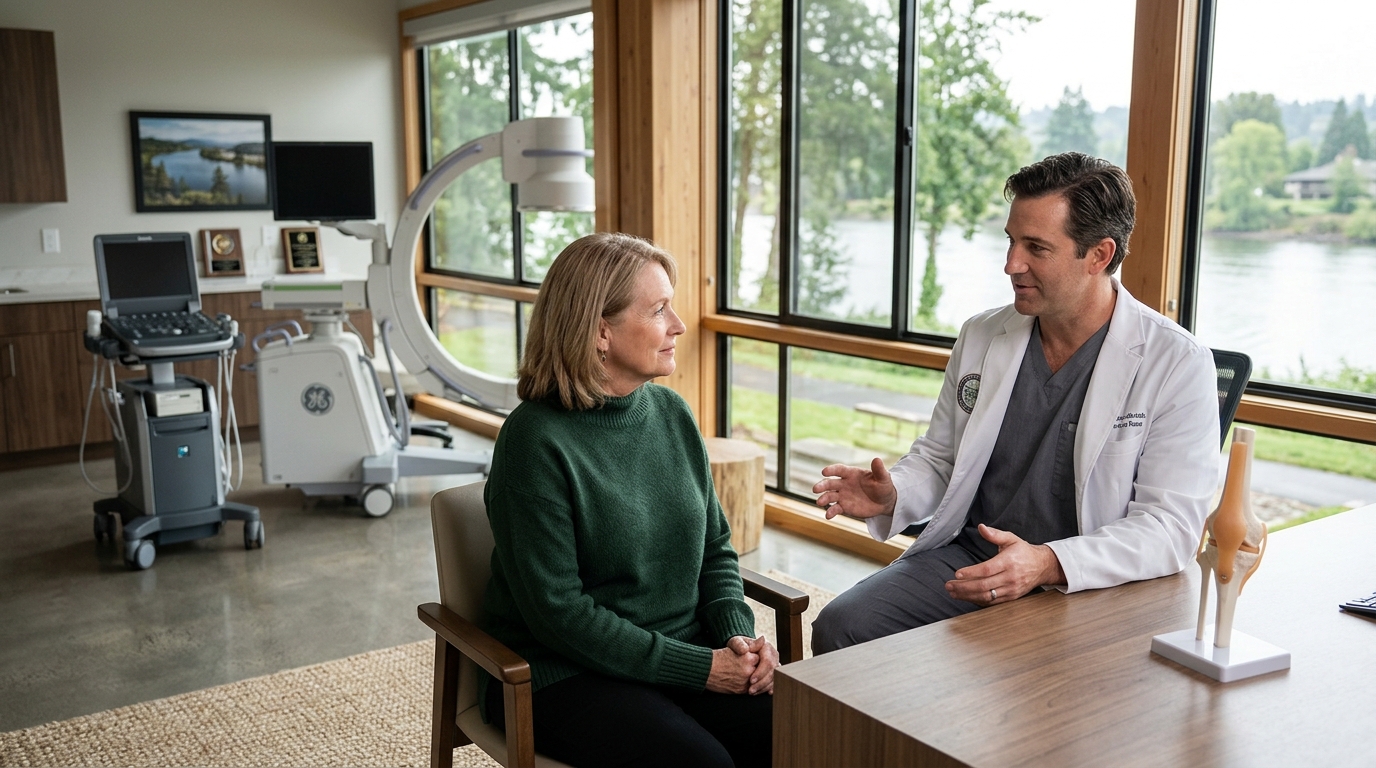
When selecting a specialist, ask about their proficiency in ultrasound imaging. A provider who can diagnose and treat in the same visit offers a significant advantage in accelerating recovery. They can also use fluoroscopic C-Arm guidance for deeper structures, such as the spine or hip, ensuring that injections are placed with millimeter accuracy. This dual-modality approach minimizes the risk of ineffective treatment and maximizes the therapeutic potential of the injected agents. (Elbow Out Elbow Pain)
Evaluating Regenerative Medicine Options
Non-surgical orthopedics has moved far beyond simple corticosteroid injections. The current standard of care involves regenerative medicine, which aims to heal damaged tissues rather than just mask pain. The three primary modalities you should evaluate are Platelet-Rich Plasma (PRP), Prolotherapy, and Biocellular Stem Cell Therapy. Each has distinct mechanisms and indications.
Platelet-Rich Plasma (PRP) is a concentration of a patient's own platelets, which release growth factors that stimulate healing. It is widely used for tendon injuries and early osteoarthritis. Prolotherapy involves injecting an irritant solution, such as dextrose, to stimulate the body's natural inflammatory healing response. This is particularly effective for ligament laxity and chronic joint instability. Biocellular Stem Cell Therapy utilizes autologous adipose tissue-derived stem cells to promote more robust tissue regeneration. This approach is often reserved for more advanced degenerative conditions where significant tissue repair is required.
Scientific literature supports the efficacy of these treatments. For instance, a meta-analysis of randomized controlled trials has demonstrated the efficacy of Platelet-Rich Plasma in the treatment of knee osteoarthritis. Similarly, research into mesenchymal stem cells injection in hip osteoarthritis shows preliminary results that are promising for long-term joint preservation. When evaluating a specialist, inquire about their specific protocols for preparing these therapies. The concentration of growth factors and the viability of stem cells are critical factors that determine clinical outcomes.
Assessing Provider Experience and Credentials
Regenerative orthopedic medicine is a specialized field that requires extensive training and clinical experience. Proficiency in hands-on diagnosis, ultrasound imaging, and fluoroscopic guidance takes years to develop. Therefore, the experience level of the provider is a paramount criterion for selection.
Look for providers who have performed thousands of regenerative injections. High-volume practitioners have encountered a wide variety of anatomical variations and pathological presentations, which enhances their ability to tailor treatments to individual patients. They are also more likely to stay current with the latest research and technological advancements in the field. For example, Oregon Regenerative Medicine has been dedicated to empowering patients with healthy, active longevity for over 30 years. Their team has performed over 40,000 regenerative injections, demonstrating a deep commitment to this specific area of practice.
Credentials also matter. Providers who are board-certified in relevant fields, such as physical medicine and rehabilitation or family medicine with additional training in regenerative techniques, bring a rigorous standard of care. Additionally, consider the multidisciplinary nature of the team. A practice that includes master aestheticians, somatic mindfulness facilitators, and functional medicine experts can address the holistic aspects of recovery, including nutrition, hormone optimization, and mental well-being.
Understanding Treatment Philosophy and Outcomes
Not all non-surgical specialists approach treatment the same way. Some may lean heavily toward surgical referral if conservative measures do not yield immediate results. Others may adopt a more patient-centered, long-term healing philosophy. It is crucial to align with a provider who prioritizes durable, pain-free function without unnecessary intervention.
A key indicator of a strong treatment philosophy is the emphasis on evidence-based practices. Providers should be able to explain the scientific basis for their recommended therapies and discuss realistic expectations for recovery. They should also be transparent about the risks and benefits of each option. For example, while no treatment has a 100% success rate, the vast majority of patients who undergo appropriate regenerative therapies achieve durable pain-free function without surgery or joint replacement.
Furthermore, consider the provider's approach to patient education. A good specialist will empower you to understand your condition and participate in your recovery. This includes providing condition-specific nutritional programs, education on injury prevention, and inspiration for maintaining an active lifestyle. The goal is not just to treat the injury but to help you live at your highest potential.

Comparing Non-Surgical Modalities
To help you make an informed decision, here is a comparison of the primary non-surgical orthopedic modalities.
| Modality | Primary Mechanism | Best For | Typical Recovery Time |
|---|---|---|---|
| Platelet-Rich Plasma (PRP) | Growth factor release from concentrated platelets | Tendon injuries, early osteoarthritis | Weeks to months |
| Prolotherapy | Inflammatory stimulation of ligament/tendon repair | Ligament laxity, joint instability | Weeks to months |
| Biocellular Stem Cell Therapy | Regeneration via autologous adipose-derived cells | Advanced degeneration, cartilage repair | Months |
| IV Therapy | Systemic nutrient and hydration support | Overall wellness, recovery support | Immediate |
Key Takeaways
- Imaging is Critical: Choose a specialist who performs in-office ultrasound imaging for real-time diagnosis and guidance.
- Experience Matters: Look for providers with decades of experience and thousands of successful injections performed.
- Regenerative Options: Ensure the provider offers a range of therapies, including PRP, Prolotherapy, and Stem Cell treatments.
- Evidence-Based Care: Select a practitioner who relies on scientific research and clinical data to guide treatment decisions.
- Holistic Approach: Consider practices that integrate functional medicine, nutrition, and mindfulness for comprehensive recovery.
- Transparent Outcomes: Be wary of providers who guarantee cures; instead, look for those who discuss realistic success rates and patient testimonials.
- Local Expertise: Prioritize home-grown experts who understand the specific needs of the regional population.
Frequently Asked Questions
What is the difference between PRP and Stem Cell therapy?
PRP uses concentrated platelets from your own blood to release growth factors that stimulate healing. Stem cell therapy uses autologous adipose-derived stem cells to promote more robust tissue regeneration and is often used for more advanced degenerative conditions.
Is ultrasound guidance necessary for these injections?
Yes, ultrasound guidance is essential for ensuring that the therapeutic agent is delivered precisely to the affected tissue. It allows the provider to visualize the needle in real-time, avoiding nerves and blood vessels, and ensuring maximum efficacy.
How long does recovery take after regenerative injections?
Recovery times vary depending on the procedure and the severity of the injury. Typically, patients can expect a few days of rest followed by a gradual return to activity over several weeks to months. Full healing can take up to six months or longer.
Are these treatments covered by insurance?
Coverage varies by insurance provider and plan. Some plans may cover diagnostic imaging or specific procedures, while others may consider regenerative therapies experimental. It is best to check with your insurance provider directly.
What conditions can be treated with non-surgical orthopedics?
Non-surgical orthopedics can treat a wide range of conditions, including osteoarthritis, tendonitis, ligament sprains, rotator cuff tears, and chronic joint pain. It is particularly effective for patients who want to avoid surgery or delay joint replacement.
How do I know if I am a candidate for regenerative medicine?
A consultation with a specialist is the best way to determine candidacy. The provider will evaluate your medical history, perform a physical exam, and likely use ultrasound imaging to assess the extent of your injury. They will then recommend the most appropriate treatment plan.
What are the risks associated with these procedures?
Since these treatments use your own biological materials, the risk of allergic reaction or rejection is minimal. However, as with any injection, there is a small risk of infection or bleeding. Choosing an experienced, sterile, and image-guided provider significantly minimizes these risks.
Schedule Your Consultation
If you are suffering from chronic joint pain or a musculoskeletal injury, do not settle for temporary relief. Take the next step toward a permanent solution by consulting with a specialist who combines advanced imaging, extensive experience, and evidence-based regenerative therapies. Visit Oregon Regenerative Medicine to schedule your consultation and discover how non-surgical options can restore your pain-free function and active lifestyle.