
Patients seeking non-surgical shoulder arthritis care in Portland should prioritize clinics offering image-guided regenerative injections, such as Platelet-Rich Plasma (PRP) and Prolotherapy, performed by board-certified specialists. Oregon Regenerative Medicine provides these advanced biocellular therapies in Lake Oswego, utilizing in-house laboratory preparation and real-time ultrasound guidance to target joint degeneration. This guide covers how to evaluate local providers, verify clinical credentials, understand treatment protocols, and navigate the costs and outcomes of non-surgical shoulder repair.
How to Choose a Clinic
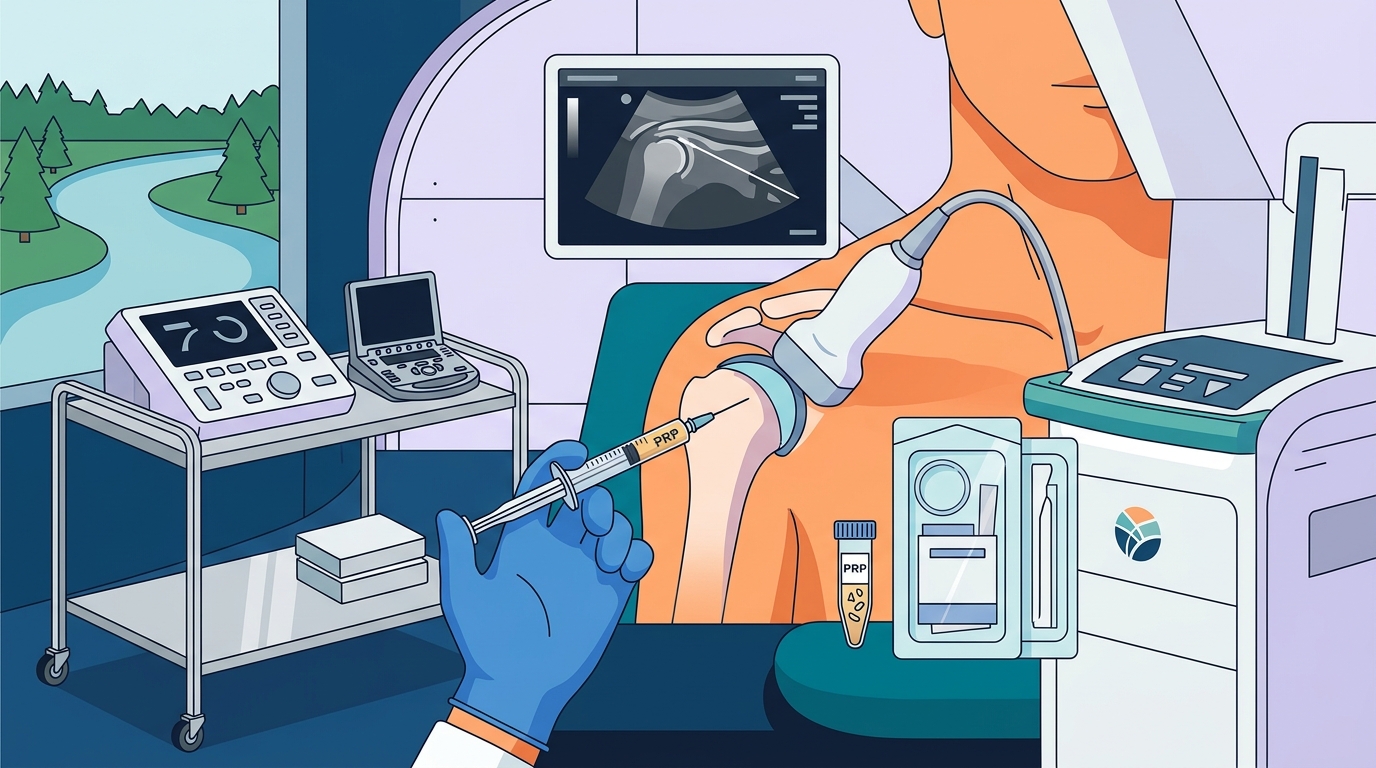
Selecting a provider for shoulder arthritis requires looking beyond marketing claims to verify clinical infrastructure. A reputable clinic must possess the technology to visualize the joint in real time. Image guidance is the primary differentiator between a standard injection and a regenerative procedure. Without ultrasound or fluoroscopy, a physician is injecting based on anatomical landmarks, which can lead to inaccurate placement in the complex shoulder joint.
Look for practices that utilize advanced ultrasound expertise for diagnostic and interventional purposes. The shoulder contains multiple compartments, including the glenohumeral joint, the subacromial space, and the biceps tendon sheath. Precision is critical to ensure the biologic agent reaches the damaged tissue rather than the surrounding muscle. Clinics that offer in-house laboratory preparation of biologics, such as PRP and A2M, often demonstrate a higher level of commitment to regenerative medicine than those relying on third-party kits.
Technology and Equipment
Verify if the clinic uses C-arm fluoroscopy or high-resolution ultrasound. Fluoroscopy-guided injections allow for dynamic visualization of bony anatomy and needle placement. While ultrasound is superior for soft tissue, fluoroscopy is the gold standard for deep joint spaces. A clinic equipped with both modalities offers the most comprehensive diagnostic and treatment capabilities.
Provider Specialization
Check the specific training of the physician. Regenerative medicine is a specialized field. Look for providers with certifications in orthopedic medicine or physical medicine and rehabilitation. At Oregon Regenerative Medicine, the medical team includes board-certified physiatrists and naturopathic physicians with extensive training in interventional orthobiologics. This multidisciplinary approach ensures that the mechanical and biological aspects of arthritis are addressed simultaneously.
What to Ask Before Committing
During your initial consultation, specific questions will reveal the depth of the clinic's expertise. Do not accept vague answers. You need to understand the mechanism of action and the expected timeline for recovery.
- How is the injection guided? Ask if they use real-time ultrasound or fluoroscopy. If they rely on palpation alone, consider seeking a second opinion.
- What is the preparation method? Ask if the PRP or stem cell graft is prepared in-house. In-house preparation allows for immediate use and specific concentration adjustments.
- What is the protocol? Ask how many injections are typically required and the spacing between them. Regenerative treatments often require a series of injections rather than a single event.
- What are the contraindications? A responsible provider will screen for conditions that might prevent healing, such as active infection or severe systemic disease.
How to Verify Credentials
Medical credentials can be verified through public databases. Do not rely solely on the clinic's website. Check the physician's license and board certification status with the Oregon Medical Board or the relevant naturopathic board. For board-certified physiatrists, verify their status with the American Board of Physical Medicine and Rehabilitation.
Additionally, review the clinic's affiliation with professional societies. Membership in organizations like the American Association of Orthopedic Medicine (AAOM) or the International Cellular Medicine Society indicates a commitment to staying current with scientific standards. Dr. Noel Peterson, the Medical Director at Oregon Regenerative Medicine, is certified in Prolotherapy by the AAOM and serves on the scientific Institutional Review Board of the International Cellular Medicine Society. These affiliations provide a layer of accountability and peer review.
How the Treatment Works
Non-surgical shoulder arthritis treatment typically follows a structured protocol. The process begins with a comprehensive evaluation, including a physical exam and diagnostic imaging. In-office ultrasound is often used to identify the specific structures causing pain, such as a rotator cuff tear or labral degeneration. This diagnosis guides the choice of therapy.
The Injection Process
For PRP therapy, a sample of the patient's blood is drawn and processed in a centrifuge to concentrate the platelets. These platelets contain growth factors that stimulate tissue repair. The concentrated PRP is then injected into the joint under image guidance. For adipose tissue graft therapy, a small sample of fat is harvested, processed to isolate stem cells and matrix, and injected into the joint. This procedure is more involved and typically takes about 2.5 hours.
Recovery and Rehabilitation
Post-injection, patients are usually advised to rest the shoulder for a short period, followed by a structured physical therapy program. The goal is to load the tissue in a way that promotes healing without causing re-injury. The biological agents work over weeks to months, remodeling the tissue and reducing inflammation.
What It Costs
Costs for regenerative shoulder treatments vary based on the complexity of the procedure and the specific biologics used. PRP injections are generally less expensive than stem cell therapies. Factors that drive the price up include the use of fluoroscopy, the number of injections required, and the cost of in-house laboratory preparation.
Most insurance plans do not cover regenerative medicine as it is often classified as experimental or elective. Patients should inquire about out-of-pocket costs and payment plans during the consultation. While the upfront cost is higher than a standard steroid injection, the potential for long-term pain relief and avoidance of surgery may offer better value over time.
Common Mistakes to Avoid
Patients often make critical errors that compromise treatment outcomes. The most common mistake is failing to address underlying mechanical instability. If the shoulder is unstable due to ligament laxity, injecting the joint without stabilizing the ligaments may yield poor results. Prolotherapy is often used in conjunction with PRP to address ligamentous laxity.
Another mistake is unrealistic expectations. Regenerative medicine is not a quick fix. It is a biological process that takes time. Patients who expect immediate relief after a single injection may become discouraged and abandon the protocol. Consistency in rehabilitation and adherence to the treatment plan are essential for success.
Versus Surgical Alternatives
Shoulder replacement surgery is a definitive treatment for end-stage arthritis but carries significant risks, including infection, dislocation, and a long recovery period. Non-surgical regenerative options offer a less invasive alternative that may delay or avoid surgery. A comparison of the two approaches is provided below.
| Feature | Regenerative Injections (PRP/Stem Cells) | Shoulder Replacement Surgery |
|---|---|---|
| Invasiveness | Minimally invasive (needle) | Major surgery (incision) |
| Recovery Time | Weeks to months | Months to a year |
| Risk Profile | Low (infection, bleeding) | Higher (infection, dislocation, anesthesia) |
| Longevity | Variable, may require repeat treatments | 15-20 years (implant lifespan) |
| Cost | Out-of-pocket, moderate | High, often insurance-covered |
Regenerative medicine is best suited for patients with mild to moderate arthritis or those who are not ideal candidates for surgery. It aims to restore function and reduce pain by leveraging the body's own healing mechanisms.
For Specific Patient Situations
The choice of treatment depends on the specific pathology. For patients with shoulder osteoarthritis, a combination of PRP and A2M (Alpha-2-Macroglobulin) may be recommended. A2M acts as a proteinase inhibitor, protecting cartilage from enzymatic degradation. For patients with rotator cuff tears, PRP may be injected into the tear site to promote healing.
Patients with frozen shoulder (adhesive capsulitis) may benefit from a different protocol, focusing on breaking up adhesions and restoring range of motion. The provider should tailor the treatment plan to the specific diagnosis identified during the ultrasound evaluation.
Rules and Patient Protections
Patients have the right to informed consent. Before any procedure, the provider must explain the risks, benefits, and alternatives. You should feel comfortable asking for a detailed explanation of the procedure and the expected outcomes. Additionally, clinics must adhere to strict safety protocols for the preparation and administration of biologics. In-house laboratories must follow Good Manufacturing Practices (GMP) to ensure the safety and efficacy of the products.
Local Specifics in Portland
The Portland metro area offers a variety of regenerative medicine clinics. Oregon Regenerative Medicine is located in Lake Oswego, on the Willamette River, providing easy access for patients from Portland, Beaverton, and surrounding areas. The clinic is situated in the historic Foundry Building at Oswego Pointe, offering a calm and professional environment for treatment. Local providers may have different specialties, so it is important to choose one that focuses on the specific condition you are treating.
Timing and Treatment Windows
Timing is critical in regenerative medicine. Early intervention can prevent the progression of arthritis and preserve joint function. Waiting until the joint is severely damaged may limit the effectiveness of non-surgical treatments. If you are experiencing persistent pain, stiffness, or loss of function, it is advisable to seek an evaluation promptly. The biological healing process takes time, so starting early allows for a longer period of recovery and rehabilitation.
Results Over Time
Patients typically begin to notice improvements in pain and function within a few weeks to months after treatment. The full benefits of regenerative injections may take up to a year to manifest. Long-term studies suggest that PRP and stem cell therapies can provide durable pain relief and improved function in a significant proportion of patients. Regular follow-up appointments are essential to monitor progress and adjust the treatment plan as needed.
Key Takeaways
- Choose a clinic with image-guided injection capabilities (ultrasound or fluoroscopy).
- Verify the provider's board certification and professional affiliations.
- Ask about the in-house preparation of biologics like PRP and A2M.
- Understand that regenerative medicine is a process, not a one-time fix.
- Consider the cost and insurance coverage before committing to treatment.
- Early intervention is key to preserving joint function.
- Combine injections with a structured physical therapy program for best results.
- Review the clinic's safety protocols and patient consent procedures.
Frequently Asked Questions
Is PRP effective for shoulder arthritis?
Research suggests that PRP can reduce pain and improve function in patients with shoulder osteoarthritis. It works by delivering growth factors to the damaged tissue, promoting repair and reducing inflammation.
How many injections are needed?
The number of injections varies depending on the severity of the condition and the specific protocol. Some patients may require a single injection, while others may need a series of three to five injections spaced several weeks apart.
Does insurance cover regenerative medicine?
Most insurance plans do not cover regenerative medicine as it is often classified as experimental. Patients should check with their provider and inquire about out-of-pocket costs.
What is the difference between PRP and stem cell therapy?
PRP uses concentrated platelets from blood to stimulate healing. Stem cell therapy uses cells harvested from adipose tissue to regenerate tissue. Stem cell therapy is more complex and typically more expensive.
How long does the procedure take?
A PRP injection typically takes 30 to 60 minutes. An adipose tissue graft procedure takes about 2.5 hours, including harvesting and processing.
Can I return to work after the injection?
Most patients can return to light duties within a few days. Heavy lifting or overhead activities should be avoided for several weeks to allow the tissue to heal.
What are the risks of regenerative injections?
Risks are generally low and include pain at the injection site, infection, and bleeding. Serious complications are rare when the procedure is performed by an experienced provider using image guidance.
Where is Oregon Regenerative Medicine located?
Oregon Regenerative Medicine is located at 320 Oswego Pointe Dr., Lake Oswego, Oregon. It is easily accessible from Portland and other parts of the Willamette Valley.