

Biocellular joint regeneration represents a paradigm shift in orthopedic care, moving beyond symptom management to actual tissue repair. This advanced therapeutic approach utilizes autologous adipose-derived stem cells to harness the body's innate healing potential. By targeting the root cause of degeneration, patients can avoid invasive surgeries and long-term pharmaceutical dependencies. The following guide details the specific conditions treated and the clinical evidence supporting this regenerative pathway. (Fluoroscopy Guided Spine Injections)
What Is Biocellular Joint Regeneration?
Biocellular joint regeneration is a specialized medical procedure that harvests a patient's own adipose (fat) tissue to isolate adult stem cells. These cells are then processed and injected directly into damaged joints, tendons, or ligaments. The term "biocellular" refers to the use of living, functional cells that actively participate in tissue repair. Unlike synthetic implants or corticosteroids, which merely mask pain, these cells release growth factors that stimulate the regeneration of cartilage and connective tissue.
According to recent clinical reviews, the regenerative capacity of adipose-derived stem cells is superior to traditional bone marrow aspirates in many orthopedic applications. This method leverages the body's natural biological response to injury. The process is minimally invasive, typically performed in an outpatient setting with local anesthesia. Patients often report significant reductions in pain and improvements in joint mobility within weeks of the procedure.
Primary Orthopedic Conditions Treated
Oregon Regenerative Medicine specializes in treating a wide array of musculoskeletal conditions using biocellular therapy. The following conditions are the most common candidates for this regenerative approach.
Osteoarthritis of the Knee
Knee osteoarthritis is one of the most prevalent conditions treated with biocellular regeneration. As cartilage wears down, bones rub against each other, causing pain and stiffness. Biocellular therapy aims to regenerate this lost cartilage. Studies indicate that intra-articular injections of adipose-derived stem cells can slow disease progression and reduce pain scores significantly. For patients facing a total knee replacement, this therapy offers a viable alternative that preserves natural joint mechanics.
Osteoarthritis of the Hip
Hip osteoarthritis often leads to severe mobility issues and chronic pain. Biocellular joint regeneration provides a targeted solution by delivering regenerative cells directly into the hip joint space. This approach helps to reduce inflammation and promote the repair of the acetabular labrum and articular cartilage. Clinical data suggests that patients with early to moderate hip degeneration can experience durable pain relief and improved range of motion.
Rotator Cuff Tears and Shoulder Pain
Shoulder injuries, particularly rotator cuff tears, are difficult to heal due to poor blood supply in the tendons. Biocellular therapy enhances this healing process by introducing a high concentration of growth factors. The adipose-derived cells help to bridge the gap in torn tendons and strengthen the surrounding tissue. This is especially beneficial for partial-thickness tears that might otherwise require surgical repair.
Ligament Injuries (ACL, MCL, Ankle Sprains)
Chronic ligament laxity, such as that seen in old ACL or MCL injuries, can lead to joint instability. Biocellular regeneration strengthens these ligaments by stimulating collagen production. Similarly, chronic ankle sprains that have not responded to physical therapy can be treated effectively. The regenerative cells help to repair the micro-tears in the ligament fibers, restoring stability and reducing the risk of re-injury.
Tendonopathies (Tennis Elbow, Golfer’s Elbow, Achilles)
Tendinopathies are degenerative conditions of the tendons, often caused by overuse or aging. Tennis elbow (lateral epicondylitis) and golfer’s elbow (medial epicondylitis) are common examples. Biocellular therapy targets the degenerative tissue at the tendon insertion point. By promoting neovascularization and collagen synthesis, the tendon can heal properly. Achilles tendinopathy, a painful condition affecting the heel, also responds well to this regenerative approach.
Spine and Chronic Pain Applications
While joint regeneration is a primary focus, biocellular therapy also addresses complex spinal conditions. The spine is susceptible to degenerative disc disease, facet joint arthritis, and nerve compression.
Facet Joint Arthritis
The facet joints in the spine can develop arthritis, leading to localized back or neck pain. Biocellular injections into these joints can reduce inflammation and regenerate the cartilage lining. This is often performed under fluoroscopic guidance to ensure precise placement. Patients often report a significant decrease in axial pain and improved spinal flexibility.
Discogenic Pain
Degenerative discs can cause chronic back pain due to the loss of disc height and hydration. Biocellular therapy aims to restore the disc's structural integrity by stimulating the surrounding annulus fibrosus. While complete disc regeneration is complex, the reduction in pain and inflammation can be substantial. This approach is particularly useful for patients who have not found relief with conservative care.
Stellate Ganglion Block for Pain Management
In addition to joint regeneration, Oregon Regenerative Medicine offers Stellate Ganglion Blocks for complex regional pain syndrome and other chronic pain conditions. This procedure involves injecting anesthetic near the stellate ganglion in the neck. It helps to reset the sympathetic nervous system, providing relief from severe, refractory pain. This complements biocellular therapy by addressing the neurological component of chronic pain.
The Role of Ultrasound and Fluoroscopy
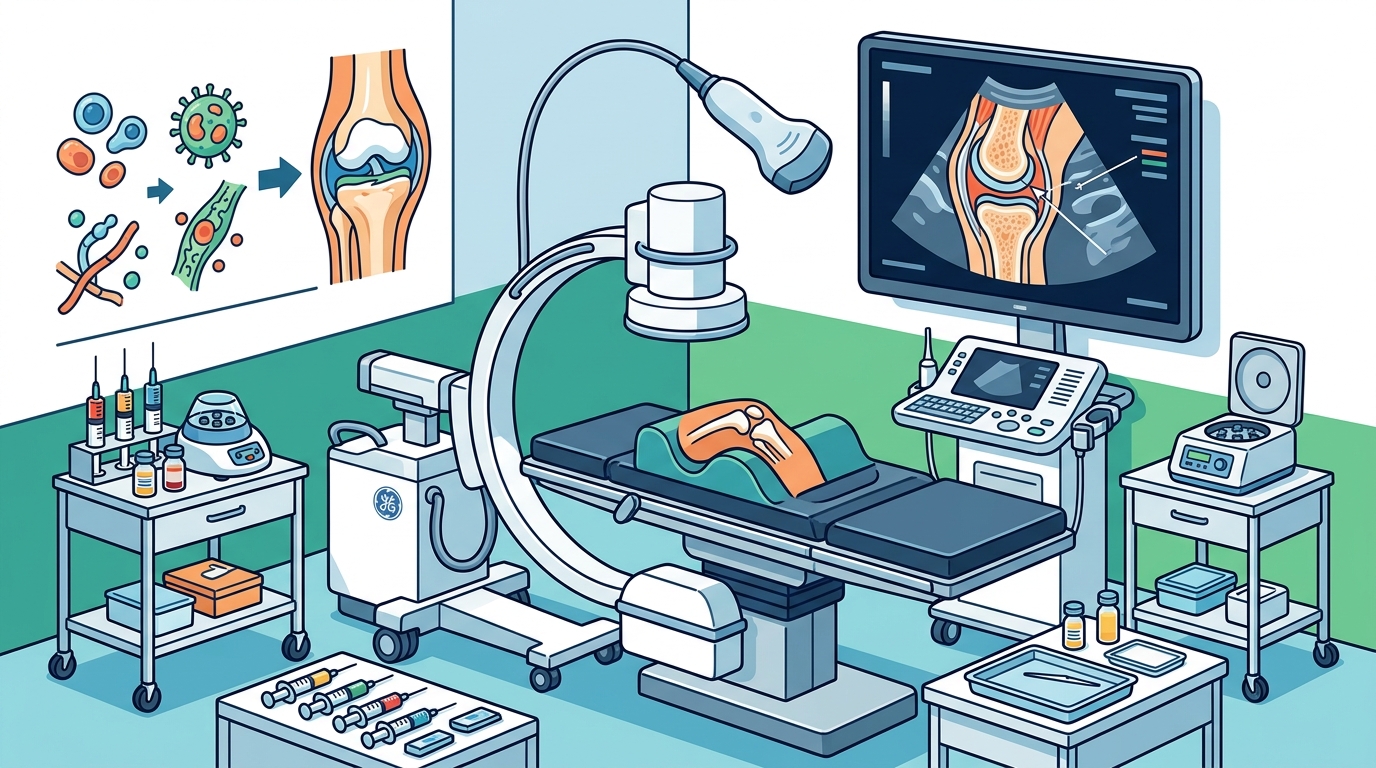
Accurate diagnosis and precise injection are critical for the success of biocellular joint regeneration. Oregon Regenerative Medicine utilizes advanced imaging technologies to ensure optimal outcomes.
Ultrasound Imaging
Ultrasound imaging allows physicians to visualize soft tissues in real-time. This is essential for identifying tendon tears, ligament damage, and joint effusions. The ability to see the needle in real-time ensures that the biocellular material is delivered exactly to the target site. This precision maximizes the therapeutic effect and minimizes the risk of complications. Ultrasound is particularly effective for peripheral joints like the knee, shoulder, and elbow.
Fluoroscopic Guidance
For spinal injections, fluoroscopy provides a live X-ray view of the bony structures. This is necessary for safely navigating the spine and avoiding nerves and blood vessels. Fluoroscopic guidance ensures that the regenerative cells are placed accurately into the facet joints or epidural space. This level of precision is vital for treating complex spinal conditions effectively.
PRP vs. Biocellular Therapy
While Platelet-Rich Plasma (PRP) is a popular regenerative treatment, biocellular therapy offers distinct advantages for certain conditions.
| Feature | Platelet-Rich Plasma (PRP) | Biocellular Joint Regeneration |
|---|---|---|
| Source | Patient's Blood | Patient's Adipose Tissue |
| Cell Type | Platelets and Growth Factors | Adult Stem Cells and Stromal Vascular Fraction |
| Regenerative Potential | Moderate | High |
| Best For | Mild to Moderate Osteoarthritis, Tendonitis | Severe Osteoarthritis, Large Tears, Cartilage Defects |
| Duration of Effect | 6-12 Months | 12-24+ Months |
Biocellular therapy contains a higher concentration of stem cells, which can lead to more robust tissue regeneration. It is often recommended for patients with more advanced degeneration or those who have not responded to PRP. The choice between the two depends on the specific condition, the severity of the injury, and the patient's overall health.
Key Takeaways
- Biocellular joint regeneration uses autologous adipose-derived stem cells to repair damaged tissues.
- It is highly effective for treating osteoarthritis in the knee, hip, and shoulder.
- The therapy can help avoid or delay the need for joint replacement surgery.
- Ultrasound and fluoroscopic guidance ensure precise delivery of regenerative cells.
- Oregon Regenerative Medicine has performed over 40,000 regenerative injections.
- Biocellular therapy offers superior regenerative potential compared to PRP for severe conditions.
- Patients often experience durable pain relief and improved function without surgery.
Frequently Asked Questions
Is biocellular joint regeneration safe?
Yes, biocellular joint regeneration is considered safe because it uses the patient's own cells. This eliminates the risk of immune rejection or disease transmission. The procedure is minimally invasive and performed under sterile conditions.
How long does the pain relief last?
The duration of pain relief varies by patient and condition. Many patients experience significant improvement for 12 to 24 months or longer. The regenerative effects can be long-lasting as the tissue continues to heal over time.
What is the recovery time after the procedure?
Recovery is typically quick. Most patients can return to normal activities within a few days. However, strenuous exercise should be avoided for a few weeks to allow the tissue to heal. Physical therapy may be recommended to optimize results.
Who is a good candidate for biocellular therapy?
Good candidates are individuals with moderate to severe osteoarthritis, tendon tears, or ligament injuries who have not found relief with conservative care. Patients who want to avoid surgery or delay joint replacement are ideal candidates.
Does insurance cover biocellular joint regeneration?
Insurance coverage varies by provider and plan. Some plans may cover the diagnostic imaging or related procedures, but the biocellular therapy itself is often considered elective. Oregon Regenerative Medicine can provide detailed cost information and assist with insurance verification.
How is the adipose tissue harvested?
The adipose tissue is harvested through a minor liposuction procedure. This is typically done under local anesthesia and takes about 15-30 minutes. The tissue is then processed to isolate the stem cells for injection.
Can biocellular therapy regenerate cartilage?
Yes, biocellular therapy has the potential to regenerate cartilage. The stem cells differentiate into chondrocytes, which produce new cartilage matrix. This can help to restore joint function and reduce pain in osteoarthritic joints.
Schedule Your Consultation
If you are suffering from chronic joint pain or degenerative conditions, biocellular joint regeneration may offer a solution. Oregon Regenerative Medicine provides expert care in Portland, Oregon, with a focus on non-surgical treatments. Our team of experienced physicians is dedicated to helping you achieve pain-free function and an active lifestyle.
Contact us today to schedule a consultation and learn more about how biocellular therapy can help you. Visit our Contact Page to get started. You can also explore our Therapies page for more information on our services. For a virtual tour of our facility, please visit our Virtual Tour. To read more about our approach, check out our Articles section.