
Evolution of Non-Surgical Joint Preservation in Portland Regenerative Medicine
For decades, the standard medical response to severe joint degeneration in the Pacific Northwest was a single, irreversible path: surgical intervention. Today, that paradigm has shifted dramatically. According to recent orthopedic trends, over 40,000 regenerative injections have been performed by leading local clinics, signaling a massive patient migration toward biological healing. This guide explores how Portland has become a hub for non-surgical joint preservation, detailing the scientific evolution from basic prolotherapy to advanced biocellular therapies.
Historical Context of Joint Care
Regenerative Orthopedic Medicine is a powerful healing art and medical specialty. Proficiency requires many years of dedicated training and clinical experience. In the early days, treatment options were limited to anti-inflammatory medications, physical therapy, or eventual joint replacement surgery. The gap in the middle, for patients who wanted to avoid surgery but needed more than physical therapy, was filled by early forms of prolotherapy.
Prolotherapy is a non-surgical treatment that stimulates the body's natural healing response to strengthen ligaments and tendons. By injecting an irritant solution, typically dextrose, into damaged tissues, the body initiates an inflammatory healing cascade. This approach laid the groundwork for modern regenerative techniques. At Oregon Regenerative Medicine, the focus has always been on empowering patients to create healthy, active longevity through these non-invasive methods.
The evolution of this field in Portland is marked by a shift from generic irritation therapies to highly specific biological interventions. Clinics in the region, such as those located in the historic Foundry Building, have pioneered the use of patient-derived biological materials. This local expertise has positioned Portland as a key destination for those seeking alternatives to traditional orthopedic surgery.
The Rise of Platelet-Rich Plasma
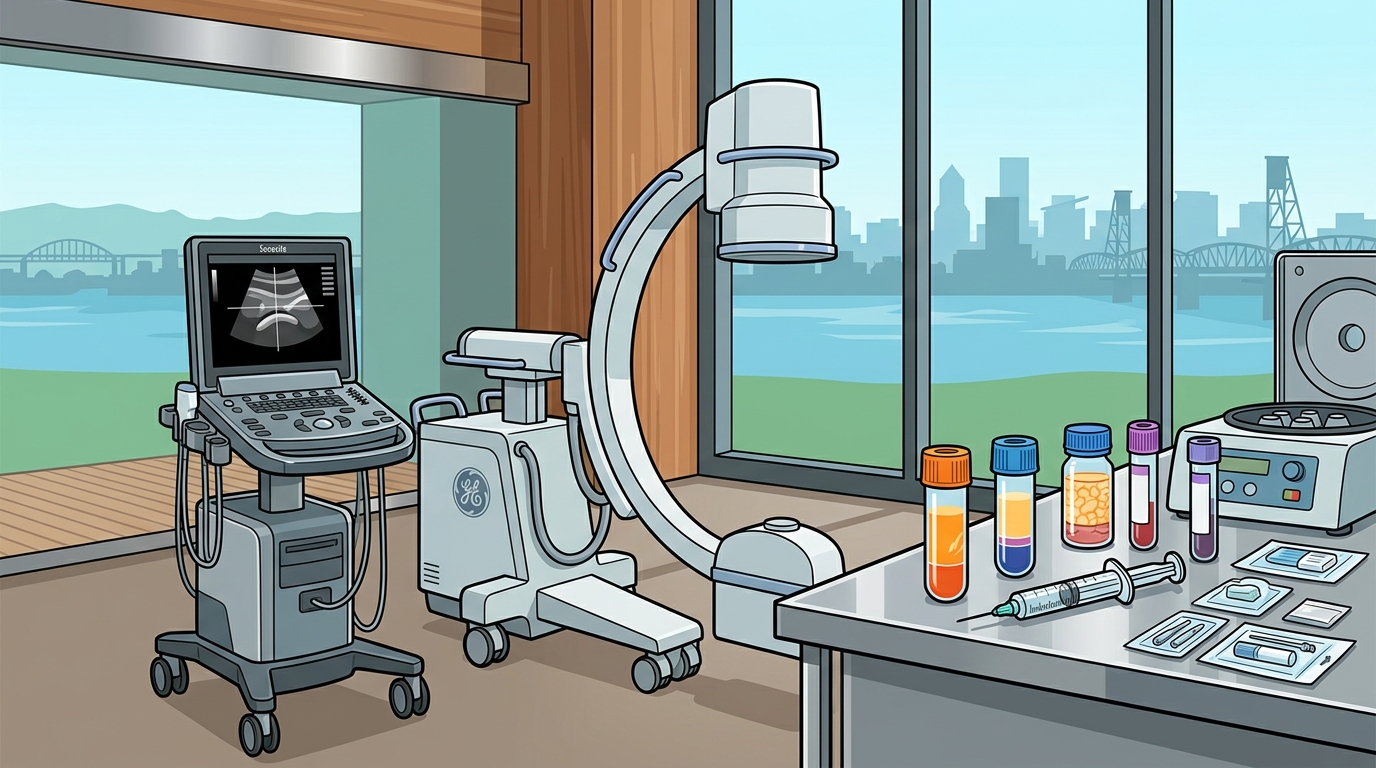
Platelet-Rich Plasma (PRP) represents a significant leap forward in non-surgical joint care. PRP is a concentration of a patient's own platelets, which contain growth factors that accelerate the healing of injured tendons, ligaments, muscles, and bones. The process involves drawing a small amount of blood, spinning it in a centrifuge to separate the platelets, and then injecting the concentrated plasma into the injured area.
Research supports the efficacy of this method. A meta-analysis of randomized controlled trials published in medical literature highlights the efficacy of platelet-rich plasma in the treatment of knee osteoarthritis. These studies demonstrate that PRP can reduce pain and improve function in patients with degenerative joint disease. The growth factors identified in PRP include vascular endothelial growth factor, platelet-derived growth factor, and transforming growth factor-beta, all of which play critical roles in tissue repair.
In Portland, the application of PRP has expanded beyond orthopedics. It is now used for skin rejuvenation, hair restoration, and even dry eye treatment. The versatility of PRP makes it a cornerstone of modern regenerative medicine. However, the success of PRP therapy depends heavily on the preparation method and the precision of the injection. This is where local expertise becomes invaluable.
Stem Cell and Biocellular Therapies
The most recent evolution in joint preservation is the use of biocellular therapies, specifically adipose-derived stem cells. These therapies utilize adult adipose tissue, which is the most abundant source of reparative cells in the human body. By harvesting fat from the patient and processing it to isolate stem cells, doctors can introduce a high concentration of regenerative cells directly into the damaged joint.
Adipose-derived stem cells facilitate hematopoiesis and have shown advantages over bone marrow-derived mesenchymal stem cells in various studies. The regeneration of cartilage in human knee osteoarthritis with autologous adipose tissue-derived stem cells is a promising area of research. This approach not only addresses pain but also aims to restore the structural integrity of the joint.
Biocellular therapies are particularly effective for patients with advanced osteoarthritis who are not yet candidates for joint replacement. The treatment works by modulating the inflammatory environment and promoting the regeneration of damaged tissue. Patients often report durable pain-free function without the need for surgery. The key to success lies in the isolation and delivery of these cells, which requires specialized equipment and skilled practitioners.
The Role of Ultrasound Guidance
Accuracy is the differentiator between effective regenerative medicine and guesswork. Ultrasound imaging is equal to or better than MRI in evaluating most tendon and ligament disorders in the arms and legs. This includes common conditions such as achilles tendinitis, tennis elbow, golfer’s elbow, rotator cuff tendinitis, and meniscus tears.
Using ultrasound for guidance allows physicians to see the needle in real-time as it enters the tissue. This precision ensures that the therapeutic agents are delivered exactly where they are needed. It also allows for the separation of individual tendon and ligament fibers, avoiding nerves and blood vessels. This level of detail is impossible to achieve with blind injections or even fluoroscopic guidance alone in many soft tissue cases.
The acceleration of ultrasound technology over the past 10 years has made in-office imaging a standard of care. Getting the correct diagnosis quickly can mean weeks or months of your life back. In Portland, clinics that invest in ultrasound expertise provide a significant advantage to their patients. This technology enables immediate feedback and adjustment during the procedure, maximizing the therapeutic outcome.
Therapy Comparison Matrix
Understanding the differences between available non-surgical options is crucial for making an informed decision. The table below summarizes the key characteristics of the primary therapies offered in Portland regenerative medicine.
| Therapy Type | Source Material | Primary Mechanism | Best For |
|---|---|---|---|
| Prolotherapy | Chemical Irritant (Dextrose) | Stimulates inflammatory healing cascade | Ligament laxity, mild osteoarthritis |
| Platelet-Rich Plasma (PRP) | Patient's Blood | Delivers concentrated growth factors | Tendon injuries, early joint degeneration |
| Biocellular Stem Cells | Patient's Adipose Tissue | Introduces reparative stem cells | Advanced osteoarthritis, cartilage loss |
Key Takeaways
- Portland has emerged as a leader in regenerative medicine, with local clinics performing tens of thousands of successful injections.
- Prolotherapy remains a foundational treatment for ligament and tendon strengthening through controlled inflammation.
- PRP therapy leverages the body's own growth factors to accelerate healing in tendons and joints.
- Biocellular stem cell therapy offers the most advanced option for cartilage regeneration using adipose-derived cells.
- Ultrasound guidance is critical for precision, safety, and accurate diagnosis during injection procedures.
- Non-surgical options can provide durable pain relief and functional improvement for thousands of patients annually.
- Choosing a clinic with specialized ultrasound expertise ensures higher accuracy and better outcomes.
Frequently Asked Questions
What is the difference between PRP and stem cell therapy?
PRP uses concentrated platelets from your blood to release growth factors, while stem cell therapy uses adipose-derived cells to introduce reparative cells directly into the tissue. Stem cell therapy is generally considered more potent for significant cartilage loss.
Is ultrasound guidance necessary for these injections?
Yes, ultrasound guidance is highly recommended. It allows the physician to visualize the needle and target the exact area of damage, ensuring the treatment is effective and safe. Blind injections have a higher risk of missing the target.
How long does recovery take after regenerative injections?
Recovery times vary by therapy. Most patients experience some soreness for a few days. Full therapeutic effects can take several weeks to months as the body heals. Prolotherapy may require a series of treatments over time.
Are these treatments covered by insurance?
Many regenerative medicine treatments, including PRP and stem cell therapy, are often considered elective or experimental by insurance providers. It is best to check with your specific provider and the clinic's billing department for details.
Who is a good candidate for non-surgical joint preservation?
Good candidates are individuals with osteoarthritis, tendon injuries, or ligament damage who want to avoid surgery or delay joint replacement. Patients who are not ready for or are not candidates for surgery are ideal candidates for these therapies.
What are the risks of stem cell therapy?
Since the cells are autologous (from your own body), the risk of rejection is minimal. Risks are similar to other injections, such as infection or bleeding, but are rare when performed by skilled physicians using sterile techniques.
How many treatments are typically needed?
This depends on the severity of the condition and the therapy used. Some patients see improvement after one PRP injection, while others may need a series of prolotherapy treatments. Stem cell therapy may also require follow-up evaluations.
Schedule Your Consultation
If you are suffering from joint pain and want to explore non-surgical options, it is time to take action. Portland's leading regenerative medicine experts are ready to help you regain your mobility and quality of life. Contact Oregon Regenerative Medicine today to schedule a consultation and learn which therapy is right for you.
Visit our Contact Page to book your appointment or call oregenmed.com for more information. Do not let joint pain dictate your life. Choose the power of regenerative medicine.