
Osteoarthritis affects over 32.5 million adults in the United States, representing a significant portion of the population seeking relief from chronic joint degeneration. According to the CDC, this condition is a leading cause of disability, yet many patients in the Pacific Northwest are unaware that surgical intervention is not their only option. For decades, the standard medical response to severe joint pain has been joint replacement or lifelong pain management. However, a paradigm shift in regenerative medicine has provided thousands of patients in Oregon and Washington with durable, pain-free function without the risks of major surgery. (PRP amp Biocellular Joint)
The ORM Approach to Joint Regeneration
Oregon Regenerative Medicine (ORM) has established itself as the original home-grown Pacific Northwest expert in regenerative orthopedics. Located inside the historic Foundry Building at Oswego Pointe, the clinic has spent over 30 years empowering patients to create healthy, active longevity. Unlike traditional orthopedic practices that may rush toward surgical solutions, ORM focuses on the biological repair of tendons, ligaments, joints, and the spine.
The clinic has performed over 40,000 regenerative injections, a milestone that reflects both its clinical volume and its commitment to evidence-based care. The medical team, including Dr. Noel Peterson, Dr. Kristian Flores, Dr. Stacey Guggino, and Dr. Terry Manning II, brings decades of specialized training in hands-on diagnosis and image-guided procedures. Their methodology is designed to treat the root cause of degeneration rather than merely masking symptoms with medication.
Regenerative Orthopedic Medicine is a powerful healing art that requires proficiency in both biological science and precise mechanical application. At ORM, the doctors utilize a combination of autologous (patient-derived) tissues to enhance the natural cycles of repair. This approach is particularly effective for aging and chronically injured knees, hips, rotator cuffs, shoulders, elbows, wrists, hands, feet, ankles, and TMJs. Most patients arrive at ORM after being told that surgery or a lifetime on pain medications is their only solution. While no treatment guarantees a 100% success rate, the vast majority of patients achieve durable pain-free function without surgery, joint replacement, or drugs.
Platelet Rich Plasma (PRP) Therapy
Platelet Rich Plasma (PRP) is a concentrated preparation of a patient's own blood plasma, which contains a high density of platelets and growth factors. Research published in the Journal of Orthopaedic Surgery indicates that PRP can significantly reduce pain and improve function in patients with knee osteoarthritis. The therapy works by stimulating the body's natural healing response, promoting tissue repair and reducing inflammation in the affected joint.
At Oregon Regenerative Medicine, PRP is not a one-size-fits-all solution. The preparation process is optimized to quantify cytokines and growth factors, ensuring that the treatment delivers the maximum biological potential. This is particularly useful for treating early-stage osteoarthritis, tendonitis, and ligament injuries. The growth and repair compounds identified in PRP help to accelerate the healing of damaged tissues, allowing patients to return to their daily activities with reduced pain and improved mobility.
PRP therapy is also utilized for aesthetic applications, such as skin rejuvenation and hair restoration, demonstrating the versatility of this biological treatment. However, in the context of orthopedic care, it serves as a cornerstone for non-surgical joint regeneration. The procedure involves drawing a small amount of blood, processing it to concentrate the platelets, and then injecting it directly into the injured area under image guidance.
Prolotherapy for Ligament Repair
Prolotherapy is a non-surgical treatment that involves injecting an irritant solution, typically dextrose, into damaged ligaments and tendons. This injection stimulates the body's inflammatory healing response, leading to the proliferation of new connective tissue. A study in the Journal of Alternative and Complementary Medicine highlights the efficacy of dextrose prolotherapy for anterior cruciate ligament laxity and knee osteoarthritis. The treatment is designed to strengthen the structural integrity of the joint, thereby reducing pain and improving stability.
At ORM, prolotherapy is often used in conjunction with PRP to enhance the healing response. The combination of these therapies addresses both the inflammatory component and the structural weakness of the joint. This approach is particularly beneficial for patients with chronic joint pain who have not found relief with physical therapy or anti-inflammatory medications. The doctors at ORM use their expertise to target the specific areas of ligamentous laxity, ensuring that the treatment is both precise and effective.
Prolotherapy is a nontraditional approach to knee osteoarthritis that has gained recognition for its ability to provide long-term relief. By stimulating the body's natural healing mechanisms, prolotherapy helps to restore the function of the joint without the need for invasive surgery. The treatment is generally well-tolerated, with most patients experiencing some temporary soreness at the injection site, which subsides as the healing process begins.
Biocellular Stem Cell Therapies
Biocellular stem cell therapy represents the cutting edge of regenerative medicine, utilizing autologous adipose tissue-derived stem cells to promote tissue regeneration. These cells, harvested from the patient's own body, have the potential to differentiate into various cell types, including cartilage and bone. According to research in the Journal of Translational Medicine, adipose-derived stem cells show significant promise in the regeneration of articular cartilage in knee osteoarthritis. The therapy aims to replace damaged cartilage with new, healthy tissue, thereby restoring joint function and reducing pain.
At Oregon Regenerative Medicine, the biocellular therapy process involves harvesting adipose tissue, processing it to isolate the stem cells, and then injecting them into the affected joint. This procedure is performed under ultrasound or fluoroscopic guidance to ensure accurate placement of the cells. The use of autologous cells minimizes the risk of rejection and immune response, making it a safe and effective option for many patients.
The benefits of biocellular stem cell therapy extend beyond pain relief. Patients often report improved range of motion, increased strength, and a better quality of life. The therapy is particularly beneficial for those with advanced osteoarthritis who are not candidates for joint replacement or who wish to delay surgery. By harnessing the body's own regenerative potential, ORM provides a powerful alternative to traditional surgical interventions.
The Role of Ultrasound Guidance
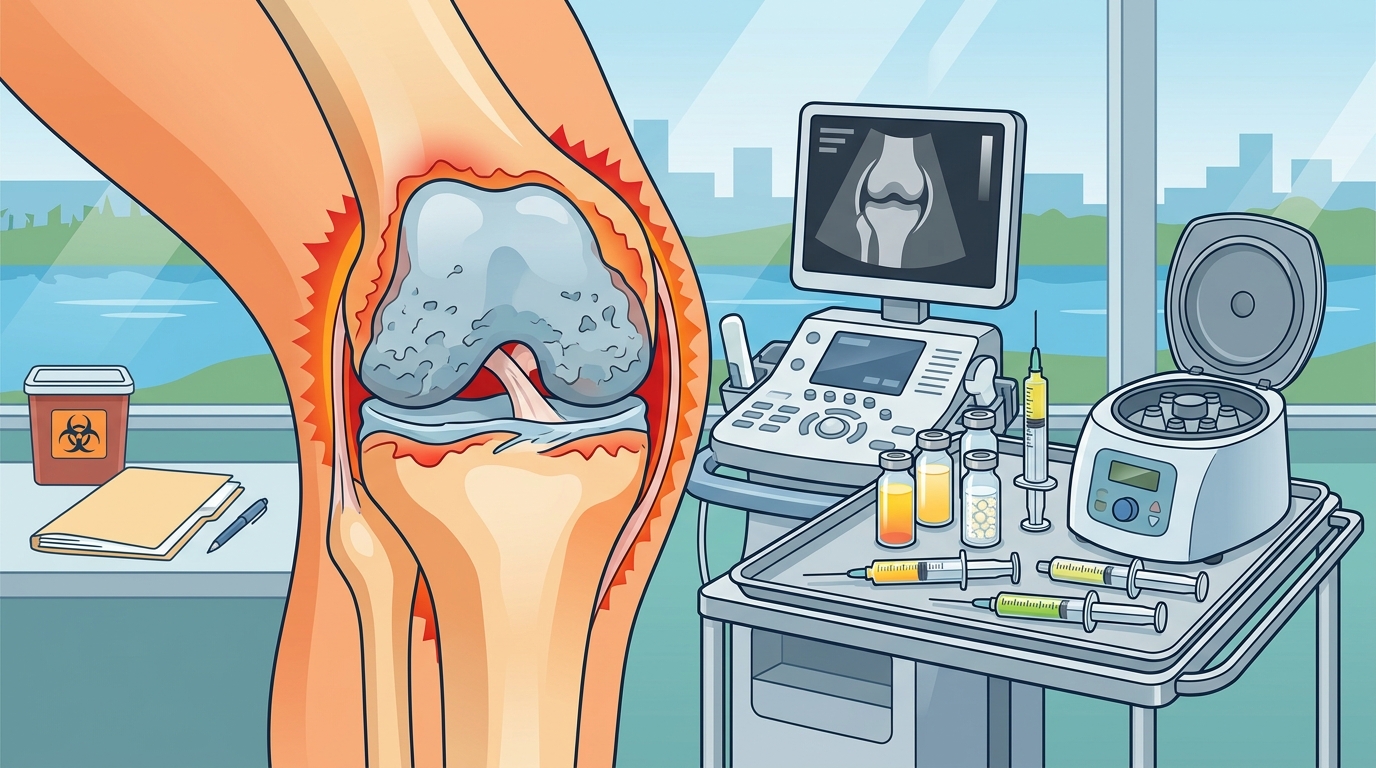
One of the key differentiators of Oregon Regenerative Medicine is its expertise in ultrasound imaging for both diagnosis and image-guided procedures. Ultrasound imaging is equal to or better than MRI in evaluating most tendon and ligament disorders in the arms and legs. A review in the American Journal of Roentgenology confirms the high diagnostic accuracy of ultrasound for musculoskeletal conditions. This technology allows the doctors at ORM to visualize the problem in real-time, ensuring that the correct diagnosis is made quickly and accurately.
Ultrasound guidance adds a whole level of precision to injection therapies. Instead of guessing where the needle needs to go, the doctors can guide it in real-time to exactly the spot where it needs to treat the affected area. This precision allows them to separate out individual tendon, ligament, and fascia fibers, get around nerves, and put the medicine into the correct location without a doubt. This level of accuracy is critical for the success of regenerative treatments, as it ensures that the biological agents are delivered to the site of injury.
The convenience of in-office ultrasound imaging cannot be overstated. Patients do not need to schedule separate appointments for imaging and results, which accelerates the path to treatment. The doctors at ORM are highly skilled in producing and interpreting ultrasound images, a technical skill that takes time to develop. This expertise allows them to provide answers and treatment plans on the same day as the initial visit, saving patients weeks or months of waiting and uncertainty.
Comparing Treatment Options
Choosing the right non-surgical treatment for osteoarthritis depends on the severity of the condition, the specific joint involved, and the patient's overall health. The table below summarizes the key features of the primary treatments offered at Oregon Regenerative Medicine.
| Treatment | Primary Mechanism | Best For | Key Benefit |
|---|---|---|---|
| PRP Therapy | Growth factor concentration | Early OA, Tendonitis | Reduces inflammation, promotes repair |
| Prolotherapy | Ligament strengthening | Ligament laxity, Chronic pain | Improves joint stability |
| Biocellular Stem Cells | Cartilage regeneration | Advanced OA, Cartilage loss | May regenerate damaged tissue |
Each of these treatments offers a unique approach to managing osteoarthritis. PRP is often the first line of defense for mild to moderate cases, while prolotherapy is ideal for addressing structural instability. Biocellular stem cell therapy is reserved for more advanced cases where cartilage regeneration is the primary goal. The doctors at ORM will evaluate each patient individually to determine the most appropriate treatment plan.
Key Takeaways
- Oregon Regenerative Medicine has over 30 years of experience in non-surgical joint regeneration.
- The clinic has performed more than 40,000 regenerative injections for patients in the Pacific Northwest.
- PRP, Prolotherapy, and Biocellular Stem Cell therapies are the core non-surgical treatments offered.
- Ultrasound guidance is used for all injections to ensure precision and safety.
- The medical team includes Dr. Noel Peterson, Dr. Kristian Flores, Dr. Stacey Guggino, and Dr. Terry Manning II.
- Most patients achieve durable pain-free function without the need for surgery or joint replacement.
- Treatments are tailored to individual needs, addressing the root cause of joint degeneration.
Frequently Asked Questions
Is non-surgical treatment for osteoarthritis covered by insurance?
Insurance coverage for regenerative therapies such as PRP and stem cell injections varies by provider and plan. At Oregon Regenerative Medicine, the administrative team can assist patients in verifying their benefits and understanding the financial aspects of their treatment. Many patients find that the long-term benefits of avoiding surgery outweigh the out-of-pocket costs.
How long does it take to see results from PRP therapy?
Results from PRP therapy can vary depending on the individual and the severity of the condition. Some patients experience relief within a few weeks, while others may take several months to see the full benefits. The healing process is gradual as the body's natural repair mechanisms are activated.
What is the difference between PRP and stem cell therapy?
PRP uses concentrated platelets from the patient's blood to release growth factors that promote healing. Stem cell therapy uses adipose-derived stem cells to potentially regenerate damaged tissue. While PRP is effective for inflammation and mild tissue damage, stem cell therapy is often considered for more advanced degeneration where tissue regeneration is needed.
Are the treatments painful?
Patients may experience some soreness at the injection site after the procedure, which is a normal part of the healing response. The doctors at ORM use local anesthesia and other techniques to minimize discomfort during the procedure. Most patients are able to return to normal activities within a day or two.
Can I combine PRP with Prolotherapy?
Yes, combining PRP with Prolotherapy is a common and effective strategy at Oregon Regenerative Medicine. This combination addresses both the inflammatory component and the structural weakness of the joint, providing a comprehensive approach to healing. The doctors will determine the best combination based on the patient's specific condition.
How do I schedule a consultation?
You can schedule a consultation by contacting Oregon Regenerative Medicine directly. The team is available to discuss your symptoms, review your medical history, and determine if you are a candidate for non-surgical treatment. Early intervention can lead to better outcomes and a faster return to an active lifestyle.
What areas do you serve in the Pacific Northwest?
Oregon Regenerative Medicine serves patients from Portland, Oregon, and the surrounding Pacific Northwest region, including Washington. The clinic's expertise in regenerative medicine has attracted patients from across the region seeking advanced non-surgical options for joint pain.
Schedule Your Consultation
If you are suffering from osteoarthritis and are looking for a non-surgical alternative, Oregon Regenerative Medicine is here to help. Our team of experienced doctors is dedicated to providing evidence-based, personalized care that empowers you to live a pain-free, active life. Do not let joint pain dictate your future. Take the first step toward regenerative healing today.
Contact Oregon Regenerative Medicine to Schedule Your Appointment