
Common Myths and FAQs About Biocellular Joint Regeneration in Portland
Regenerative medicine has transformed orthopedic care in the Pacific Northwest, yet confusion persists among patients seeking alternatives to surgery. According to recent clinical data, over 40,000 regenerative injections have been performed by leading Portland specialists, indicating a massive shift toward non-surgical joint repair. Despite this growth, many individuals remain hesitant due to misinformation about biocellular therapies. This guide addresses the most persistent myths and answers the most frequent questions to help you make informed decisions about your joint health. (PRP amp Biocellular Joint)
Myth 1: Stem Cells Are Only from Embryos
One of the most pervasive myths in regenerative medicine is the belief that stem cell therapy involves embryonic tissue. This misconception often causes unnecessary anxiety for patients considering treatment. Adipose-derived stem cells are adult stem cells harvested from the patient's own fat tissue. This autologous approach eliminates the risk of immune rejection and ethical concerns associated with embryonic sources.
At Oregon Regenerative Medicine, we utilize autologous Adipose Tissue Stem Cell Grafts. These cells are rich in reparative factors and mesenchymal stem cells that promote healing in joints, tendons, and ligaments. The process is minimally invasive and uses your own biological material to stimulate natural repair mechanisms.
Myth 2: Results Are Immediate and Permanent
Patients often expect instant relief after a single injection. While some experience immediate pain reduction due to the anti-inflammatory properties of Platelet Rich Plasma (PRP), the true regenerative process takes time. Biocellular joint regeneration is a biological healing process, not a mechanical fix. It typically takes several weeks to months for new tissue to form and for full functional benefits to be realized.
Furthermore, while results can be durable, they are not always permanent. Factors such as age, activity level, and the severity of initial degeneration play significant roles. Maintenance treatments or lifestyle adjustments may be necessary to sustain long-term joint health. Understanding this timeline helps set realistic expectations for recovery.
Myth 3: It Is Just a Fancy Painkiller
Another common misconception is that regenerative injections are merely long-lasting painkillers. This view ignores the fundamental mechanism of action. Regenerative medicine aims to repair damaged tissue, not just mask symptoms. Unlike corticosteroids, which can sometimes weaken tissue over time, PRP and stem cells actively recruit healing cells to the injury site.
Research supports the efficacy of Platelet-Rich Plasma in treating conditions like knee osteoarthritis. Studies indicate that PRP can reduce pain and improve function by delivering concentrated growth factors that modulate inflammation and stimulate tissue repair. This distinction is crucial for patients seeking a solution that addresses the root cause of their joint pain.
FAQ 1: Who Is a Candidate for Biocellular Therapy?
Not every patient with joint pain is a candidate for regenerative medicine. Ideal candidates typically include individuals with osteoarthritis, tendonitis, or ligament injuries who have not found relief with conservative treatments like physical therapy or NSAIDs. Patients who wish to avoid surgery or delay joint replacement are also strong candidates.
Our doctors at Oregon Regenerative Medicine evaluate each patient individually. We consider the specific joint involved, the extent of damage, and your overall health. Conditions such as inflammatory arthritis may require a different approach, so a thorough diagnosis is essential before proceeding with treatment.
FAQ 2: How Is Adipose Tissue Harvested?
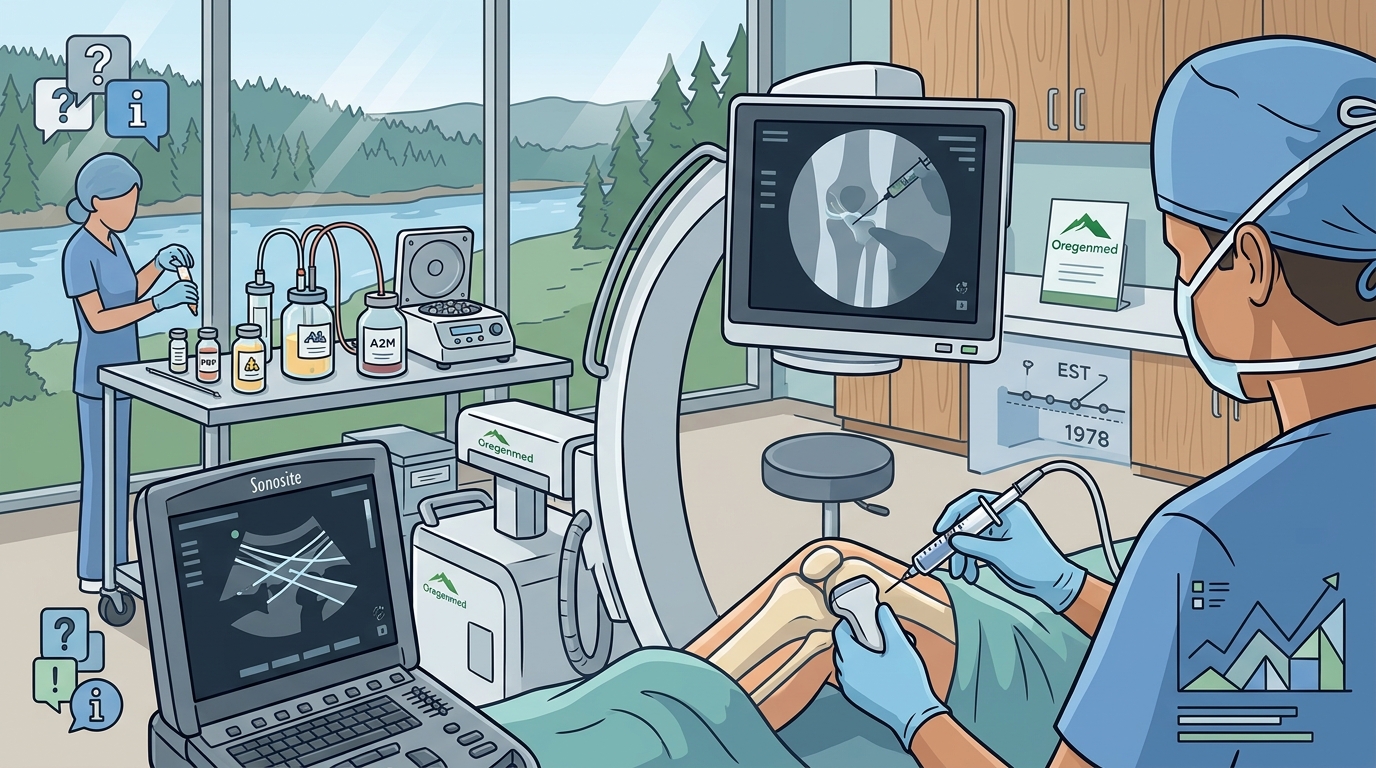
The harvesting of adipose tissue is a minor surgical procedure performed in our office. It involves a small incision, usually in the abdominal area, to extract fat. This process is similar to liposuction but is much less invasive. The harvested tissue is then processed to isolate the stem cells and growth factors.
The procedure is performed under local anesthesia, ensuring patient comfort. Recovery from the harvest site is typically quick, with most patients returning to normal activities within a few days. The focus remains on the therapeutic injection into the affected joint, which is guided by advanced imaging for precision.
FAQ 3: What Is the Recovery Timeline?
Recovery varies depending on the treatment type and the specific joint treated. For PRP injections, patients are often advised to rest the area for a few days and avoid anti-inflammatory medications, which can interfere with the healing response. Physical therapy may be recommended to strengthen surrounding muscles and support the healing tissue.
For biocellular stem cell therapies, the recovery period may be slightly longer due to the harvesting process. Patients should expect gradual improvement over several weeks. Full benefits may take up to six months to manifest. Patience and adherence to post-treatment guidelines are key to achieving optimal outcomes.
FAQ 4: Is It Covered by Insurance?
Currently, many regenerative medicine treatments are considered elective and are not covered by insurance. This includes PRP injections and stem cell therapies for orthopedic conditions. However, costs can vary based on the specific procedure and the complexity of the case.
We provide transparent pricing and can discuss financing options during your consultation. While the upfront cost may be higher than traditional treatments, many patients find that avoiding surgery and its associated costs makes regenerative medicine a cost-effective long-term solution. We encourage you to contact our office for detailed financial information.
FAQ 5: How Does Ultrasound Guidance Help?
Ultrasound guidance is a critical component of safe and effective regenerative medicine. It allows our physicians to visualize the anatomy in real-time, ensuring accurate placement of the injection. This precision is vital for targeting specific tendons, ligaments, or joint spaces.
Without ultrasound, injections rely on anatomical landmarks, which can lead to inaccurate placement and reduced efficacy. Our expertise in ultrasound imaging ensures that the therapeutic agents are delivered exactly where they are needed. This technology enhances the safety and success rate of every procedure we perform.
Comparison of Regenerative Options
Understanding the differences between available treatments helps patients choose the right path. The table below summarizes key distinctions between PRP, Prolotherapy, and Biocellular Stem Cell therapies.
| Treatment Type | Source | Primary Mechanism | Best For |
|---|---|---|---|
| Platelet Rich Plasma (PRP) | Patient's Blood | Growth Factor Release | Tendonitis, Mild Arthritis |
| Prolotherapy | Dextrose Solution | Inflammatory Healing Response | Ligament Laxity, Joint Instability |
| Biocellular Stem Cells | Patient's Fat Tissue | Cellular Regeneration | Severe Osteoarthritis, Cartilage Defects |
Key Takeaways
- Biocellular therapy uses the patient's own adipose-derived stem cells, avoiding immune rejection risks.
- Results are not immediate; biological healing takes weeks to months to fully manifest.
- Ultrasound guidance ensures precise injection placement, enhancing safety and efficacy.
- Oregon Regenerative Medicine has performed over 40,000 regenerative injections, demonstrating extensive clinical experience.
- Treatments are generally not covered by insurance, but may offer long-term cost savings compared to surgery.
- PRP and stem cells actively repair tissue, unlike painkillers that only mask symptoms.
- Prolotherapy uses dextrose to stimulate healing, making it suitable for ligament laxity.
Frequently Asked Questions
What is the difference between PRP and stem cell therapy?
PRP uses concentrated platelets from blood to release growth factors, while stem cell therapy uses adipose-derived cells to promote deeper tissue regeneration. Both are effective for different stages of joint degeneration.
Is the procedure painful?
Most patients report minimal discomfort. Local anesthesia is used during the harvest and injection to ensure comfort. Some soreness may occur post-procedure as part of the normal healing response.
How long do the results last?
Results can last from one to several years, depending on the severity of the condition and lifestyle factors. Many patients experience long-term pain relief and improved function.
Can I combine PRP with stem cell therapy?
Yes, combining therapies can enhance outcomes. PRP can serve as a scaffold for stem cells, potentially improving cell survival and integration. Your doctor will recommend the best protocol for your specific case.
What is the success rate of biocellular joint regeneration?
While no treatment has a 100% success rate, the vast majority of patients at Oregon Regenerative Medicine achieve durable pain-free function without surgery. Success depends on individual factors such as age and health status.
Do you treat athletes?
Yes, many professional and amateur athletes use regenerative medicine to recover from injuries and extend their careers. The non-surgical approach allows for faster return to activity compared to traditional surgery.
Is there any downtime?
Recovery from the harvest site is quick, usually a few days. Joint recovery takes longer, but most patients can return to light activities within a week. Strenuous exercise should be avoided for several weeks.
Take the Next Step in Your Joint Health
If you are suffering from joint pain and want to explore non-surgical options, contact Oregon Regenerative Medicine today. Our team of experts is dedicated to helping you achieve a pain-free, active life. Visit our contact page to schedule a consultation and learn more about how biocellular joint regeneration can benefit you.