
Regenerative medicine has fundamentally shifted the paradigm for treating chronic pain and joint degeneration. According to recent clinical data, over 40,000 regenerative injections have been performed by leading Pacific Northwest experts to restore function without surgery. This surge in demand reflects a growing patient preference for biological solutions that leverage the body's own healing mechanisms. Understanding the nuanced differences between Platelet Rich Plasma, stem cell therapies, and prolotherapy is essential for making an informed medical decision. (Contact Oregon Regenerative Medicine)
Mechanism of Action
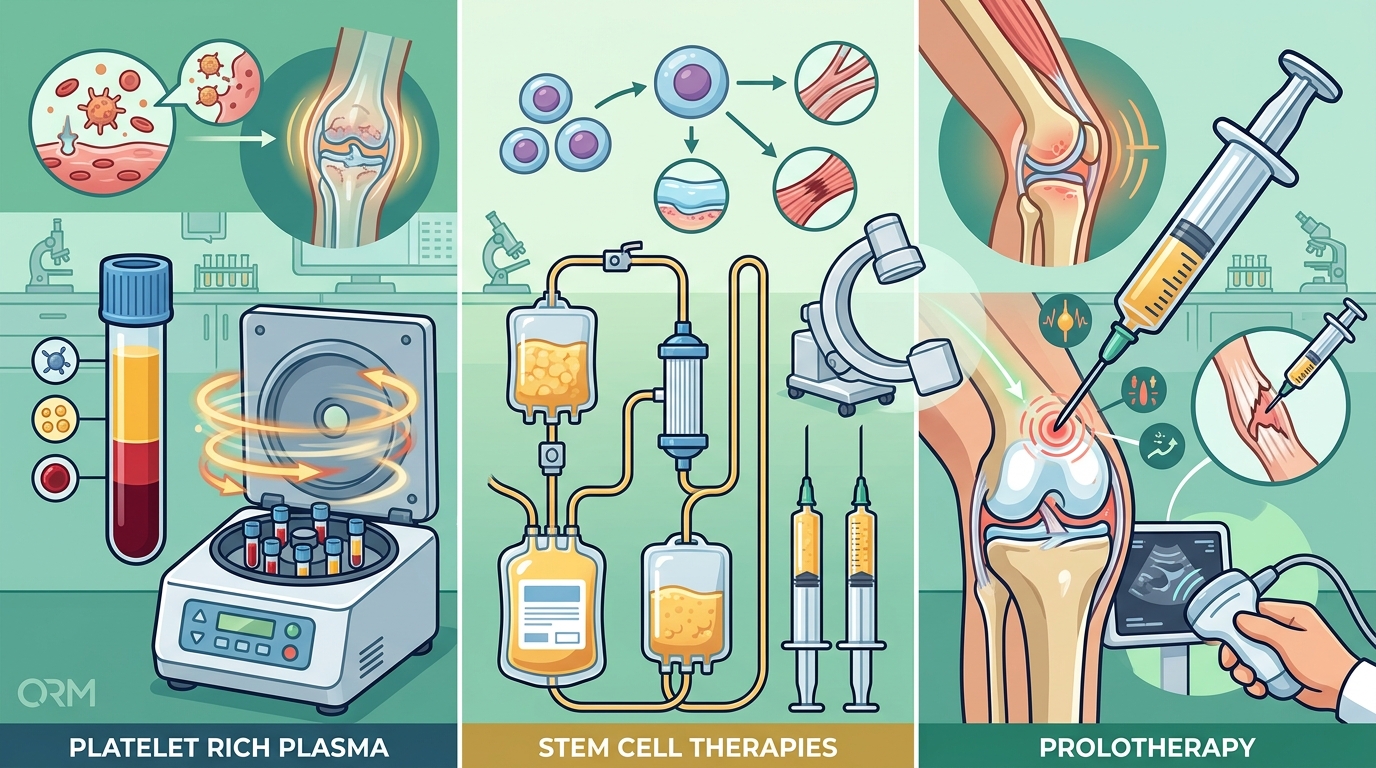
Each regenerative modality operates through distinct biological pathways. Platelet Rich Plasma is defined as a concentration of a patient's own platelets, which release growth factors that stimulate tissue repair. This therapy is widely used for tendon injuries and early-stage osteoarthritis. The process involves drawing blood, spinning it to isolate platelets, and injecting the concentrate into the injured area. (PRP amp Biocellular Joint)
Stem cell therapy, specifically adipose-derived stem cells, utilizes mesenchal stem cells harvested from the patient's own fat tissue. These cells have the unique ability to differentiate into various tissue types and modulate inflammation. This approach is often reserved for more severe degenerative conditions where significant tissue regeneration is required. The procedure involves liposuction to harvest the tissue, followed by processing to isolate the stem cells. (Meet Our Team)
Prolotherapy is defined as a non-surgical treatment that involves injecting an irritant solution, typically dextrose, into damaged ligaments and tendons. This injection triggers a localized inflammatory response, which signals the body to initiate a healing cascade. It is particularly effective for ligament laxity and chronic joint instability. The goal is to strengthen the structural integrity of the joint over time. (Articles Oregon Regenerative Medicine)
Efficacy and Clinical Evidence
The efficacy of these treatments varies based on the specific condition being treated. Research indicates that Platelet Rich Plasma is highly effective for knee osteoarthritis and rotator cuff injuries. A meta-analysis of randomized controlled trials confirms that PRP can significantly reduce pain and improve function in patients with knee osteoarthritis. The growth factors in PRP accelerate the healing of soft tissue injuries. (Elbow Out Elbow Pain)
Stem cell therapy shows promise for advanced osteoarthritis and cartilage defects. Studies on mesenchymal stem cells injected into the hip and knee joints demonstrate preliminary results in cartilage regeneration. The regenerative capacity of adipose-derived stem cells is superior to bone marrow-derived cells in some contexts due to higher cell counts and easier harvestability. This makes it a powerful option for patients seeking long-term joint preservation.
Prolotherapy has a long history of clinical success for chronic pain. Long-term effects of dextrose prolotherapy for anterior cruciate ligament laxity show sustained improvement in joint stability. Comparative evaluations of MSCs from bone marrow and adipose tissue seeded in PRP-derived scaffolds highlight the synergistic potential of these therapies. Prolotherapy is often used in conjunction with PRP to enhance the healing response.
Procedure and Recovery
Recovery times and procedural complexity differ significantly among these options. PRP injections are minimally invasive and can be performed in an office setting. Patients typically experience soreness for a few days but can return to normal activities quickly. The use of ultrasound guidance ensures precise placement of the plasma, maximizing therapeutic benefit.
Stem cell therapy involves a more complex procedure due to the harvesting of adipose tissue. The process requires liposuction, which is a minor surgical procedure. Recovery may involve more downtime as the body processes the harvested cells. However, the long-term benefits for severe degenerative conditions often outweigh the initial recovery period. Ultrasound expertise is critical for guiding the stem cell injections accurately.
Prolotherapy requires a series of injections over several weeks or months. Each session involves multiple injections into the affected area. Patients may experience significant soreness for a few days after each session. The cumulative effect of the treatments leads to gradual strengthening of the ligaments and tendons. Consistency in treatment is key to achieving optimal results.
Cost and Accessibility
Cost is a major factor in choosing a regenerative therapy. PRP is generally the most affordable option, as it does not require complex harvesting procedures. The cost varies based on the area treated and the number of injections required. Insurance coverage for PRP is limited, but many patients find the out-of-pocket cost manageable compared to surgery.
Stem cell therapy is typically the most expensive option due to the complexity of the procedure and the processing of the cells. The cost reflects the advanced technology and specialized expertise required. However, for patients with severe joint degeneration, the potential to avoid joint replacement surgery can justify the investment. Financing options may be available to make this treatment more accessible.
Prolotherapy is often the most cost-effective long-term solution for chronic pain. The series of injections is less expensive than stem cell therapy and can be covered by some insurance plans. The affordability of prolotherapy makes it an attractive option for patients with ligamentous instability. It provides a sustainable path to pain relief without the high costs associated with advanced biologics.
Therapy Comparison Summary
| Feature | PRP | Stem Cells | Prolotherapy |
|---|---|---|---|
| Primary Mechanism | Growth Factor Release | Tissue Regeneration | Inflammatory Trigger |
| Invasiveness | Low | High (Liposuction) | Low |
| Best For | Tendon/Ligament Repair | Cartilage/Joint Degeneration | Ligament Laxity |
| Cost Level | Medium | High | Low |
| Recovery Time | Days | Weeks | Days per session |
Key Takeaways
- PRP is ideal for soft tissue injuries and early osteoarthritis, leveraging growth factors for accelerated healing.
- Stem Cell Therapy offers the highest regenerative potential for severe joint degeneration and cartilage loss.
- Prolotherapy is a cost-effective solution for chronic ligament laxity and joint instability.
- Ultrasound Guidance is critical for precision in all three therapies, ensuring accurate delivery to the target tissue.
- Autologous Treatments minimize the risk of rejection, as all therapies use the patient's own biological material.
- Combined Approaches often yield the best results, with prolotherapy and PRP frequently used together for enhanced efficacy.
- Expertise Matters The success of these treatments depends heavily on the physician's skill in diagnosis and injection technique.
Frequently Asked Questions
Which therapy is best for knee osteoarthritis?
For early to moderate knee osteoarthritis, PRP is often the first line of defense. For advanced degeneration, stem cell therapy may provide better long-term outcomes by promoting cartilage regeneration.
Is stem cell therapy painful?
The harvesting of adipose tissue involves liposuction, which is performed under local anesthesia. Patients may experience soreness at the harvest site and the injection site for several days.
How many prolotherapy sessions are needed?
Most patients require a series of 3 to 6 sessions, spaced several weeks apart, to achieve optimal ligament strengthening and pain relief.
Are these treatments covered by insurance?
Insurance coverage varies. Prolotherapy is sometimes covered, while PRP and stem cell therapy are often considered elective and may require out-of-pocket payment.
Can I combine PRP and Prolotherapy?
Yes, combining PRP with prolotherapy is a common and effective strategy. The prolotherapy triggers the healing response, while PRP enhances the regenerative process.
What is the success rate of these treatments?
Success rates vary by condition and patient. However, the vast majority of patients at leading clinics achieve durable pain-free function without surgery.
How long do the results last?
Results can last from several months to years, depending on the severity of the condition and the lifestyle factors of the patient. Maintenance treatments may be recommended.
Schedule Your Consultation
Choosing the right regenerative therapy requires a personalized assessment of your condition. At Oregon Regenerative Medicine, we specialize in precision injection therapy using ultrasound and fluoroscopic guidance. Our team of experts is dedicated to helping you achieve pain-free function and active longevity. Contact us today to schedule your consultation and explore your options for regenerative orthopedic medicine.