
Regenerative medicine has fundamentally shifted the standard of care for chronic musculoskeletal pain. For patients in the Pacific Northwest, the goal is no longer just pain management but structural restoration. According to recent clinical data, over 40,000 regenerative injections have been performed by specialized providers in the Oregon and Washington regions, demonstrating a massive shift toward non-surgical interventions. This guide details what patients can realistically expect regarding pain relief, functional recovery, and timeline milestones when choosing advanced biological therapies. (PRP amp Biocellular Joint)
Understanding Regenerative Mechanisms
Before discussing specific outcomes, it is vital to define the biological processes at play. Platelet Rich Plasma (PRP) is a concentrated preparation of a patient's own platelets, which release growth factors that stimulate tissue repair. Prolotherapy is a non-surgical treatment that involves injecting an irritant solution to stimulate the body's natural healing response in weakened ligaments and tendons. Adipose Biocellular therapy is a regenerative procedure that harvests stem cells from the patient's own fat tissue to promote deep tissue regeneration.
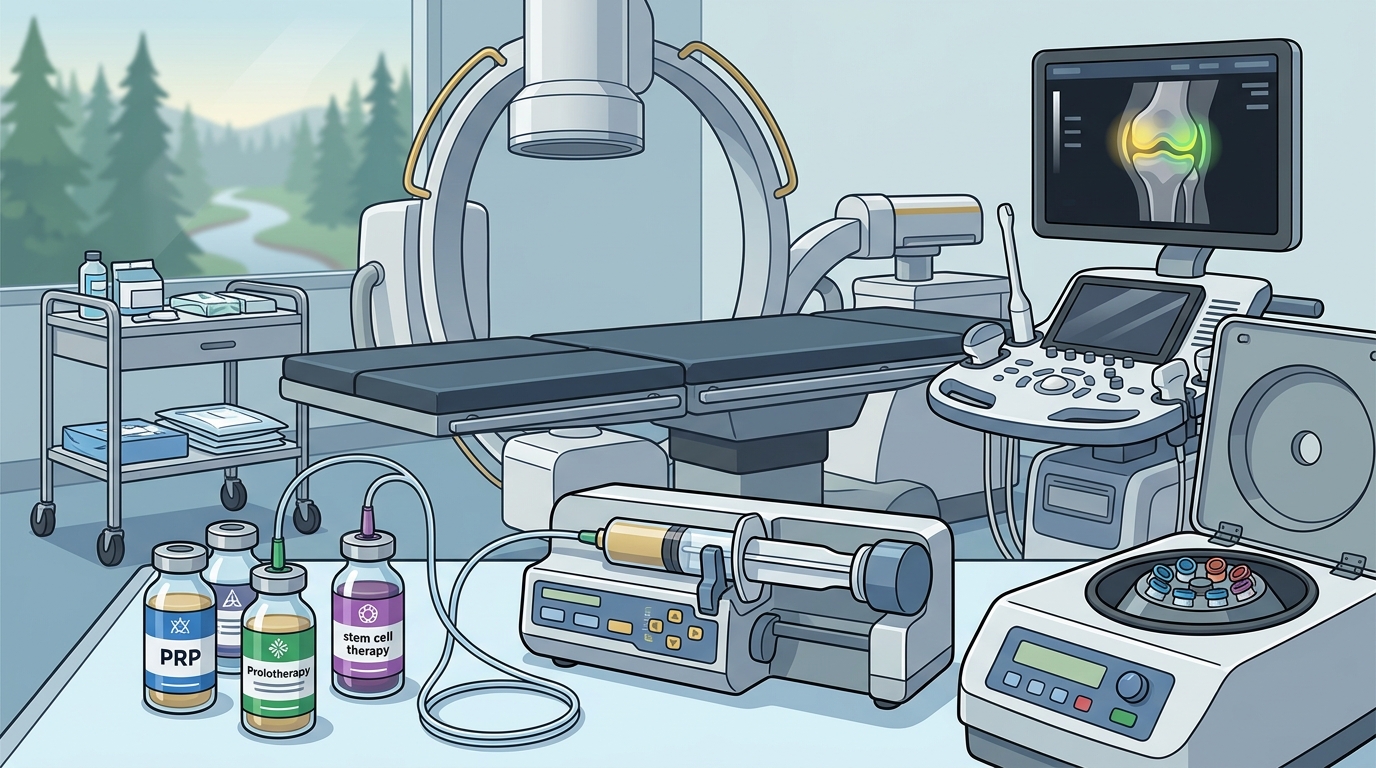
At Oregon Regenerative Medicine, located inside the historic Foundry Building at Oswego Pointe, we utilize these mechanisms to treat thousands of patients annually. Our approach relies on evidence-based, ultrasound imaging and fluoroscopic C-Arm guidance to ensure precision. This technical accuracy is a primary driver of successful outcomes, as it ensures the biological agents are delivered exactly to the site of injury.
PRP Therapy Outcomes and Timeline
Platelet Rich Plasma therapy is widely recognized for its efficacy in treating tendonitis, ligament sprains, and early-stage osteoarthritis. The expected outcome for PRP is not immediate pain relief but rather a gradual reduction in inflammation and accelerated tissue healing.
The Inflammatory Phase
Immediately following the injection, patients typically experience a flare-up of pain and inflammation. This is a positive sign, indicating that the growth factors are active and the healing cascade has been initiated. This phase usually lasts for three to five days. During this time, rest and ice are recommended to manage discomfort.
The Healing Phase
Between weeks two and six, patients often report a noticeable decrease in pain and an improvement in joint mobility. The growth factors released by the platelets attract stem cells to the injury site, promoting the repair of damaged collagen fibers. For conditions like tennis elbow or Achilles tendinitis, significant functional improvement is often observed within this window.
Long-Term Results
Full therapeutic benefits of PRP can take up to twelve weeks to manifest. Studies indicate that PRP can provide durable pain relief for up to two years in many patients, reducing the need for surgical intervention. The success rate is highly dependent on the severity of the degeneration and the patient's adherence to post-procedure rehabilitation protocols.
Prolotherapy Expectations and Protocols
Prolotherapy is particularly effective for joint instability and chronic ligament laxity. Unlike PRP, which relies on growth factors, prolotherapy uses dextrose or other irritants to trigger a localized inflammatory response that strengthens the connective tissue.
Multiple Sessions Required
One of the most important expectations for prolotherapy is that it is rarely a one-time cure. Most patients require a series of three to six treatments spaced four to six weeks apart. Each session builds upon the previous one, gradually tightening and strengthening the ligaments.
Pain Management During Treatment
Because the treatment involves injecting an irritant, patients should expect significant soreness for up to a week after each session. However, this temporary discomfort is outweighed by the long-term benefit of stabilized joints. Overweight osteoarthritis patients often see enhanced benefits when prolotherapy is combined with weight management strategies, as reduced load on the joint accelerates healing.
Functional Stability
The primary outcome of prolotherapy is improved joint stability. Patients with knee instability, shoulder impingement, or lower back pain due to ligament laxity often report a return to high-impact activities that were previously painful or impossible. The strengthening of the ligamentous support structure provides a durable foundation for long-term orthopedic health.
Stem Cell Regeneration Results
Adipose Biocellular therapy represents the cutting edge of regenerative medicine. By harvesting mesenchymal stem cells from the patient's own adipose tissue, we can address more severe degenerative conditions, such as advanced osteoarthritis and large tendon tears.
Cartilage Regeneration
One of the most compelling outcomes of stem cell therapy is the potential for true cartilage regeneration. While traditional treatments only manage symptoms, stem cells can differentiate into chondrocytes, the cells responsible for producing cartilage matrix. Clinical case series have demonstrated the regeneration of human cartilage in knee osteoarthritis patients following autologous adipose-tissue-derived stem cell treatment.
Pain Reduction and Mobility
Patients undergoing stem cell therapy often experience profound pain reduction within the first few weeks. The anti-inflammatory properties of the stem cells help calm the joint environment, while the reparative cells begin the work of rebuilding damaged tissue. Many patients who were told they needed joint replacement surgery are able to delay or avoid the procedure entirely.
Longevity of Results
Because stem cells address the root cause of degeneration, the results tend to be more durable than those of PRP or prolotherapy. Long-term studies suggest that the benefits of adipose-derived stem cell therapy can last for several years, providing patients with a renewed quality of life and the ability to remain active.
Comparison of Therapeutic Options
Choosing the right therapy depends on the specific diagnosis, the severity of the condition, and the patient's goals. The following table summarizes the key differences in expected outcomes for each modality.
| Therapy Type | Primary Mechanism | Best For | Expected Timeline for Results | Typical Number of Sessions |
|---|---|---|---|---|
| PRP Therapy | Growth Factor Release | Tendonitis, Mild Arthritis | 6-12 Weeks | 1-3 |
| Prolotherapy | Inflammatory Stimulation | Ligament Laxity, Joint Instability | 3-6 Months (Cumulative) | 3-6 |
| Stem Cell Therapy | Cellular Regeneration | Advanced Osteoarthritis, Tears | 3-6 Months | 1-2 |
Recovery and Rehabilitation
Successful outcomes are not solely dependent on the injection itself but also on the patient's commitment to rehabilitation. At Oregon Regenerative Medicine, we emphasize a holistic approach that includes condition-specific nutritional programs and physical therapy.
Immediate Post-Procedure Care
In the first 48 hours, patients should avoid anti-inflammatory medications, as they can interfere with the healing cascade. Ice and rest are crucial to manage the initial inflammatory response. Patients are advised to avoid high-impact activities for at least two weeks to allow the biological agents to settle and begin their work.
Gradual Return to Activity
After the initial rest period, a gradual return to activity is recommended. Physical therapy plays a critical role in this phase, helping to restore range of motion and strengthen the surrounding musculature. For patients undergoing prolotherapy, the rehabilitation process is more extended, focusing on progressive loading of the treated ligaments.
Lifestyle Modifications
Long-term success requires lifestyle adjustments. This includes maintaining a healthy weight, engaging in regular low-impact exercise, and following a nutrient-dense diet that supports tissue repair. Our team provides education and inspiration to help patients live at their highest potential, ensuring that the results of the procedure are sustained over time.
Key Takeaways
- Non-Surgical Success: The vast majority of patients achieve durable pain-free function without surgery or joint replacement.
- Precision Matters: Ultrasound and fluoroscopic guidance are essential for accurate delivery of biological agents.
- PRP Timeline: Significant improvement in tendon and ligament injuries is typically seen within 6 to 12 weeks.
- Prolotherapy Protocol: Multiple sessions are required to progressively strengthen lax ligaments and stabilize joints.
- Stem Cell Potential: Adipose-derived stem cells offer the potential for true cartilage regeneration in advanced arthritis.
- Historical Expertise: Oregon Regenerative Medicine has over 30 years of experience in regenerative orthopedics.
- Holistic Approach: Nutrition, hormone optimization, and physical therapy are integral to long-term outcomes.
Frequently Asked Questions
How long does it take for PRP to work?
Most patients begin to feel relief within two to six weeks, with full benefits peaking around twelve weeks as the tissue fully repairs.
Is prolotherapy painful?
Yes, prolotherapy involves injecting an irritant, which causes temporary soreness for up to a week. However, this is a necessary part of the healing process.
Can stem cells regenerate cartilage?
Yes, autologous adipose-derived stem cells have been shown to regenerate cartilage in human knee osteoarthritis patients, offering a potential alternative to joint replacement.
How many prolotherapy sessions do I need?
Most patients require a series of three to six treatments spaced four to six weeks apart to achieve optimal ligament strengthening.
Are the treatments safe?
Yes, because PRP and stem cells are derived from your own body, the risk of rejection or allergic reaction is virtually non-existent.
What is the success rate for joint regeneration?
While no treatment has a 100% success rate, the vast majority of our patients achieve durable pain-free function, with many avoiding surgery for years.
Do you use imaging during the procedure?
Absolutely. We use ultrasound imaging and fluoroscopic C-Arm guidance to ensure precise placement of the treatment into the affected area.
Contact Us
If you are suffering from chronic pain or joint degeneration, it is time to explore regenerative options. Our team of experienced doctors is ready to help you create a healthy, active longevity. Contact us today to schedule a consultation and learn more about how we can help you.
Contact Oregon Regenerative Medicine to book your appointment.