

Prolotherapy for Chronic Knee Pain: Mechanisms and Clinical Evidence
Prolotherapy is an injection therapy that uses a sclerosing solution, typically dextrose, to stimulate the body's natural healing response in damaged connective tissues. For chronic knee pain, this treatment targets the underlying structural instability and degeneration rather than just masking symptoms. By triggering a controlled inflammatory cascade, prolotherapy promotes the release of growth factors that strengthen ligaments and support cartilage repair. At Oregon Regenerative Medicine, this approach offers a non-surgical alternative for patients seeking long-term joint stability and functional recovery.
The Biological Mechanism of Prolotherapy
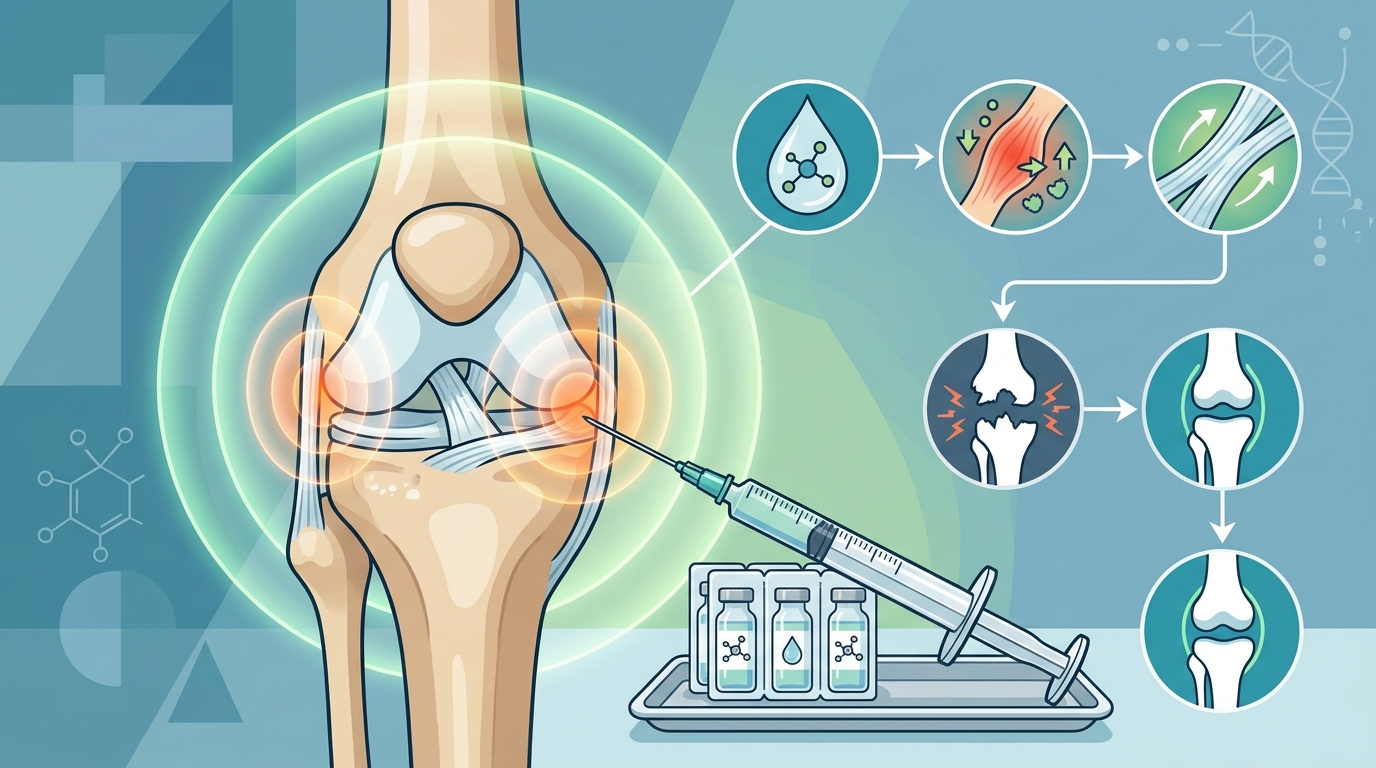
Prolotherapy is a regenerative injection technique that works by creating a localized, controlled injury to stimulate tissue repair. The primary agent used is usually hypertonic dextrose, a form of glucose that acts as an osmotic shock to the tissue. This irritation triggers the body's innate wound-healing cascade, which is essential for rebuilding damaged structures. The process begins with the recruitment of inflammatory cells to the injection site, which then release a variety of growth factors and cytokines. These signaling molecules stimulate the proliferation of fibroblasts, the cells responsible for producing new collagen and connective tissue. According to research published in the PMC database, the mechanism of action is thought to be the result of local tissue irritation stimulating inflammatory pathways, which leads to the release of growth factors and subsequent tissue regeneration. This biological response is distinct from anti-inflammatory treatments, which suppress the very processes needed for structural repair.
Targeting Knee Osteoarthritis and Instability
Chronic knee pain often stems from a combination of osteoarthritis and ligamentous laxity, both of which are effectively addressed by prolotherapy. Osteoarthritis is a degenerative joint disease characterized by the breakdown of cartilage and the development of bone spurs. However, the pain is frequently exacerbated by the instability of the surrounding ligaments, which can no longer support the joint properly. Prolotherapy targets these specific ligaments and the periosteum (the membrane covering the bone) to restore stability. A comprehensive review in the PMC journal highlights that the association of intra-articular and extra-articular prolotherapy yields more effective results in osteoarthritis pain. By strengthening the ligaments, the joint becomes more stable, reducing the abnormal stresses that contribute to cartilage wear. This dual approach addresses both the symptom of pain and the underlying cause of joint dysfunction.
Clinical Evidence and Patient Outcomes
The efficacy of prolotherapy for knee osteoarthritis is supported by a growing body of clinical literature. A randomized controlled trial published in the Annals of Family Medicine demonstrated that dextrose prolotherapy provided significant improvements in pain and function compared to placebo. Patients in the study reported substantial reductions in pain scores and improvements in their ability to perform daily activities. Furthermore, a systematic review in PubMed confirms that prolotherapy is an effective treatment for knee osteoarthritis, although it notes the need for larger sample sizes in future research. The American Academy of Family Physicians also recognizes prolotherapy as an evidence-based adjunctive therapy for knee osteoarthritis, as detailed in their 2021 publication. These studies suggest that prolotherapy is not only safe but also provides durable benefits for patients with chronic knee pain.
Prolotherapy vs. Other Injection Therapies
While prolotherapy is a powerful tool, it is often compared to other injection therapies like platelet-rich plasma (PRP) and corticosteroids. Corticosteroids provide rapid pain relief by suppressing inflammation, but they do not promote tissue repair and may even weaken connective tissue over time. In contrast, prolotherapy and PRP are regenerative therapies that aim to heal the tissue. PRP uses the patient's own blood, which is centrifuged to concentrate platelets and their growth factors. Prolotherapy, on the other hand, uses a simpler, more cost-effective solution. At Oregon Regenerative Medicine, we often tailor the treatment based on the specific diagnosis. For patients with significant ligament laxity, prolotherapy is often the first choice. For those with more advanced cartilage damage, a combination of prolotherapy and PRP may be recommended. Understanding the differences between these therapies is crucial for selecting the right treatment plan. You can learn more about the specific applications of PRP therapy and how it complements prolotherapy in our detailed guides. according to Efficacy of prolotherapy
The Role of Ultrasound-Guided Precision
The success of prolotherapy depends heavily on the precision of the injection. Blind injections, which rely on anatomical landmarks alone, can be less effective and carry a higher risk of complications. Ultrasound-guided prolotherapy allows the practitioner to visualize the target tissue in real-time, ensuring that the solution is delivered exactly where it is needed. This precision is particularly important for the knee, where the anatomy is complex and the target ligaments are often deep. At Oregon Regenerative Medicine, we utilize advanced ultrasound systems to guide our injections, ensuring maximum efficacy and safety. This technology allows us to treat specific ligaments, such as the medial collateral ligament or the posterior oblique ligament, with high accuracy. The use of imaging also helps in monitoring the treatment's progress over time. By combining clinical expertise with technological precision, we can provide a more effective and safer treatment experience for our patients.
Key Takeaways
- Prolotherapy is a regenerative injection therapy that uses dextrose to stimulate tissue repair.
- It targets the underlying ligamentous instability and degeneration that cause chronic knee pain.
- Clinical studies support its efficacy in reducing pain and improving function in knee osteoarthritis.
- Unlike corticosteroids, prolotherapy promotes long-term structural healing rather than temporary symptom relief.
- Ultrasound guidance enhances the precision and safety of prolotherapy injections.
- Prolotherapy can be used alone or in combination with other regenerative therapies like PRP.
Frequently Asked Questions
How many prolotherapy sessions are needed for knee pain?
Most patients require a series of 3 to 6 injections, spaced 2 to 4 weeks apart. The exact number depends on the severity of the condition and the individual's response to treatment.
Does prolotherapy hurt?
The injection itself may cause some discomfort, but the area is often numbed with a local anesthetic. Some soreness and swelling are normal after the procedure and typically last for a few days.
Can prolotherapy cure osteoarthritis?
While prolotherapy cannot reverse advanced osteoarthritis, it can significantly improve pain and function by strengthening the supporting ligaments and promoting tissue repair. It is often used to delay or avoid the need for surgery.
Is prolotherapy safe?
Yes, prolotherapy is generally considered safe when performed by a trained practitioner. The most common side effects are temporary pain and swelling at the injection site.
How is prolotherapy different from PRP?
Prolotherapy uses a dextrose solution to stimulate healing, while PRP uses the patient's own concentrated platelets. Both are regenerative therapies, but they work through slightly different mechanisms and may be used for different types of injuries.
Who is a good candidate for prolotherapy?
Good candidates include patients with chronic knee pain due to ligament laxity, osteoarthritis, or soft tissue injuries who have not responded to conservative treatments like physical therapy or anti-inflammatory medications.
Conclusion
Prolotherapy offers a promising, evidence-based approach to treating chronic knee pain by addressing the root causes of joint instability and degeneration. By stimulating the body's natural healing processes, this regenerative therapy can provide long-term relief and improved function for many patients. At Oregon Regenerative Medicine, we combine this technique with advanced ultrasound guidance and a comprehensive understanding of musculoskeletal anatomy to deliver precise and effective care. If you are struggling with chronic knee pain and seeking a non-surgical alternative, we invite you to explore our prolotherapy services and schedule a consultation to discuss your treatment options.