
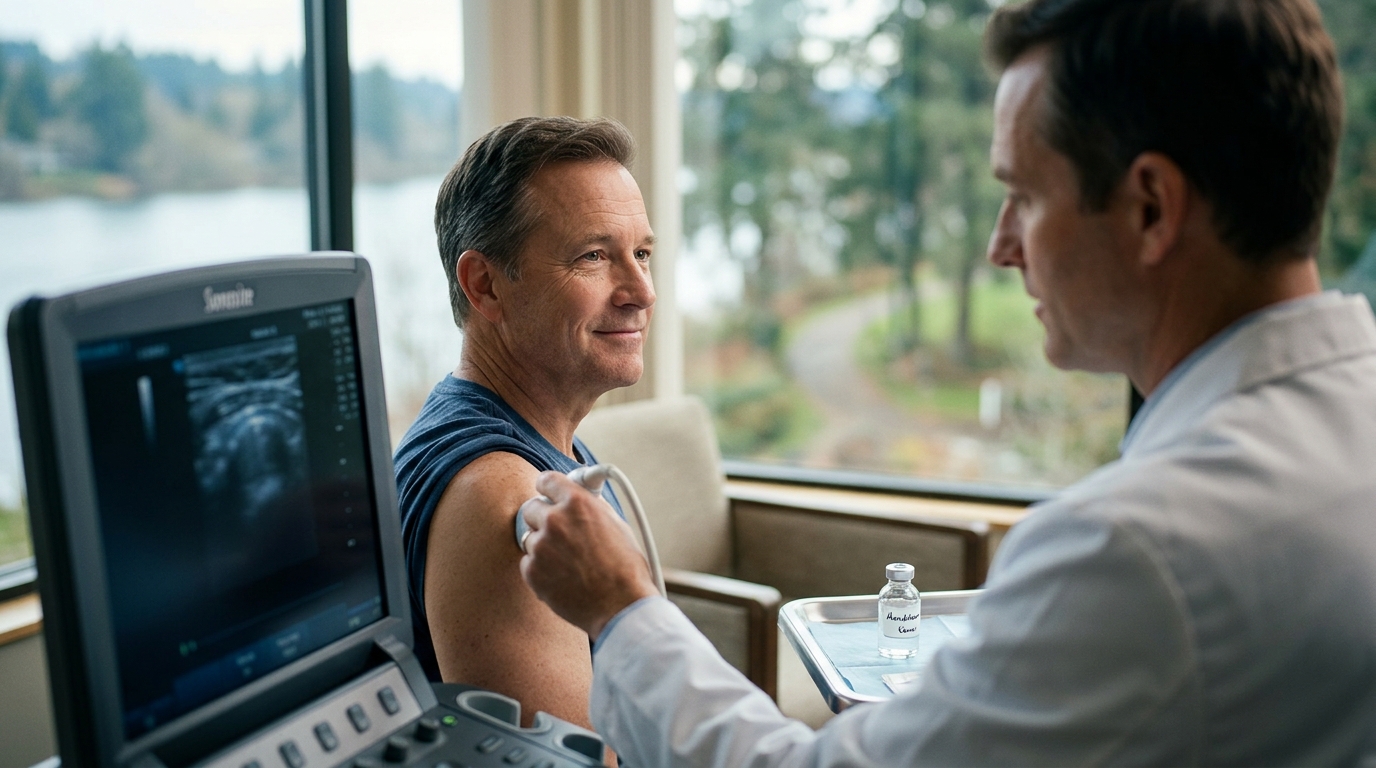
Portland clinics treating shoulder arthritis without surgery include Oregon Regenerative Medicine, which specializes in non-surgical regenerative therapies like Platelet-Rich Plasma (PRP) and prolotherapy. This guide covers how to evaluate local providers, verify their credentials, understand treatment protocols, and navigate the specific medical landscape of the Portland metro area to find the right non-surgical care for your shoulder.
How to Choose a Clinic
Selecting the right clinic for shoulder arthritis requires looking beyond marketing claims to evaluate clinical infrastructure and provider expertise. A high-quality non-surgical practice should prioritize precise diagnosis over generic treatment. You need a provider who can distinguish between rotator cuff tendinopathy, bursitis, and true osteoarthritis, as each condition requires a different therapeutic approach.
Diagnostic Capability
The most critical differentiator is the clinic's ability to perform in-office imaging. Clinics that rely solely on patient history or external MRI referrals often miss the specific structural changes driving your pain. Look for practices that utilize point-of-care ultrasound (POCUS) or fluoroscopy. For example, ultrasound expertise allows physicians to visualize tendon integrity and guide injections in real-time, ensuring the therapeutic agent reaches the exact site of injury.
Provider Specialization
General practitioners may treat shoulder pain, but specialists in regenerative medicine or physical medicine and rehabilitation (PM&R) often achieve better outcomes for complex joint issues. At Oregon Regenerative Medicine, the team includes board-certified physiatrists and naturopathic physicians with specific training in interventional orthobiologics. This specialization ensures that the treatment plan is tailored to the biological mechanisms of joint repair rather than just symptom suppression.
What to Ask Before Committing
Before scheduling a procedure, you must ask specific questions that reveal the clinic's depth of knowledge. Vague answers are a red flag. You need to understand exactly what is being injected, how it is prepared, and what the expected timeline for improvement is.

Questions on Preparation and Technique
Questions on Expectations
Ask how many treatments are typically required for shoulder arthritis. Most regenerative protocols involve a series of injections rather than a single event. Ask about the role of physical therapy in the protocol. Effective regenerative medicine is rarely standalone; it works best when combined with targeted rehabilitation to restore range of motion and strength.
How to Verify Credentials
Medical credentials can be confusing, especially in the regenerative medicine space where titles vary. You must verify that the provider is licensed and that their specific training aligns with the treatment they are offering.
Licensing and Board Certification
Check the Oregon Medical Board or Oregon Board of Naturopathic Medicine to verify active licenses. For naturopathic physicians, look for board certification in specific fields such as orthopedic medicine or endocrinology. For example, Dr. Terry Manning II holds advanced certification in musculoskeletal ultrasonography and is a Fellow of the American Academy of Orthopedic Medicine. These specific credentials indicate a level of training beyond general practice.
Professional Affiliations
Look for membership in recognized professional organizations. Affiliations with groups like the American Academy of Orthopedic Medicine (AAOM) or the International Cellular Medicine Society suggest that the provider stays current with evolving research and adheres to ethical standards in the use of biological therapies.
How Non-Surgical Treatment Works
Non-surgical treatment for shoulder arthritis typically follows a structured protocol designed to stimulate the body's natural healing response. The process begins with a comprehensive evaluation, followed by a series of targeted interventions.
The Diagnostic Phase
The initial visit involves a physical examination and imaging. In-office ultrasound allows the physician to assess the thickness and texture of the rotator cuff tendons and the state of the joint capsule. This baseline data is crucial for measuring progress later in the treatment course.
The Intervention Phase
Once a diagnosis is confirmed, the physician administers the chosen therapy. Platelet Rich Plasma (PRP) therapy involves drawing the patient's blood, processing it to concentrate platelets, and injecting the solution into the joint or tendon. These platelets release growth factors that promote tissue repair. Prolotherapy, another common option, uses a dextrose solution to stimulate a controlled inflammatory response that leads to tissue strengthening.
The Rehabilitation Phase
After the injection, the patient enters a rehabilitation period. This involves specific exercises to maintain mobility while the tissue heals. The goal is to restore function without overloading the healing tissue. Most protocols span several months, with follow-up appointments to monitor progress and adjust the plan as needed.
What It Costs
Costs for non-surgical shoulder arthritis treatment vary significantly based on the type of therapy, the number of sessions, and the complexity of the case. It is essential to understand the financial commitment before starting treatment.
Factors Influencing Price
The primary cost drivers are the biological agents used and the imaging technology. PRP and stem cell therapies are generally more expensive than standard corticosteroid injections due to the laboratory processing required. In-house preparation of biologics, such as the adipose biocellular treatments, involves specialized equipment and staff, which contributes to the overall cost. Additionally, the use of fluoroscopy or ultrasound guidance adds to the procedural fee but increases safety and accuracy.
Insurance and Payment
Common Mistakes to Avoid
Patients often make errors that can compromise their treatment outcomes. Avoiding these common pitfalls can improve your chances of success.
Skipping the Diagnostic Step
One of the biggest mistakes is assuming that all shoulder pain is the same. Treating a rotator cuff tear with the same protocol as bursitis will likely fail. Always insist on a proper diagnosis through imaging before accepting a treatment plan.
Ignoring Rehabilitation
Another common error is neglecting the prescribed exercises. Regenerative injections create an environment for healing, but the tissue must be moved and strengthened to remodel correctly. Skipping physical therapy can lead to stiffness and suboptimal results.
Expecting Immediate Relief
Unlike corticosteroids, which provide rapid but temporary pain relief, regenerative therapies work over time. Patients who expect immediate results may become discouraged and stop the protocol prematurely. Patience and adherence to the timeline are critical.
Regenerative Therapy Versus Alternatives
Understanding how regenerative medicine compares to other options helps you make an informed decision. The main alternatives are conservative care, corticosteroid injections, and surgery.
| Treatment Option | Mechanism | Duration of Relief | Long-Term Tissue Repair |
|---|---|---|---|
| Conservative Care (PT/Ice) | Symptom management | Variable | Low |
| Corticosteroid Injections | Anti-inflammatory | Weeks to Months | None (may degrade tissue) |
| Regenerative (PRP/Prolo) | Tissue stimulation/repair | Months to Years | High |
| Surgery | Mechanical correction/replacement | Permanent (if successful) | High (but invasive) |
Regenerative therapies offer a middle ground between passive management and invasive surgery. They aim to address the underlying tissue damage rather than just masking the pain. For patients who are not candidates for surgery or wish to delay it, these options provide a viable path to improved function.
Treatment for Specific Situations
The best treatment depends on the specific nature of your shoulder condition. Different pathologies respond differently to regenerative approaches.
Osteoarthritis
Rotator Cuff Tendinopathy
For degenerative rotator cuff tears or tendinopathy, the focus is on the tendon itself. Ultrasound-guided PRP injections directly into the tendon can promote healing of the damaged collagen fibers. This is often combined with eccentric loading exercises to strengthen the tendon.
Rules and Patient Protections
Patients have rights and protections when undergoing medical treatment. Understanding these can help you navigate the process safely.
Informed Consent
You have the right to full informed consent. This means the physician must explain the risks, benefits, and alternatives of the proposed treatment. You should feel comfortable asking questions and should not feel pressured to proceed if you are unsure.
Regulatory Oversight
Clinics operating in Oregon must adhere to state medical regulations. This includes proper handling of biological materials and maintaining accurate medical records. You can request copies of your records and imaging at any time.
Local Specifics in Portland
The Portland metro area offers a diverse range of medical providers, but the local landscape has specific characteristics that affect your care.
Geographic and Access Considerations
Portland's geography can impact access to care. Clinics located in areas like Lake Oswego or the Eastside may have different wait times and parking availability. Oregon Regenerative Medicine is located in Lake Oswego, offering a convenient option for patients in the southern Willamette Valley. Proximity to your home or workplace can improve adherence to a multi-visit treatment protocol.
Provider Density
Portland has a high density of medical providers, which can be both a benefit and a challenge. The abundance of options means you have more choices, but it also requires careful vetting to ensure you are selecting a provider with the specific expertise you need.
Timing and Outcomes
Timing is a critical factor in the success of non-surgical shoulder treatment. Acting too early or too late can affect your outcomes.
Early Intervention
Intervening early in the course of a shoulder injury can prevent minor issues from becoming chronic. For example, treating a mild rotator cuff strain promptly can prevent it from progressing to a full-thickness tear. Early treatment often requires fewer sessions and leads to faster recovery.
Chronic Conditions
For chronic arthritis, the timing is less about urgency and more about persistence. These conditions require a longer-term commitment. Patients should be prepared for a treatment timeline that spans several months. Consistency in attending appointments and performing exercises is key to achieving long-term relief.
Results Over Time
Understanding the trajectory of results helps set realistic expectations. Regenerative therapies do not provide instant fixes, but they offer durable improvements.
Short-Term (0-3 Months)
In the first few months, patients may experience some initial soreness after injections, followed by gradual improvements in pain and range of motion. The inflammatory response triggered by the therapy is part of the healing process.
Long-Term (6+ Months)
By six months, the tissue remodeling process should be well underway. Many patients report significant improvements in function and quality of life. The goal is to achieve a stable, pain-free shoulder that can handle daily activities and recreational pursuits. Follow-up imaging can confirm structural improvements in the tendon or joint.
Key Takeaways
- Choose a clinic with in-house diagnostic capabilities like ultrasound or fluoroscopy for precise treatment.
- Verify provider credentials through state licensing boards and professional affiliations.
- Ask specific questions about how biological agents are prepared and how the procedure is guided.
- Understand that regenerative therapies are a process, not a one-time event, requiring multiple sessions.
- Costs vary based on the type of therapy and imaging used; ask for a detailed estimate upfront.
- Avoid skipping the diagnostic phase or neglecting rehabilitation exercises.
- Regenerative therapies offer a middle ground between conservative care and surgery, aiming for tissue repair.
- Timing matters; early intervention for injuries and consistent commitment for chronic conditions yield the best results.
Frequently Asked Questions
Is PRP effective for shoulder arthritis?
PRP is often used for shoulder arthritis to reduce inflammation and support tissue health. While it may not reverse advanced arthritis, it can improve pain and function in many patients. The effectiveness depends on the severity of the condition and the individual's response to treatment.
How many PRP injections are needed for the shoulder?
Most protocols involve a series of three to five injections, spaced several weeks apart. The exact number depends on the specific diagnosis and the patient's progress. Your physician will tailor the plan to your needs.
Does insurance cover regenerative shoulder treatments?
Coverage varies by insurance plan. Many plans consider regenerative therapies experimental and do not cover them. You should check with your provider and the clinic to understand your specific coverage and out-of-pocket costs.
Can I continue working while undergoing treatment?
Many patients can continue working, especially if their job is sedentary. However, you may need to modify activities that strain the shoulder. Your physician will provide guidance on activity restrictions during the healing process.
What is the difference between PRP and prolotherapy?
PRP uses concentrated platelets from your blood to promote healing, while prolotherapy uses a dextrose solution to stimulate a healing response. Both aim to repair tissue, but they work through different biological mechanisms. Your physician will recommend the best option based on your diagnosis.
How long does it take to see results from regenerative therapy?
Results are gradual. You may start to notice improvements in pain and function within a few weeks, but the full benefits often take three to six months. Consistency with the treatment protocol and rehabilitation is essential for optimal outcomes.