Where to Find a Non-Surgical Orthopedic Specialist in Portland, Vancouver, and the Willamette Valley
There's a particular moment a lot of orthopedic patients hit: an MRI report in hand, a surgeon's calendar booked out weeks in advance, and a nagging sense that "replace the joint" was offered as the plan a little too quickly. Surgery is sometimes genuinely the right call — but it isn't the only one, and for a lot of tendon, ligament, and early-to-moderate joint conditions, it isn't even the first one most specialists would reach for. This guide is about the other path: what non-surgical orthopedic care actually involves, what separates a serious regenerative medicine practice from a trendy one, and where to find that kind of care if you're in the Portland, Vancouver, or Willamette Valley area.
Understanding Non-Surgical Orthopedic Options
When you experience persistent pain in your knees, hips, or shoulders, the traditional medical pathway often leads directly toward surgery. A non-surgical orthopedic specialist takes a different first step: diagnosing the root cause of the injury and using advanced therapies aimed at helping the body heal itself. This matters most for people who want to avoid the risks of anesthesia, long recovery times, and potential complications from joint replacement, where those risks are avoidable.
Non-surgical orthopedics spans several disciplines: diagnostic imaging to pinpoint the actual problem, physical rehabilitation, and increasingly, biologic therapies that work with the body's own healing mechanisms rather than around them. For patients in the Pacific Northwest, where active lifestyles are common, preserving joint function matters directly to quality of life.
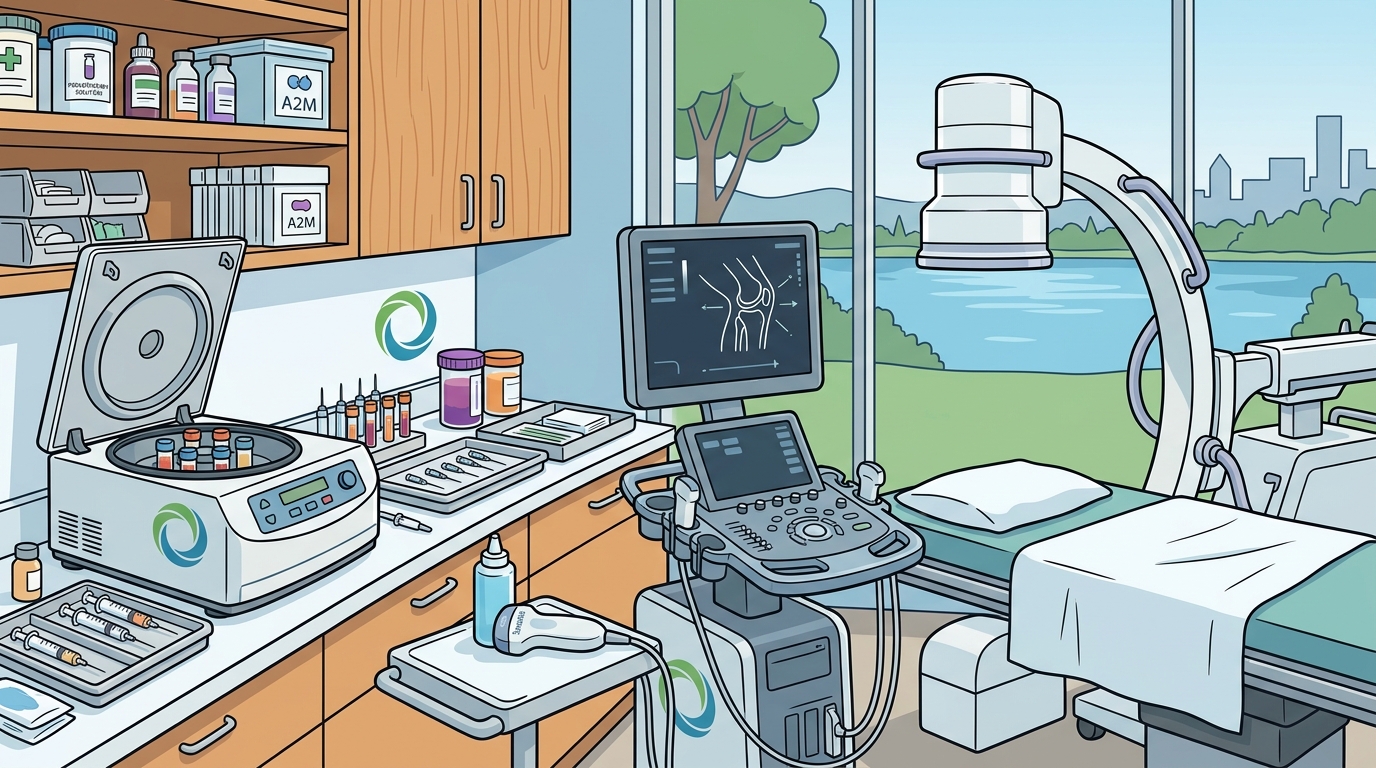
The field has changed a lot over the last decade. Ultrasound guidance, for instance, has become a standard of care for precision injections — letting specialists see the needle in real time, so treatment is delivered exactly where it's needed. That precision reduces side effects and improves outcomes for conditions like tendonitis and arthritis.
Why Regenerative Medicine Matters
Regenerative medicine sits at the frontier of non-surgical orthopedics. It uses biological substances to help restore function to diseased or damaged tissue. Unlike treatments that primarily manage pain, regenerative therapies aim at the underlying structural damage itself.
Platelet-Rich Plasma (PRP) is one of the most widely used regenerative treatments — a concentration of a patient's own platelets, rich in growth factors that support healing. Injected into a damaged joint or tendon, PRP can help reduce inflammation and support tissue repair, with research pointing to particular promise for knee osteoarthritis, sometimes offering pain relief lasting months or longer.
Stem cell therapy is another core tool. Stem cells are undifferentiated cells capable of developing into specialized cell types; in orthopedics, mesenchymal stem cells are often used with the goal of supporting cartilage and bone repair. This is particularly relevant for patients with more advanced degenerative conditions who want to delay or avoid joint replacement.
Adipose-derived stem cells are a related option — harvested from a patient's own fat tissue and processed to concentrate the regenerative components. Because the cells are autologous (from the patient's own body), the risk of rejection or immune response is minimized, which is part of why this approach is used for more complex orthopedic injuries.
Choosing the Right Specialist in the Pacific Northwest
Finding a qualified non-surgical orthopedic specialist means looking closely at credentials, experience, and treatment philosophy. Patients in the Portland, Vancouver, and Willamette Valley region have access to some genuinely established regenerative medicine practices.
Look for specialists who are board-certified with specific training in interventional pain management or regenerative medicine. Physicians with dual qualifications — naturopathic doctors with acupuncture certification, for instance, or additional training in musculoskeletal ultrasound — often bring a more multidisciplinary lens to care, addressing both the structural and functional sides of pain.
Experience with ultrasound and fluoroscopy guidance is close to non-negotiable. These imaging techniques help ensure injections land accurately, which matters directly for both efficacy and safety. Specialists relying solely on anatomical landmarks without imaging guidance are working with meaningfully less precision. It's worth asking directly what imaging technology is used during any procedure.
Also weigh a clinic's commitment to patient education. A good specialist takes time to explain your diagnosis, walk through the available options, and help you make an informed choice — including a clear-eyed account of risks, benefits, and realistic expected outcomes, not just the upside.
Oregon Regenerative Medicine: A Regional Leader
For residents of Oregon and Southwest Washington, Oregon Regenerative Medicine is a well-established destination for non-surgical orthopedic care. The clinic is located in the historic Foundry Building at Oswego Pointe in Lake Oswego, just south of Portland, and has been practicing for over 30 years — a track record the practice says includes more than 40,000 regenerative injections performed to date.
The clinic's physician team includes Dr. Noel Peterson (ND, DAAPM), Dr. Kristian Flores (MD, ND), Dr. Stacey Guggino (ND, MAcCHM), and Dr. Terry Manning II (ND, RMSK, FAAOM) — a group with combined experience across stem cell therapy, PRP, prolotherapy, and related regenerative treatments. For more detail on their individual backgrounds, see the clinic's Doctors page.
Beyond core orthopedic regenerative medicine, the clinic offers a broader range of therapies, including Ketamine-Assisted Somatic Mindfulness (KASM) for chronic pain and trauma, bioidentical hormone replacement therapy, and aesthetic regenerative medicine — reflecting a wider focus on patient health beyond a single joint or injury.
Ultrasound expertise is central to how the practice operates. As the clinic's own resources on ultrasound-guided injection explain, visualizing the injection site in real time supports both precision and safety. The same emphasis on imaging carries into more complex procedures such as fluoroscopy-guided spine injections, detailed on their Fluoroscopy Guided Spine Injections page.
The clinic also maintains a library of research articles on regenerative medicine, aimed at keeping patients informed about the evidence behind these treatments rather than relying purely on marketing claims.
Comparison of Non-Surgical Treatments
Understanding the differences between non-surgical treatment options matters for making an informed decision. The table below offers a comparative overview of therapies commonly used by non-surgical orthopedic specialists.
| Treatment | Primary Mechanism | Best For | Recovery Time |
|---|---|---|---|
| Platelet-Rich Plasma (PRP) | Releases growth factors to stimulate healing | Tendonitis, mild to moderate osteoarthritis | Minimal; return to activity in 24-48 hours |
| Stem Cell Therapy | Supports tissue repair using the patient's own stem cells | Advanced osteoarthritis, cartilage defects | Short; gradual improvement over weeks |
| Prolotherapy | Induces a localized healing response in connective tissue | Ligament laxity, chronic joint pain | Minimal; mild soreness for a few days |
| Ketamine-Assisted Somatic Mindfulness | Modulates pain perception and trauma response | Chronic pain, PTSD, complex regional pain syndrome | Varies; requires monitoring during session |
Each treatment carries its own indications and contraindications. A thorough evaluation is necessary to determine what's appropriate for your specific condition — the severity of the injury, your overall health, and your personal goals all factor into that recommendation.
Key Takeaways
- Non-surgical orthopedic care offers real alternatives to surgery for many joint and soft tissue injuries.
- Regenerative medicine, including PRP and stem cell therapy, aims to address damaged tissue directly rather than only manage pain.
- Ultrasound and fluoroscopy guidance are important for precision and safety during injections.
- Oregon Regenerative Medicine has practiced in the Portland metro area (based in Lake Oswego) for over 30 years, with more than 40,000 regenerative injections performed.
- Specialists with board certification and multidisciplinary training tend to offer more comprehensive care.
- Look for clinics that back their claims with published research rather than marketing language alone.
- Early intervention with non-surgical options can, in many cases, delay or reduce the eventual need for joint replacement.
Frequently Asked Questions
What is the difference between a non-surgical orthopedic specialist and a regular orthopedist?
A non-surgical orthopedic specialist focuses exclusively on conservative treatments — injections, physical therapy, and regenerative medicine — without performing surgery themselves, letting them dedicate their practice to maximizing the effectiveness of non-invasive options. Regular orthopedists may perform surgery but often also offer conservative care.
Is PRP therapy covered by insurance?
Coverage varies by insurer and plan. Many insurance companies still classify PRP as experimental, which often means it isn't covered, though this varies by indication and provider. Check directly with your insurance company about your specific plan.
How long does it take to see results from stem cell therapy?
Results aren't immediate — the body needs time to integrate the cells and begin regenerating tissue. Many patients start noticing improvement within 4 to 6 weeks, with continued gains over the following months.
Are there any risks associated with regenerative medicine?
Because these treatments generally use the patient's own biological material, the risk profile tends to be favorable. As with any injection, there's a small risk of infection, bleeding, or nerve irritation; ultrasound guidance meaningfully reduces these risks.
Can I find a non-surgical orthopedic specialist in Vancouver, Washington?
Yes — while many specialists are based on the Oregon side, they often serve patients from Vancouver and the surrounding area. Oregon Regenerative Medicine, based in Lake Oswego just south of Portland, serves patients from both Oregon and Southwest Washington.
What should I expect during a consultation?
Expect a review of your medical history, a physical exam, and likely a request for existing imaging (X-rays or MRIs) or new diagnostic imaging. From there, the specialist should walk you through your diagnosis and a treatment plan tailored to your specific goals.
How many PRP treatments do I need?
It depends on the condition and its severity. Some patients see meaningful relief after a single injection; others need a series of 2 to 3 injections spaced several weeks apart. Your specialist should be able to lay out the expected protocol for your specific case.
Schedule Your Consultation
If you're dealing with chronic pain or an orthopedic injury, surgery doesn't have to be the default next step. Oregon Regenerative Medicine works with patients across Portland, Vancouver, and the Willamette Valley on non-surgical paths toward lasting relief and improved mobility.
Contact the team today to schedule your evaluation. You can reach them by phone at (503) 636-2734 or visit their Contact page to learn more about their services and how they can help you on your path to recovery.