
Comparing Regenerative Medicine Providers for Joint Preservation in Portland
Choosing the right provider for joint preservation is a critical decision that impacts long-term mobility and quality of life. According to recent orthopedic data, over 32 million Americans suffer from arthritis, with joint degeneration being a primary driver for seeking regenerative interventions. The landscape of regenerative medicine in Portland has evolved significantly, offering patients multiple pathways to avoid surgery. However, not all clinics operate with the same level of precision, technology, or clinical depth. This guide breaks down the key differentiators to help you make an informed choice.
Core Differences in Provider Expertise
When evaluating regenerative medicine providers, the primary distinction lies in the depth of their clinical training and the specificity of their focus. Many general wellness clinics offer "wellness" injections, but joint preservation requires a specialized orthopedic approach. True regenerative orthopedics is a powerful healing art that demands decades of dedicated training and clinical experience.
Providers who specialize exclusively in musculoskeletal repair often utilize a combination of diagnostic imaging and biological therapies. This dual approach ensures that the treatment targets the exact source of pain rather than masking symptoms. For instance, Oregon Regenerative Medicine has spent over 30 years focusing on non-surgical treatments for osteoarthritis and joint pain. Their expertise is rooted in the precise application of Platelet Rich Plasma (PRP), Prolotherapy, and Biocellular stem cell therapies.
Another critical factor is the provider's ability to diagnose in real-time. General practitioners may rely on referrals for imaging, which delays treatment. In contrast, specialized centers integrate ultrasound expertise directly into the consultation. This allows for immediate visualization of tendon tears, ligament laxity, or joint degeneration, ensuring that the subsequent injection is both accurate and effective.
The Role of Imaging Guidance
The most significant differentiator among Portland's regenerative medicine providers is the use of advanced imaging guidance. Ultrasound imaging is equal to or better than MRI in evaluating most tendon and ligament disorders in the arms and legs. This includes common conditions such as achilles tendinitis, tennis elbow, golfer’s elbow, rotator cuff tendinitis, and meniscus tears.
Without ultrasound guidance, injections are often administered based on anatomical landmarks alone, which can lead to imprecise delivery of therapeutic agents. Ultrasound-guided injection allows physicians to separate out individual tendon, ligament, and fascia fibers, get around nerves, and place the medicine exactly where it is needed. This precision reduces the risk of complications and maximizes the biological response.
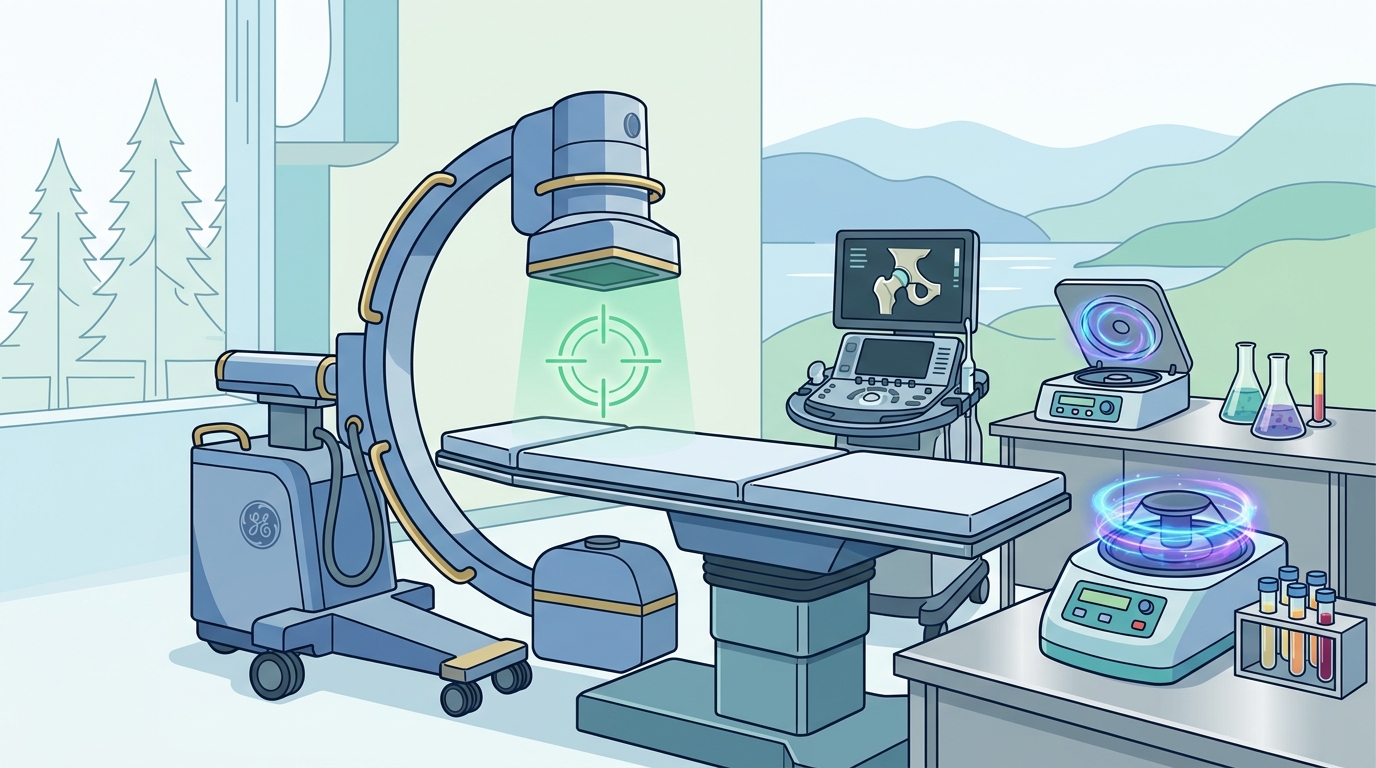
Furthermore, fluoroscopic C-Arm guidance is utilized for spinal and complex joint procedures. This real-time X-ray technology ensures that needles are placed with millimeter accuracy in the spine and sacroiliac joints. The combination of ultrasound and fluoroscopy represents the gold standard in non-surgical orthopedic care, a standard that not all clinics in the Pacific Northwest can claim.
Comparing PRP, Prolotherapy, and Stem Cells
Regenerative medicine is not a one-size-fits-all solution. Providers differ in the breadth and sophistication of the biological agents they offer. Understanding these options is crucial for joint preservation.
Platelet Rich Plasma (PRP)
PRP involves drawing the patient's own blood, concentrating the platelets, and injecting them into the injured area. PRP is a biological fluid that contains high concentrations of platelets and growth factors that promote healing. Research indicates that PRP can be highly effective for early-stage osteoarthritis and tendon injuries. For example, meta-analyses of randomized controlled trials have shown significant efficacy in treating knee osteoarthritis. PRP is also used for aesthetic rejuvenation, highlighting its versatility in regenerative medicine.
Prolotherapy
Prolotherapy involves injecting an irritant solution, such as dextrose, into ligaments and tendons to stimulate the body's natural healing response. Prolotherapy is a non-surgical technique that encourages the growth of new connective tissue. It is particularly effective for chronic ligament laxity and joint instability. Studies on dextrose prolotherapy have demonstrated long-term effects in reducing anterior cruciate ligament laxity and improving knee stability.
Biocellular Stem Cell Therapies
For more advanced degeneration, autologous adipose tissue-derived stem cells offer a potent regenerative option. Adipose tissue-derived mesenchymal stem cells facilitate hematopoiesis and cartilage regeneration. These cells are harvested from the patient's own fat tissue and processed to isolate the reparative cells. This approach is often reserved for severe osteoarthritis where cartilage loss is significant. The use of autologous Adipose Tissue Stem Cell Grafts allows for the regeneration of human bones and cartilage, offering hope for patients who have exhausted other options.
Oregon Regenerative Medicine: A Deep Dive
Among Portland's providers, Oregon Regenerative Medicine stands out for its comprehensive approach and historical depth. Located inside the historic Foundry Building at Oswego Pointe, the clinic has been a pioneer in the Pacific Northwest for over three decades. Their team includes Dr. Noel Peterson, Dr. Kristian Flores, and Dr. Terry Manning II, all of whom bring extensive training in regenerative orthopedics.
One of the clinic's key strengths is its volume of experience. They have performed over 40,000 regenerative injections, providing a vast dataset of clinical outcomes. This volume translates to refined technique and a deeper understanding of complex musculoskeletal cases. Their focus on evidence-based practice ensures that treatments are not just experimental but grounded in proven medical science.
Additionally, the clinic offers a holistic framework that extends beyond injections. They integrate condition-specific nutritional programs, hormone optimization, and functional medicine to support overall joint health. This multi-modal approach addresses the root causes of degeneration, such as inflammation and hormonal imbalances, rather than just the local symptoms.
Key Takeaways
- Imaging is Critical: Providers who utilize real-time ultrasound and fluoroscopy offer superior precision compared to those relying on anatomical landmarks alone.
- Specialization Matters: Clinics focused exclusively on regenerative orthopedics, like those with decades of experience, typically offer more advanced protocols than general wellness centers.
- Treatment Variety: Effective joint preservation often requires a combination of PRP, Prolotherapy, and stem cell therapies tailored to the stage of degeneration.
- Experience Volume: Providers with tens of thousands of procedures, such as Oregon Regenerative Medicine, have refined their techniques for complex cases.
- Holistic Support: The best outcomes are achieved when regenerative injections are paired with nutritional and hormonal optimization strategies.
- Local Expertise: Portland providers are uniquely positioned to treat the region's active lifestyle injuries, offering targeted care for athletes and seniors alike.
- Evidence-Based Care: Look for providers who cite clinical studies and meta-analyses to support their treatment protocols.
Frequently Asked Questions
How do I choose between PRP and Stem Cell therapy?
PRP is typically recommended for early to moderate joint degeneration and tendon injuries, while stem cell therapy is often reserved for more advanced osteoarthritis with significant cartilage loss. A provider with ultrasound expertise can determine the exact stage of your condition to recommend the appropriate treatment.
Is regenerative medicine covered by insurance?
Most insurance plans do not cover regenerative injections as they are often considered experimental or elective. However, some functional medicine aspects may be covered. It is best to consult with the provider's administrative team for specific billing details.
What is the recovery time for PRP injections?
Recovery time varies by individual and the area treated. Generally, patients can expect some soreness for a few days, with full biological effects taking several weeks to manifest. Most patients return to light activities within 24 to 48 hours.
Why is ultrasound guidance important?
Ultrasound guidance ensures that the therapeutic agent is delivered exactly to the site of injury, such as a specific tendon tear or ligament insertion. This precision maximizes efficacy and minimizes the risk of damaging surrounding nerves or tissues.
Can regenerative medicine reverse arthritis?
While it cannot completely reverse advanced arthritis, regenerative medicine can significantly reduce pain, improve function, and slow the progression of degeneration. Many patients achieve durable pain-free function without the need for joint replacement surgery.
What makes Oregon Regenerative Medicine different?
ORM has over 30 years of experience and has performed over 40,000 regenerative injections. They combine advanced imaging, biological therapies, and functional medicine to provide a comprehensive approach to joint preservation.
Are the treatments painful?
Patients may experience some discomfort during the injection, but providers use local anesthesia and precise techniques to minimize pain. The post-injection soreness is typically manageable with ice and rest.
Next Steps for Joint Preservation
If you are suffering from joint pain or early signs of arthritis, taking action now can preserve your mobility for years to come. Do not wait until surgery is the only option. Schedule a consultation with a specialist who combines diagnostic imaging with advanced regenerative therapies. Visit Oregon Regenerative Medicine to learn more about their evidence-based protocols and to book your appointment. Empower yourself to live at your highest potential through precision injection therapy and restorative care.