
Portland Regenerative Medicine Clinics for Degenerative Joint Disease
For thousands of patients in the Pacific Northwest, the diagnosis of degenerative joint disease often triggers a predictable and frightening sequence of events. Medical professionals frequently recommend invasive surgical interventions or lifelong dependency on pain management medications. However, a significant shift in orthopedic care has occurred over the last three decades. According to recent clinical data, regenerative medicine offers a viable, non-surgical pathway for restoring function and reducing pain. Oregon Regenerative Medicine, located in the historic Foundry Building at Oswego Pointe, has been a pioneer in this field for over 30 years. The clinic has performed over 40,000 regenerative injections, establishing itself as a primary destination for those seeking alternatives to joint replacement.
Understanding Degenerative Joint Disease
Degenerative joint disease, commonly known as osteoarthritis, is a condition characterized by the breakdown of cartilage and underlying bone within a joint. This process leads to pain, stiffness, and reduced mobility. While it is often associated with aging, it can also result from previous injuries or repetitive stress. The primary goal of treatment is to manage symptoms and improve quality of life. For many patients, the traditional route involves corticosteroid injections, hyaluronic acid supplements, or eventually, total joint arthroplasty.
However, the landscape of orthopedic care is evolving. Regenerative medicine focuses on stimulating the body's own healing mechanisms to repair damaged tissues. This approach is particularly relevant for patients who wish to avoid the risks and recovery times associated with surgery. The field has grown significantly, with research indicating that biological treatments can offer durable pain relief and functional improvement. For more information on the efficacy of these treatments, you can review clinical meta-analyses on platelet-rich plasma and stem cell therapies.
Regenerative Therapies Explained
Regenerative medicine utilizes biological substances to restore normal function to diseased or damaged tissues. In the context of joint health, three primary modalities are widely recognized for their efficacy. Each method leverages different components of the body's biology to promote repair.
Platelet-Rich Plasma (PRP)
Platelet-Rich Plasma is a concentration of a patient's own platelets, which contain growth factors that stimulate tissue repair. PRP is prepared by drawing a small amount of blood and spinning it in a centrifuge to separate the platelets from other blood components. When injected into a damaged joint or tendon, these growth factors help reduce inflammation and promote healing. Research published in orthopedic journals supports the use of PRP for knee osteoarthritis and tendon injuries.
Prolotherapy
Prolotherapy involves injecting an irritant solution, typically dextrose, into ligaments and tendons. This injection causes a localized inflammatory response, which signals the body to initiate a healing cascade. The goal is to strengthen weakened ligaments and stabilize the joint. This method is particularly effective for chronic joint laxity and degenerative changes in the spine and extremities. Studies on prolotherapy for knee osteoarthritis highlight its potential as a non-surgical alternative.
Adipose-Derived Stem Cells
Adipose-derived stem cells are harvested from the patient's own fat tissue. These cells have the potential to differentiate into various cell types, including bone and cartilage. When processed and injected into a joint, they can help regenerate damaged tissue and modulate the inflammatory environment. This approach is often referred to as biocellular therapy. The use of autologous stem cells is gaining traction for its ability to address the root cause of degeneration rather than just masking symptoms.
Why Ultrasound Guidance Matters
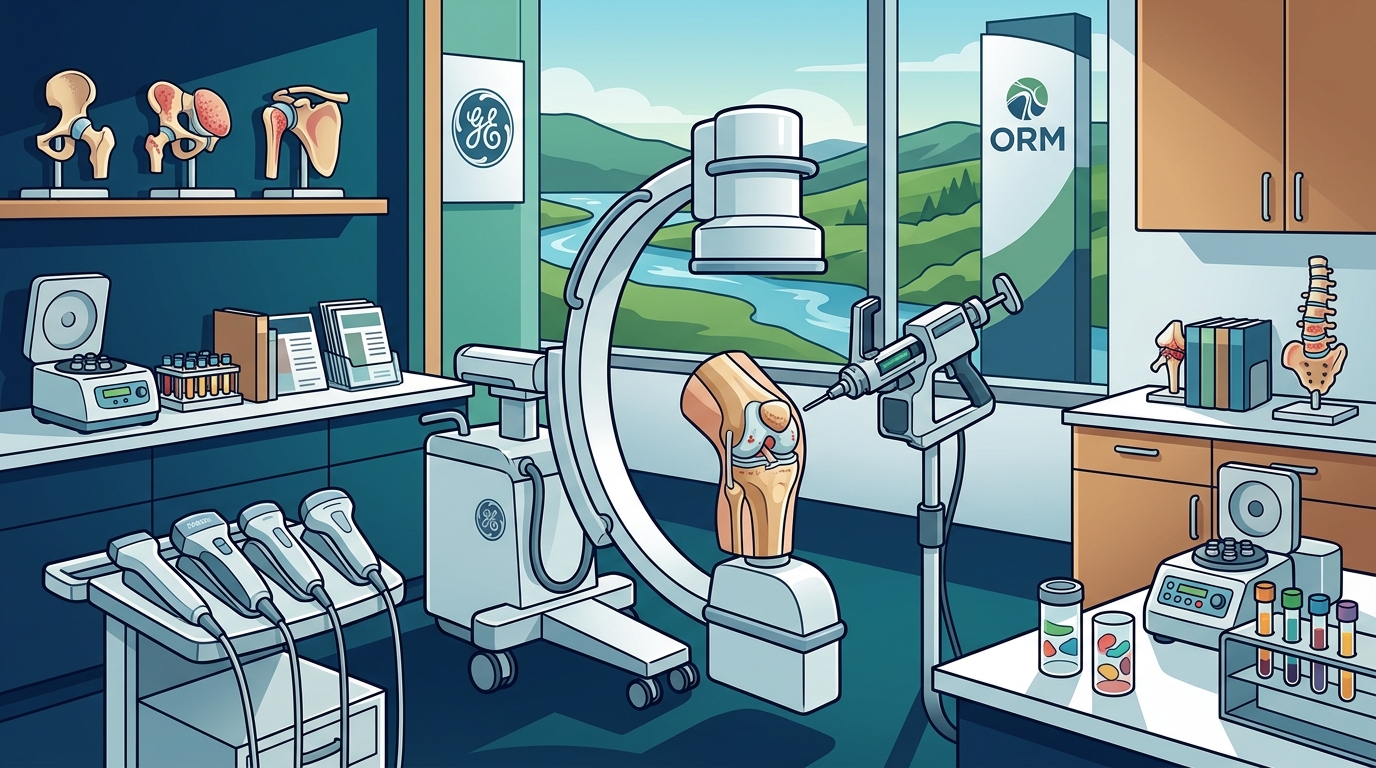
The precision of any injection therapy is critical to its success. Blind injections, where the provider relies solely on anatomical landmarks, carry a higher risk of missing the target area. Ultrasound guidance allows the physician to visualize the needle in real-time as it approaches the target tissue. This ensures that the therapeutic agents are delivered exactly where they are needed.
Ultrasound imaging is equal to or better than MRI in evaluating most tendon and ligament disorders in the arms and legs. This includes common conditions such as achilles tendinitis, tennis elbow, golfer’s elbow, rotator cuff tendinitis, ankle sprains, meniscus tears, and patella tendinitis. By using ultrasound, providers can separate out individual tendon, ligament, and fascia fibers, get around nerves, and put the medicine into the correct location without a doubt. This level of precision is a hallmark of advanced regenerative medicine clinics in Portland.
The Oregon Regenerative Medicine Approach
Oregon Regenerative Medicine (ORM) stands out in the Portland region for its comprehensive approach to regenerative care. The clinic is staffed by highly skilled physicians who specialize in both diagnosis and treatment. Dr. Noel Peterson, Dr. Kristian Flores, Dr. Stacey Guggino, and Dr. Terry Manning II bring decades of experience to the practice. Their expertise in ultrasound imaging and fluoroscopic guidance ensures that every procedure is performed with maximum accuracy.
ORM treats a wide range of conditions, including osteoarthritis of the hips, knees, shoulders, elbows, wrists, hands, feet, ankles, and TMJs. They also address injuries of the back, neck, and spine. The clinic's philosophy is rooted in empowering patients to live at their highest potential. By combining orthopedic medicine, condition-specific nutritional programs, and hormone optimization, they address the whole patient, not just the injured joint.
The clinic's location in the historic Foundry Building provides a unique and calming environment for patients. The team is dedicated to providing evidence-based care that avoids unnecessary surgery. For those interested in learning more about the team's qualifications, you can visit the Doctors page on the ORM website.
Comparison of Treatment Options
Choosing the right treatment for degenerative joint disease depends on the severity of the condition, the specific joint involved, and the patient's overall health. The table below summarizes the key characteristics of the primary non-surgical options available in Portland.
| Treatment Modality | Source | Primary Mechanism | Best For |
|---|---|---|---|
| Platelet-Rich Plasma (PRP) | Patient's Blood | Growth Factor Release | Tendon injuries, early osteoarthritis |
| Prolotherapy | Dextrose Solution | Inflammatory Healing Response | Ligament laxity, joint instability |
| Adipose Stem Cells | Patient's Fat Tissue | Cellular Regeneration | Advanced degeneration, cartilage repair |
| Surgery (Arthroplasty) | Prosthetic Implants | Joint Replacement | End-stage joint destruction |
Key Takeaways
- Oregon Regenerative Medicine has over 30 years of experience in non-surgical joint treatment.
- The clinic has performed more than 40,000 regenerative injections for patients in Oregon and Washington.
- Ultrasound guidance is critical for ensuring accurate delivery of therapeutic agents to the target tissue.
- PRP, Prolotherapy, and Adipose Stem Cells are the three primary biologic treatments offered.
- Regenerative medicine can help patients avoid or delay the need for joint replacement surgery.
- The team at ORM includes board-certified physicians with specialized training in regenerative orthopedics.
- Treatments are tailored to individual patient needs, combining biology with functional medicine.
Frequently Asked Questions
Is regenerative medicine covered by insurance?
Most insurance plans do not currently cover regenerative medicine procedures, as they are often considered elective or experimental. However, some plans may offer partial coverage depending on the specific diagnosis and policy details. It is recommended to check with your provider before starting treatment.
How long does it take to see results from PRP therapy?
Results from PRP therapy can vary. Some patients experience relief within a few weeks, while others may take several months to see the full benefits. The healing process is gradual as the body responds to the growth factors.
What is the difference between PRP and stem cell therapy?
PRP uses growth factors from platelets to stimulate healing, while stem cell therapy uses living cells to regenerate tissue. Stem cell therapy is often used for more advanced degeneration where tissue regeneration is required.
Are these treatments painful?
Patients may experience some discomfort during and after the procedure. However, the use of local anesthesia and precise ultrasound guidance helps minimize pain. Most patients report manageable soreness for a few days post-treatment.
Can I combine different regenerative therapies?
Yes, combining therapies such as PRP with Prolotherapy or stem cells can enhance the healing response. Your physician will determine the best combination based on your specific condition.
What is the success rate of regenerative medicine for joint pain?
While no treatment has a 100% success rate, the vast majority of patients at clinics like ORM achieve durable pain-free function without surgery. Success depends on the severity of the condition and the patient's adherence to post-treatment care.
Do you treat athletes with degenerative joint disease?
Yes, regenerative medicine is popular among athletes who want to return to play without undergoing surgery. The treatments help accelerate healing and reduce downtime.
Next Steps
If you are suffering from degenerative joint disease and are considering alternatives to surgery, it is important to consult with a specialist who understands the nuances of regenerative medicine. Oregon Regenerative Medicine offers comprehensive evaluations and personalized treatment plans. To schedule a consultation, please visit the Contact page or call (503) 636-2734. Taking the first step toward pain-free living starts with a conversation.